Join us on a literary world trip!
Add this book to bookshelf
Grey
Write a new comment Default profile 50px
Grey
Subscribe to read the full book or read the first pages for free!
All characters reduced
Songs of Innocence and Experience - cover

Songs of Innocence and Experience

William Blake

Publisher: BookRix

  • 0
  • 0
  • 0

Summary

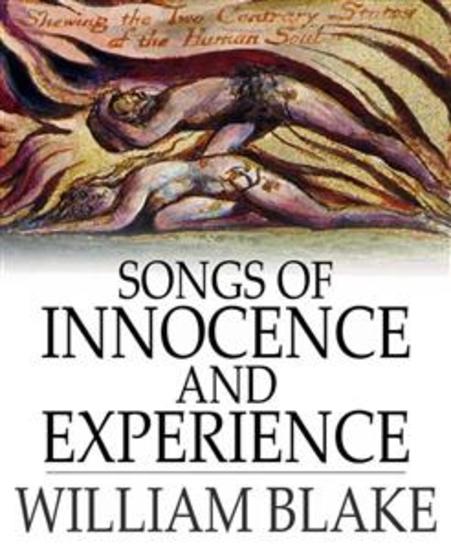
Songs of Innocence and Experience is a collection of poems by William Blake in two phases. "Innocence" and "Experience" are definitions of consciousness that rethink Milton's existential-mythic states of "Paradise" and the "Fall." Blake's categories are modes of perception that tend to coordinate with a chronology that would become standard in Romanticism: childhood is a state of protected innocence rather than original sin, but not immune to the fallen world and its institutions. This world sometimes impinges on childhood itself, and in any event becomes known through "experience," a state of being marked by the loss of childhood vitality, by fear and inhibition, by social and political corruption, and by the manifold oppression of Church, State, and the ruling classes. The volume's "Contrary States" are sometimes signalled by patently repeated or contrasted titles: in Innocence, Infant Joy, in Experience, Infant Sorrow; in Innocence, The Lamb, in Experience, The Fly and The Tyger. The stark simplicity of poems such as The Chimney Sweeper and The Little Black Boy display Blake's acute sensibility to the realities of poverty and exploitation that accompanied the "dark satanic mills" of the Industrial Revolution'.
Available since: 12/19/2023.
Print length: 23 pages.
Other books that might interest you

  • Essay on Man An - Pope is one of our greatest poets here he once again demonstrates his brilliant talents - cover

    Essay on Man An - Pope is one of...

    Alexander Pope

    • 0
    • 0
    • 0
    Alexander Pope was born on May 21st, 1688 in London into a Catholic family.   
    His education was affected by the recent Test Acts, upholding the status of the Church of England and banning Catholics from teaching.  In effect this meant his formal education was over by the age of 12 and Pope was to now immerse himself in classical literature and languages and to, in effect, educate himself.    
    From this age too he also suffered from numerous health problems including a type of tuberculosis (Pott’s disease) which resulted in a stunted, deformed body.  Only to grow to a height of 4’ 6”, with a severe hunchback and complicated further by respiratory difficulties, high fevers, inflamed eyes and abdominal pain all of which served to further isolate him, initially, from society.  
    However his talent was evident to all. Best known for his satirical verse, his translations of Homer and the use of the heroic couplet, he is the second-most frequently quoted writer in The Oxford Dictionary of Quotations, after Shakespeare.  
    With the publication of Pastorals in 1709 followed by An Essay on Criticism (1711) and his most famous work The Rape of the Lock (1712; revised and enlarged in 1714) Pope became not only famous but wealthy.  
    His translations of the Iliad and the Odyssey further enhanced both reputation and purse.  His engagement to produce an opulent new edition of Shakespeare met with a mixed reception.  Pope attempted to "regularise" Shakespeare's metre and rewrote some of his verse and cut 1500 lines, that Pope considered to be beneath the Bard’s standard, to mere footnotes.  
    Alexander Pope died on May 30th, 1744 at his villa at Twickenham (where he created his famous grotto and gardens) and was buried in the nave of the nearby Church of England Church of St Mary the Virgin.   
    Over the years and centuries since his death Pope’s work has been in and out of favour but with this distance he is now truly recognised as one of England’s greatest poets.
    Show book
  • Confessions of a MANAHOLIC - cover

    Confessions of a MANAHOLIC

    P. Pierre

    • 0
    • 0
    • 0
    Newfound love or paradise lost? This poetry book exposes it all. Follow P. Pierre through her many do-overs in love.
    Show book
  • Icelight - cover

    Icelight

    Ranjit Hoskote

    • 0
    • 0
    • 0
    Icelight, Ranjit Hoskote's eighth collection of poems, enacts the experience of standing at the edge—of a life, a landscape, a world assuming new contours or going up in flames. Yet, the protagonists of these poems also stand at the edge of epiphany. In the title poem, we meet the Neolithic cave-dweller who, dazzled by a shapeshifting nature, crafts the first icon. The 'I' of these poems is not a sovereign 'I'. A questing, questioning voice, it locates itself in the web of life, in relation to the cosmos. In 'Tacet', the speaker asks: "What if I had/ no skin/ Of what/ am I the barometer?" Long committed to the Japanese mono no aware aesthetic, Hoskote embraces talismans, premonitions, fossils: active residues from the previous lives of people and places. Icelight is a book about transitions and departures, eloquent in its acceptance of transience in the face of mortality. AubadeRumours of wind, banners of cloud.The low earth shakes but the stormhas not arrived. You packfor the journey, look up, look throughthe doors at trees shedding their leavestoo soon, a track on which silk shoeswould be wasted, a moonstill dangling above a boat.Wearing your salt mask, you facethe mulberry shadows.The valley into whichyou're rappellingis you.
    Show book
  • Drakkar Noir - cover

    Drakkar Noir

    Jeramy Dodds

    • 0
    • 0
    • 0
    This mirror's selfie-proof, a machine that dams back the gloom.
      After a brief period of mourning, it was the afternoon.
      This mirror is selfie-proof, a machine that dams
      back the gloom. When machines dream they dream
      of stopping. But this bulimic is all hangnails
      with a hankering to throatsing.


      Following the Fratellini Family of clowns, Jeramy Dodds astonishes readers
      and non-readers alike. Techniques such as his patented triumph, the Grand
       Mal Caesura, along with other favourites, are on display inside. Dodds is a warlock of words, only to be outdone by them, enslaved by them, freed by them - maybe even loved by them. A haunting, yet hilarious depiction of a journey to and fro the furthest limits of the human experiment.
    Show book
  • Primers Volume Seven - cover

    Primers Volume Seven

    Jade Cuttle, Antonia Taylor,...

    • 0
    • 0
    • 0
    In 2023, Nine Arches Press launched their nationwide Primers scheme for a seventh time, in search of exciting new voices in poetry, with Katie Hale as selecting editor. After reading through hundreds of anonymous entries, and narrowing down the choices from longlist to shortlist, three poets emerged as clear choices: Jade Cuttle, Antonia Taylor and Laura Varnam.
    Primers Volume Seven now brings together a showcase from three distinctive poets, exploring everything from mudlarking and making a 'mossary', to the borderlands of conflicts and a bold retelling of an Old English epic. Through lively engagement with language, deep connection to place and time, and the unearthing the stories of myth, history and peoples, these revealing poems offer an insightful collection of new work from some of poetry's most talented emerging voices.
    Show book
  • Aspects Of Love - cover

    Aspects Of Love

    William Shakespeare

    • 0
    • 0
    • 0
    Aspects Of Love is an anthology of poetic explorations on the theme of erotic love - though one of the "poets" represented here is better known, even than as a dramatist, as the philosopher, Plato. His Symposium heads off this set of erotic explorations. In The Symposium's philosophic play, he depicts a scene of men cosing together over dinner, each describing what he finds in his experience of love. I have followed this pattern in the choice of works for this anthology - in a similar manner, each of these works deals in a radically different way with the discovery of love. Whether philandering or married, heterosexual, lesbian or gay, under cover of friendship or as flagrant delight, from Plato through Donne, Whitman, Shakespeare or Sappho. we will not cease from exploration till we reach at last, as The Symposium does, a vision of the union of love as a discovery of the Divine. Surely there must be something here for everyone.
    Show book