Rejoignez-nous pour un voyage dans le monde des livres!
Ajouter ce livre à l'électronique
Grey
Ecrivez un nouveau commentaire Default profile 50px
Grey
Abonnez-vous pour lire le livre complet ou lisez les premières pages gratuitement!
All characters reduced
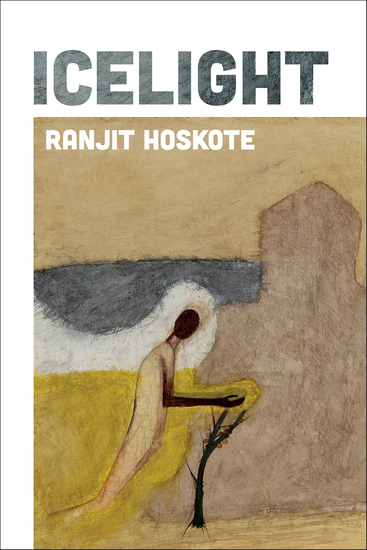
Icelight - cover

Icelight

Ranjit Hoskote

Maison d'édition: Wesleyan University Press

  • 0
  • 0
  • 0

Synopsis

Icelight, Ranjit Hoskote's eighth collection of poems, enacts the experience of standing at the edge—of a life, a landscape, a world assuming new contours or going up in flames. Yet, the protagonists of these poems also stand at the edge of epiphany. In the title poem, we meet the Neolithic cave-dweller who, dazzled by a shapeshifting nature, crafts the first icon. The 'I' of these poems is not a sovereign 'I'. A questing, questioning voice, it locates itself in the web of life, in relation to the cosmos. In 'Tacet', the speaker asks: "What if I had/ no skin/ Of what/ am I the barometer?" Long committed to the Japanese mono no aware aesthetic, Hoskote embraces talismans, premonitions, fossils: active residues from the previous lives of people and places. Icelight is a book about transitions and departures, eloquent in its acceptance of transience in the face of mortality. AubadeRumours of wind, banners of cloud.The low earth shakes but the stormhas not arrived. You packfor the journey, look up, look throughthe doors at trees shedding their leavestoo soon, a track on which silk shoeswould be wasted, a moonstill dangling above a boat.Wearing your salt mask, you facethe mulberry shadows.The valley into whichyou're rappellingis you.
Disponible depuis: 07/03/2023.
Longueur d'impression: 122 pages.

D'autres livres qui pourraient vous intéresser

  • What to Believe and Other Poems - cover

    What to Believe and Other Poems

    Cliff Duncan

    • 0
    • 0
    • 0
    As the author of this original work as a book of poems, I would like the readers to engage their minds and get with my written utterances and apply a kind of understanding and draw their own conclusions of what they have just digested and not to be fearful of some deep thinking. The reader, I hope, will feel somewhat elated and fresh with inner thoughts!
    Voir livre
  • Set Me Free - The Good News of God’s Relentless Pursuit (Poetry and Essays) - cover

    Set Me Free - The Good News of...

    Lecrae Moore

    • 0
    • 0
    • 0
    Read by the author. 
    Do you feel like you live life looking in from the outside? From the way you speak, to the color of your skin, to the way you vote, or the way you pray, you don't fit the mold. And yet you find yourself still trying to prove yourself to others. In Set Me Free, New York Times bestselling author Lecrae invites you on a poetic and artistic exploration of how you can persevere against the lies of unworthiness to experience the freedom given to you in Jesus. 
    Under the weight of America's racial history, church traditions, and cultural pressures, Lecrae found himself trapped in the belief that he had to earn his freedom or prove his right to be on the stage, or even in the pews of a church. As he learns to shed these old ways of thinking, Lecrae beckons you to step out of the beliefs that are holding you captive and to reconstruct your faith. 
    Within this inspirational collection of poetry and essays, you will experience:Raw, lyrical expressions of what it means to be unfree in AmericaConfessional essays explaining Lecrae's personal journey to claim his freedom and his faithEmpowering words to help heal your wounded soulA testimony of God's unfailing love and eternal acceptance 
      
    This book is perfect for:Followers of Jesus who feel disillusioned or who are deconstructing from their church experienceSpiritual seekers who feel on the outside of modern religious institutionsFans of Lecrae's music 
      
    Provocative, vulnerable, convicting, and inspiring, Set Me Free is a poetry collection for our time.
    Voir livre
  • The Ballad Of The White Horse - An epic poem about King Alfred's Christian endeavors resisting the Viking conquest of England - cover

    The Ballad Of The White Horse -...

    Gilbert Keith Chesterton

    • 0
    • 0
    • 0
    "The Last Great Epic Poem in the English Language"- Dale Ahlquist"The ending is absurd. The brilliant smash and glitter of the words and phrases (when they come off, and are not mere loud colours) cannot disguise the fact that G. K. C. knew nothing whatever about the 'North', heathen or Christian."- JRR TolkienThe tale of King Alfred, the Christian king who in 878AD battled a Viking invasion that had conquered the rest of England and burnt some cakes. He then became the last holdout of resistance against the invaders and forced the conversion of the Danish king Guthrum to Christianity after the battle of Ethandun. Chesterton says "This ballad needs no historical notes, for the simple reason that it does not profess to be historical. All of it that is not frankly fictitious, as in any prose romance about the past, is meant to emphasize tradition rather than history. That is the use of tradition: it telescopes history."Named after the chalk horses carved into English hills (and partly set at Uffington), it begins with an exhortation to true Christianity in the face of despair and defeat, and ends with a prediction of more barbarian invasions. It focuses on the nature of faith in times of despair, and on the true strength of local kings in the face of empires."... you and all the kind of ChristAre ignorant and brave,And you have wars you hardly winAnd souls you hardly save...."In some far century, sad and slow,I have a vision, and I knowThe heathen shall return...."They shall come mild as monkish clerks,With many a scroll and pen;And backward shall ye turn and gaze,Desiring one of Alfred's days,When pagans still were men."
    Voir livre
  • A Rhyme A Dozen ― Summer - 12 Poets 12 Poems 1 Topic - cover

    A Rhyme A Dozen ― Summer - 12...

    William Shakespeare, Christina...

    • 0
    • 0
    • 0
    ‘A dime a dozen’ as known in America, is perhaps equal to the English ‘cheap as chips’ but whatever the lingua franca of your choice in this series we hereby submit ‘A Rhyme a Dozen’ as 12 poems on many given subjects that are a well-rounded gathering, maybe even an essential guide, from the knowing pens of classic poets and their beautifully spoken verse to the comfort of your ears. 
    1 - A Rhyme A Dozen - 12 Poems, 12 Poets, 1 Topic - Summer - An Introduction 
    2 - Shall I Compare Thee To A Summers Day (Sonnet 18) by William Shakespeare 
    3 - Summer Sun by Robert Louis Stevenson 
    4 - The Summer Rain by Henry David Thoreau 
    5 - Summer Song by Ella Wheeler Wilcox 
    6 - A Summer Evening Churchyard by Percy Bsysshe Shelley 
    7 - An Indian Summer Day on the Prairie by Vachel Lindsay 
    8 - A Summer Night by George William Russell 
    9 - Summer in the South by Paul Laurence Dunbar 
    10 - Summer by Kahlil Gibran 
    11 - Summer by Christina Rossetti 
    12 - Sonnet 13 -  Summer Fruit by Rainer Maria Rilke 
    13 - Tis the Last Rose of Summer by Thomas Moore
    Voir livre
  • The Bali Paradigm - Prose Poems and Illustrations by Michael M Clements - cover

    The Bali Paradigm - Prose Poems...

    Michael M Clements

    • 0
    • 0
    • 0
    Have you ever dreamed of starting a new life in a tropical paradise far from home? The Bali Paradigm chronicles such a leap through the prose, poetry and illustrations of author Michael M Clements, who sold his business, his house and all his possessions and moved with his partner and son to start a new life in Bali, and in the process, created this raw and inspiring account of what it feels like to jump from one life paradigm into the next.
    Voir livre
  • The Holy Sonnets - Incredible sonnets often compared to that of Shakespeares - cover

    The Holy Sonnets - Incredible...

    John Donne

    • 0
    • 0
    • 0
    John Donne was born on the 22nd January 1572 in London, into a Roman Catholic family when Catholicism was illegal in England, and there was turbulence and unrest with both state and church throughout much of Europe.  
     
    His father, also named John, died when he was four, and his mother, Elizabeth Haywood, married a wealthy widower, ensuring the family were looked after.  He received a good education at both Oxford and Cambridge but was unable to obtain a degree without taking the oath of supremacy, which as a Catholic he refused to do.  
     
    During the 1590s, Donne wrote a wide range of verses, including both erotic and sacred poems, creating two major volumes of work.  His strong vivacious and sensual style fusing intellect and passion, as well as inventive use of subtle argument and syntax, provided a new radical perspective that reached beyond his contemporaries, and continued to chime and charm poetry lovers throughout the ages.  
     
    Difficult to believe that with this enormous talent, Donne lived in poverty for many years, exacerbated by his secret marriage to Anne Moore, which meant no dowry, and they having twelve children.  Later he served in Parliament and became Dean of St Paul's in 1621, noted for his learned and charismatic sermons.  
     
    John Donne died in London on the 31st March 1631, but leaves an enormous legacy of many splendid influential poems.  He was known as the founder of the Metaphysical Movement and is widely regarded as one of Britain's best-loved poets.
    Voir livre