Join us on a literary world trip!
Add this book to bookshelf
Grey
Write a new comment Default profile 50px
Grey
Subscribe to read the full book or read the first pages for free!
All characters reduced
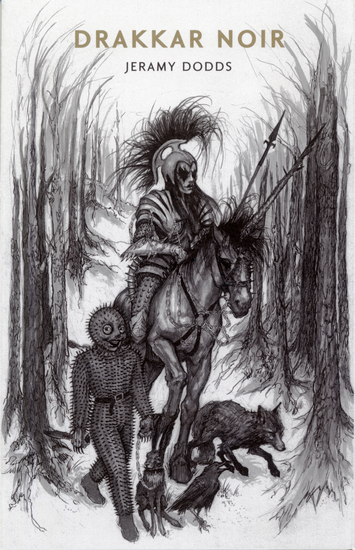
Drakkar Noir - cover

Drakkar Noir

Jeramy Dodds

Publisher: Coach House Books

  • 0
  • 0
  • 0

Summary

This mirror's selfie-proof, a machine that dams back the gloom.
  After a brief period of mourning, it was the afternoon.
  This mirror is selfie-proof, a machine that dams
  back the gloom. When machines dream they dream
  of stopping. But this bulimic is all hangnails
  with a hankering to throatsing.


  Following the Fratellini Family of clowns, Jeramy Dodds astonishes readers
  and non-readers alike. Techniques such as his patented triumph, the Grand
   Mal Caesura, along with other favourites, are on display inside. Dodds is a warlock of words, only to be outdone by them, enslaved by them, freed by them - maybe even loved by them. A haunting, yet hilarious depiction of a journey to and fro the furthest limits of the human experiment.
Available since: 09/18/2017.
Print length: 88 pages.

Other books that might interest you

  • A Gay Century Volume 2 1973-2001 - 7 more unreliable vignettes of Lesbian and Gay Life - cover

    A Gay Century Volume 2 1973-2001...

    Peter Scott-Presland

    • 0
    • 0
    • 0
    ‘A Gay Century: Vol 2’ is a vivid portrait of gay life in recent history, using a series of seven playlets which are dramatic, angry, funny and heartbreaking in turn. A camp old man collides with Gay Liberation and gets a new lease of life; a gay bandsman can’t grieve for his lover killed in an IRA bomb – until he’s thrown out of the army for being gay; a gay man and a lesbian decide to have a baby, but their partners plot to stop it; the bombing of the Admiral Duncan pub devastates not only the victims but their friends. Queen Victoria and Oscar Wilde – repression and liberation – battle for supremacy; there can only be one victor.
    Show book
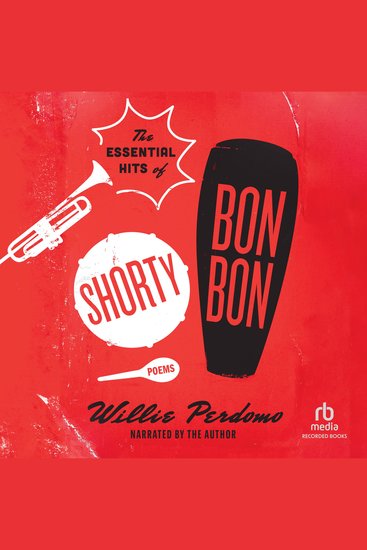
  • The Essential Hits of Shorty Bon Bon - Poems - cover

    The Essential Hits of Shorty Bon...

    Willie Perdomo

    • 0
    • 0
    • 0
    A suite of poems about a percussionist in 1970 Spanish Harlem music circles, from the author of The Crazy Bunch 
      
    A National Book Critics Circle 2014 Finalist for Poetry 
      
    Through dream song and elegy, alternate takes and tempos, prizewinning poet Willie Perdomo’s third collection crackles with vitality and dynamism as it imagines the life of a percussionist, rebuilding the landscape of his apprenticeship, love, diaspora, and death. At the beginning of his infernal journey, Shorty Bon Bon recalls his live studio recording with a classic 1970s descarga band, sharing his recollection with an unidentified poet. This opening section is followed by a call-and-response with his greatest love, a singer named Rose, and a visit to Puerto Rico that inhabits a surreal nationalistic dreamscape, before a final jam session where Shorty recognizes his end and a trio of voices seek to converge on his elegy. 
      
    “A vivid portrait of a late-20th century Nuyorican musical community … Perdomo manages to mix the language of city life with a sense of the transcendent.”—NPR.org 
    Show book
  • A Valedictory Bestiary - Elegies for a Vanishing World - cover

    A Valedictory Bestiary - Elegies...

    M. Coleridge Scott

    • 0
    • 0
    • 0
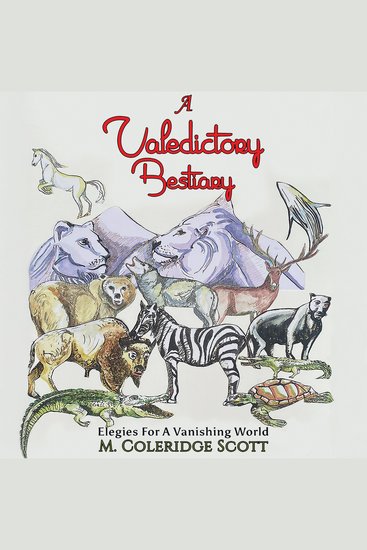
    This anthology of eleven stirring tales, composed in melodic rhyming couplets, sweeps readers into a realm where myth intertwines with romance across diverse landscapes: from the Peruvian Amazon to the plains of Africa, the vastness of the Pacific to the spiritual heights of Tibet. Each narrative celebrates the wild, noble beasts that champion the cause of their land: wolves liberating Athens, pumas safeguarding the Amazon, bears emancipating prisoners in wartime Germany, and more. 
    These creatures not only symbolize the spirit of their homelands but also the myths and history embedded within, now imperilled by relentless
     modernization.
     
    Scott’s weaves a poetic tapestry reminiscent of Coleridge’s ‘Ancient Mariner,’ Kipling’s ‘Just So Stories,’ and the adventurous spirit of Patrick Leigh Fermor, all while channelling Mary Pope Osborne’s fascination with myth. It’s a literary mosaic, unparalleled in ambition, which speaks eloquently to the urgency of preserving our world’s cultural and ecological richness. The stories, though they grapple with themes of loss and environmental decay, also ignite hope for spiritual rebirth and the triumph of nature’s indomitable heart.
    Show book
  • The Poet Li Po - A Study Of One Of China's Great Cultural Treasures - cover

    The Poet Li Po - A Study Of One...

    Arthur Waley

    • 0
    • 0
    • 0
    A dive into one of China's great poets by the first great populariser of Chinese literature, Arthur Waley.Also known as Li Bai (Chinese: 李白; pinyin: Lǐ Bái, 701–762), also pronounced as Li Bo, courtesy name Taibai (Chinese: 太白), was a Chinese poet, acclaimed from his own time to the present as one of the greatest and most important poets of the Tang dynasty and in Chinese history as a whole. He and his friend Du Fu (712–770) were two of the most prominent figures in the flourishing of Chinese poetry under the Tang dynasty, which is often called the "Golden Age of Chinese Poetry". The expression "Three Wonders" denotes Li Bai's poetry, Pei Min's swordplay, and Zhang Xu's calligraphy. - From the wiki
    Show book
  • Born in England – Exploring English Poetry - The Lords Knights & Gentlemen of the Realm - A celebration of English poems - cover

    Born in England – Exploring...

    Sir Philip Sidney, Sir Thomas...

    • 0
    • 0
    • 0
    Poetry. A form of words that seems so elegantly simple in one verse and so cleverly complex in another.  Each poet has a particular style, an individual and unique way with words and yet each of us seems to recognise the path and destination of where the verses lead, even if sometimes the full comprehension may be a little beyond us. 
     
    Through the centuries every culture has produced verse to symbolize and to describe everything from everyday life, natural wonders, the human condition and even in its more hubristic moments, the crushing triumph of an enemy. 
     
    In the volumes of this series, we take a look at poetry through the prism of individual regions of England, or sometimes more quaintly known as ‘Albion’, or ‘Blighty’, through the centuries of its gloried history. 
     
    England, despite its perception of reserve and under-statement has, in reality, strode the global stage at various time in many things, both good and bad, from Empire to long distance running. Here our focus in on its literature.  Famed for its fiction and dramas, it is equally admired for its plethora of gifted poets and the dazzling verse which has added so much to its artistic legacy.  These classic poets are wonders of their age and of their art.  Genius is written in their names. 
     
    In this volume we explore through many centuries the poetry written by the Nobility of England.  Their titles may be inherited and reek of undeserved privilege but their verse is the inheritance of us all.  Our poets include Sir Thomas Wyatt, W S Gilbert, Sir John Beaumont, Sir John Suckling and many others.  Genius is written in their names.
    Show book
  • Tintern Abbey - Glorious poem evoking the beauty of a church monument - cover

    Tintern Abbey - Glorious poem...

    William Wordsworth

    • 0
    • 0
    • 0
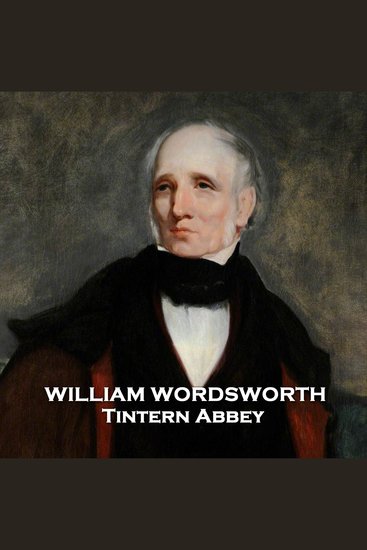
    William Wordsworth was born on 7 April, 1770 in Cockermouth, in Cumbria, northwest England.  
    Wordsworth spent his early years in his beloved Lake District often with his sister, Dorothy. The English lakes could terrify as well as nurture, and as Wordsworth would write “I grew up fostered alike by beauty and by fear,” 
    After being schooled at Hawkshead he went to St. John’s College, Cambridge but not liking the competitive nature of the place idled his way through saying he “was not for that hour, nor for that place.”  
    Whilst still at Cambridge he travelled to France.  He was immediately taken by the Revolutionary fervor and the confluence of a set of great ideals and rallying calls for the people of France. 
    In his early twenties he ventured again to France and fathered an illegitimate child. He would not see that daughter till she was 9 owing to the tensions and hostilities between England and France. 
    There now followed a period of three to four years that plagued Wordsworth with doubt.  He was now in his early thirties but had no profession, was rootless and virtually penniless.  
    Although his career was not on track he did manage to publish two volumes, both in 1793;  An Evening Walk and Descriptive Sketches. 
    This dark period ended in 1795. A legacy of £900 received from Raisley Calvert enabled Wordsworth to pursue a literary career in earnest.  
    In 1797 he became great friends with a fellow poet, Samuel Taylor Coleridge. They formed a partnership that would change both their lives and the course of English poetry. 
    Their aim was for a decisive break with the strictures of Neoclassical verse. In 1798 the ground breaking Lyrical Ballads was published. Wordsworth wrote in the preface “the spontaneous overflow of powerful feelings: it takes its origin from emotion recollected in tranquility.” Most of the poems were dramatic in form, designed to reveal the character of the speaker. Thus the poems set forth a new style, a new vocabulary, and new subjects for poetry. 
    Coleridge had also conceived of an enormous poem to be called “The Brook,” in which he proposed to treat all science, philosophy, and religion, but soon laid the burden of writing it to Wordsworth.  To test his powers for that endeavour, Wordsworth began writing the autobiographical poem that would absorb him for the next 40 years, and which was eventually published as The Prelude, or, Growth of a Poet’s Mind.  
    By the 1820s, the critical acclaim for Wordsworth was growing, but perhaps his best years of work were behind him. Nonetheless he continued to write and to revise previous works.  
    With the death is 1843 of his friend and Poet Laureate Robert Southey, Wordsworth was offered the position. He accepted despite saying he wouldn’t write any poetry as Poet Laureate. And indeed he didn’t. 
    Wordsworth died of pleurisy on 23 April 1850. He was buried in St Oswald’s church Grasmere.
    Show book