Join us on a literary world trip!
Add this book to bookshelf
Grey
Write a new comment Default profile 50px
Grey
Subscribe to read the full book or read the first pages for free!
All characters reduced
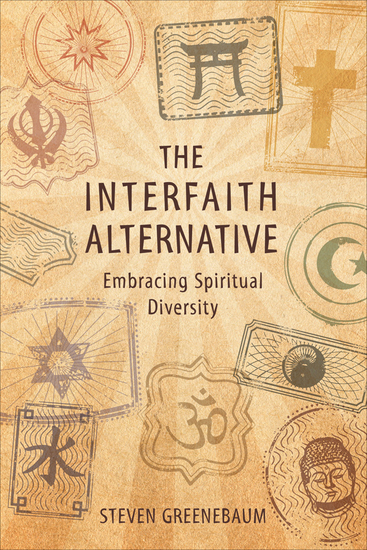
The Interfaith Alternative - Embracing Spiritual Diversity - cover

The Interfaith Alternative - Embracing Spiritual Diversity

Steven Greenebaum

Publisher: New Society Publishers

  • 0
  • 1
  • 0

Summary

There is no them — there is only us, celebrating our common humanityWhatever your spiritual path, chances are that the primary tenets of your faith include universal love, acceptance, and compassion. Yet three thousand years after Moses, twenty-five hundred years after the Buddha, two thousand years after Jesus, and fifteen hundred years after Muhammad, we are still divided by our differences. Religious intolerance, discrimination, even persecution and violence make up the not-so-golden rule.The Interfaith Alternative shows us how we can celebrate each other without fear of losing our own identity. It illuminates the path to creating a nurturing spiritual community that honors and includes all religious languages—an alternative to Jews worshiping only with Jews, Christians with Christians, and Muslims with Muslims. In doing so, it demonstrates that through coming together in a mutually supportive environment we can concentrate on our shared desire to remake the world into a compassionate, loving place.At its core, Interfaith is about community and justice. Once we truly embrace diversity, we embrace our common humanity. A powerful antidote to the current climate of fear and mistrust, The Interfaith Alternative argues that it is not how we encounter the sacred, but what we do about it that counts—there are positive alternatives to religious lines in the sand.Steven Greenebaum is an Interfaith minister whose experiences directing choirs of different faiths and denominations have helped him to understand the profound wisdom of many spiritual traditions. Steven has dedicated his life to working for social and environmental justice. He is the founder of the Living Interfaith Church in Lynnwood, Washington.
Available since: 04/01/2012.
Print length: 176 pages.
Other books that might interest you

  • Strange Religion - How the First Christians Were Weird Dangerous and Compelling - cover

    Strange Religion - How the First...

    Nijay K. Gupta

    • 0
    • 0
    • 0
    The first Christians were weird. Just how weird is often lost on today's believers. 


    Within Roman society, the earliest Christians stood out for the oddness of their beliefs and practices. They believed unusual things, worshiped God in strange ways, and lived a unique lifestyle. They practiced a whole new way of thinking about and doing religion that would have been seen as bizarre and dangerous when compared to Roman religion and most other religions of the ancient world. 


    Award-winning author, blogger, speaker, and New Testament teacher Nijay Gupta traces the emerging Christian faith in its Roman context in this accessible and engaging book. Christianity would have been seen as radical in the Roman world, but some found this new religion attractive and compelling. The first Christians dared to be different, pushed the boundaries of what was acceptable, transformed how people thought about religion, and started a movement that grew like wildfire. This book shows how the example of the earliest Christians can offer today's believers encouragement and hope.
    Show book
  • Man's Search for Meaning - An Introduction to Logotherapy - cover

    Man's Search for Meaning - An...

    Viktor E. Frankl

    • 0
    • 0
    • 0
    Man's search for meaning : An Introduction to Logotherapy 
    “One of the outstanding contributions to psychological thought in the last fifty years.” —Dr. Carl Rogers, psychologist and founder of Rogerian therapy. 
    “Viktor Frankl’s Man’s Search for Meaning is one of the great books of our time. Typically, if a book has one passage, one idea with the power to change a person’s life, that alone justifies reading it, rereading it, and finding room for it on one’s shelves. This book has several such passages.” —Harold S. Kushner, author and rabbi emeritus at Temple Israel. 
    Viktor Frankl's account of his battle for survival at Auschwitz and other concentration camps is included in Man's Search for Meaning, one of the great masterpieces to come out of the Holocaust. 
    Generations of readers have been captivated by this book because of its depictions of life in Nazi death camps and its spiritual survival teachings. 
    Frankl contends that although we cannot escape pain, we can decide how to manage it, find meaning in it, and go on with a new sense of purpose based on his personal experience and the testimonies of his patients. The belief that the pursuit of what we find significant, rather than pleasure, is the fundamental human motivation is at the core of his philosophy, which is known as logotherapy. 
    One of the most important books in the Universe today is Man's Search for Meaning, which never stops encouraging us to discover meaning in life itself.
    Show book
  • Project Mind Control - Sidney Gottlieb the CIA and the Tragedy of MKULTRA - cover

    Project Mind Control - Sidney...

    John Lisle

    • 0
    • 0
    • 0
    The inside story of the CIA’s secret mind control project, MKULTRA, using never-before-seen testimony from the perpetrators themselves.Sidney Gottlieb was the CIA’s most cunning chemist. As head of the infamous MKULTRA project, he oversaw an assortment of dangerous—even deadly—experiments. Among them: dosing unwitting strangers with mind-bending drugs, torturing mental patients through sensory deprivation, and steering the movements of animals via electrodes implanted into their brains. His goal was to develop methods of mind control that could turn someone into a real-life “Manchurian candidate.” In conjunction with MKULTRA, Gottlieb also plotted the assassination of foreign leaders and created spy gear for undercover agents. The details of his career, however, have long been shrouded in mystery. Upon retiring from the CIA in 1973, he tossed his files into an incinerator. As a result, much of what happened under MKULTRA was thought to be lost—until now.Historian John Lisle has uncovered dozens of depositions containing new information about MKULTRA, straight from the mouths of its perpetrators. For the first time, Gottlieb and his underlings divulge what they did, why they did it, how they got away with it, and much more. Additionally, Lisle highlights the dramatic story of MKULTRA’s victims, from their terrible treatment to their dogged pursuit of justice.The consequences of MKULTRA still reverberate throughout American society. Project Mind Control is the definitive account of this most disturbing of chapters in CIA history."Listeners will be transfixed" —AudioFile on The Dirty Tricks DepartmentA Macmillan Audio production from St. Martin’s Press.
    Show book
  • Poetics - cover

    Poetics

    Aristotle, S. H. Butcher -...

    • 0
    • 0
    • 0
    Delve into the timeless principles of storytelling and drama with "Poetics" by Aristotle, now available as a captivating audiobook. In this seminal work, Aristotle explores the fundamentals of literature, offering invaluable insights into the art of crafting compelling narratives and engaging characters. 
    Listeners will be enthralled by Aristotle's analysis of tragedy, comedy, and epic poetry, as he delves into the essential elements that make these forms of literature so powerful and enduring. From the structure of plots to the importance of character development and catharsis, "Poetics" provides a comprehensive framework for understanding the beauty and complexity of storytelling. 
    Perfect for writers, students of literature, and anyone interested in the art of storytelling, "Poetics" offers a wealth of knowledge and inspiration. Whether you're a seasoned storyteller or just beginning your journey as a writer, this audiobook provides valuable insights that will enhance your understanding of narrative technique and enrich your creative process. 
    So, if you're ready to unlock the secrets of great storytelling and elevate your craft to new heights, start listening to "Poetics" today and embark on a journey of literary discovery and enlightenment. Start Listening to "Poetics" today!
    Show book
  • Mayan Myths and Legends - Exploring the Spiritual World of the Maya - cover

    Mayan Myths and Legends -...

    Odessa Nightshade

    • 0
    • 0
    • 0
    The Maya civilization is one of the most enigmatic and awe-inspiring cultures of the ancient world. Flourishing for thousands of years in the dense jungles of Mesoamerica, the Maya built vast cities, developed a sophisticated writing system, and mapped the heavens with astonishing accuracy. Yet, beyond their architectural and scientific achievements, the Maya were a deeply spiritual people, weaving a rich tapestry of myths, legends, and sacred beliefs that connected them to the cosmos. Their mythology was not mere storytelling—it was a living force, shaping their rituals, governance, and daily existence.  
    At the heart of Maya spirituality was a complex pantheon of gods and supernatural beings, each governing different aspects of life, death, and the afterlife. Unlike many Western traditions that separate the divine from the earthly realm, the Maya believed that the gods were intimately involved in every facet of existence. Deities such as Itzamná, the creator god, and Chaac, the bringer of rain, were both revered and feared, their influence reflected in ceremonies, offerings, and astronomical observations. The legendary Popol Vuh, often referred to as the “Maya Bible,” preserved many of these sacred stories, including the epic journey of the Hero Twins, Hunahpú and Xbalanqué, who overcame the lords of the underworld, Xibalba, to restore cosmic order.  
    Maya mythology was deeply intertwined with their concept of time and destiny. Their intricate calendar system, which included the Tzolk’in (a sacred 260-day calendar) and the Long Count, was not merely a tool for marking days but a means of understanding cosmic cycles and divine will. Priests and scribes interpreted these calendars to determine auspicious dates for everything from coronations to warfare. Prophecies and celestial events were seen as messages from the gods, guiding the fate of individuals and entire kingdoms. 
    Show book
  • Digital Mavericks - A Guide to Web3 NFTS and Becoming the Main Character of the Next Internet Revolution - cover

    Digital Mavericks - A Guide to...

    Debbie Soon

    • 0
    • 0
    • 0
    In Digital Mavericks, founder, NFT collector, and tech entrepreneur Debbie Soon delivers an exciting and eye-opening exploration of the seismic changes and tremendous opportunities that can be found at the intersection of creativity and technology. You'll learn about how blockchain technology and non-fungible tokens (NFTs) are challenging the way we think about our careers and discover inspirational stories behind the personal triumphs and challenges experienced by successful artists, entrepreneurs, and technologists. 


    This book is a career guide for the new age of the Internet, a world being reshaped by blockchain technology. Despite the countless fortunes Web3 has already created, it remains a space subject to both criticism and skepticism. Digital Mavericks is an easy-to-follow roadmap for those eager to play a part in shaping the future of our increasingly digital world. You’ll also find in-depth interviews and stories from movers and shakers in the space; an explanation of the evolution of the Internet, the basics of how Web3 works and is being used today, and its historical significance at this moment in time; A step-by-step guide on how best to enter and navigate the Web3 space; and predictions for the future and how we can best prepare ourselves for the impact of regulatory changes and generative AI on blockchain adoption.
    Show book