Join us on a literary world trip!
Add this book to bookshelf
Grey
Write a new comment Default profile 50px
Grey
Subscribe to read the full book or read the first pages for free!
All characters reduced
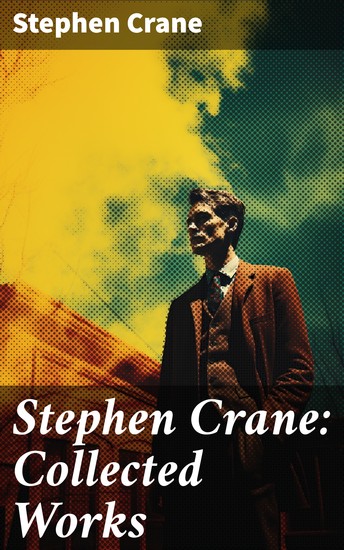
Stephen Crane: Collected Works - Enriched edition Over 200 Novels Short Stories & Poems - cover

Stephen Crane: Collected Works - Enriched edition Over 200 Novels Short Stories & Poems

Stephen Crane

Publisher: Good Press

  • 0
  • 0
  • 0

Summary

Stephen Crane: Collected Works is an essential compilation that encapsulates the profound narrative depth and stylistic innovation of one of American literature's pioneering figures. This anthology features Crane's seminal works, including The Red Badge of Courage, which explores the nature of courage and the psychological impacts of war through vivid imagery and impressionistic prose. His unique use of naturalism and symbolism situates his narratives within a broader literary context, revealing the stark realities of human existence against the backdrop of 19th-century America and its tumultuous social landscapes. Stephen Crane, born in 1871, was a journalist and novelist whose experiences in war and urban life heavily influenced his writing. Raised in a family with a strong literary background, Crane developed a distinctive voice that challenged contemporary literary conventions. His early exposure to the American Civil War's lingering effects and his ventures as a war correspondent shaped his thematic focus on existentialism, survival, and the human condition, making his works eternally relevant. This collected works not only serves as a comprehensive introduction to Crane's genius but also as a testament to his influence on modern literature. Readers seeking to immerse themselves in the complexities of human emotion and experience will find this anthology both enlightening and unforgettable.

In this enriched edition, we have carefully created added value for your reading experience:
- A comprehensive Introduction outlines these selected works' unifying features, themes, or stylistic evolutions.
- The Author Biography highlights personal milestones and literary influences that shape the entire body of writing.
- A Historical Context section situates the works in their broader era—social currents, cultural trends, and key events that underpin their creation.
- A concise Synopsis (Selection) offers an accessible overview of the included texts, helping readers navigate plotlines and main ideas without revealing critical twists.
- A unified Analysis examines recurring motifs and stylistic hallmarks across the collection, tying the stories together while spotlighting the different work's strengths.
- Reflection questions inspire deeper contemplation of the author's overarching message, inviting readers to draw connections among different texts and relate them to modern contexts.
- Lastly, our hand‐picked Memorable Quotes distill pivotal lines and turning points, serving as touchstones for the collection's central themes.
Available since: 12/28/2023.
Print length: 1872 pages.

Other books that might interest you

  • Uncle's Dream - cover

    Uncle's Dream

    Fyodor Dostoevsky

    • 0
    • 0
    • 0
    Uncle's Dream (Russian: Дядюшкин сон, Dyadyushkin son) is an 1859 novella by Russian writer Fyodor Dostoevsky. The first work of Dostoevsky after a long pause, the novella was written during the author's stay in Semipalatinsk. It was first published in the Russian magazine Russkoye Slovo (1859, No. 3).
    Show book
  • The Tattooed Leg - From their pens to your ears genius in every story - cover

    The Tattooed Leg - From their...

    John Chilton

    • 0
    • 0
    • 0
    The bookshelves of American literature are incredible collections that have gathered together centuries of very talented authors.  From this continent their fame spread and whilst among their number many are now forgotten or neglected their talents endure.  Among them is John Chilton.
    Show book
  • Mr And Mrs Dove - cover

    Mr And Mrs Dove

    Katherine Mansfield

    • 0
    • 0
    • 0
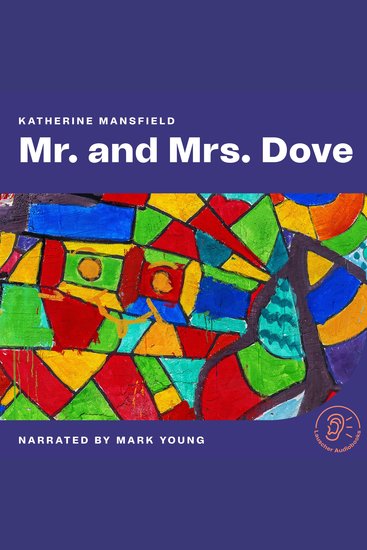
    Mr. and Mrs. Dove is a 1921 short story by Katherine Mansfield. It was first published in The Sphere on 28 November 1921, and later reprinted in The Garden Party and Other Stories.
    Reginald is returning to Rhodesia the next day; it is his last day in England. Again he thinks of Anne; then he goes to Colonel Proctor's to say goodbye, and he is greeted by Anne, her parents being away. On seeing him she laughs, then he tells her he is leaving. They both look at her pet doves. She remarks how "Mr. Dove" is always running after "Mrs. Dove". Reginald asks her if she likes him, and she says she cannot marry him. He's unhappy at the rejection, and tries to depart. She asks why he's upset, but he persists in leaving. As he's walking away, she calls him again, and he goes back to her.
    Show book
  • The Autobiography of an Ex-Colored Man - cover

    The Autobiography of an...

    James Weldon Johnson

    • 0
    • 0
    • 0
    He could choose how the world would see him—but at what cost to himself?
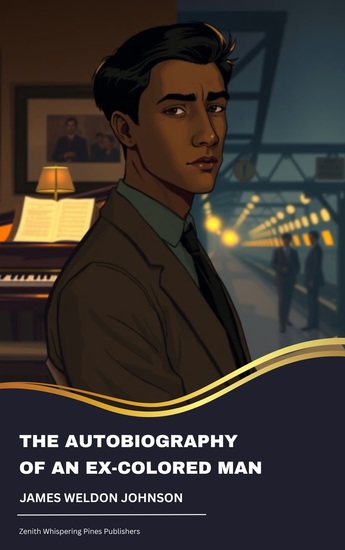
    Told as a deeply personal confession, this groundbreaking novel follows a gifted young man of mixed race as he navigates America's rigid color line. Faced with discrimination, opportunity, fear, and ambition, he ultimately makes a life-altering decision to "pass" as white—gaining security while sacrificing a vital part of his identity.
    
    Hailed as "one of the most important novels of the Harlem Renaissance," James Weldon Johnson's work is both intimate and political, exposing the psychological toll of racism and the quiet pain behind outward success. Its themes of identity, belonging, and moral compromise remain urgently relevant.
    
    If you seek literature that challenges, enlightens, and reveals the hidden costs of conformity, this essential classic will leave a lasting impression.
    
    Open the book—and confront the question of who we become when survival demands silence.
    Show book
  • Magic - From their pens to your ears genius in every story - cover

    Magic - From their pens to your...

    Mary Butts

    • 0
    • 0
    • 0
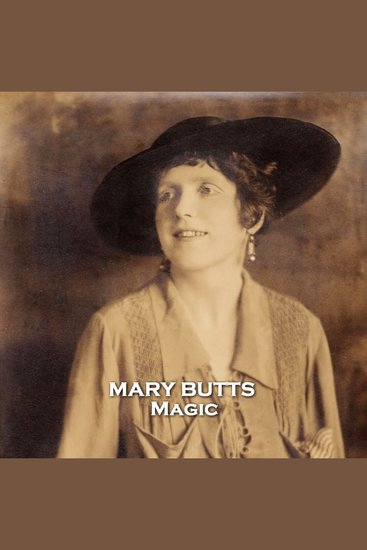
    Mary Frances Butts was born on 13th December 1890 in Poole, Dorset. 
    Her early years were spent at Salterns, an 18th-century house overlooking Poole Harbour.  Sadly in 1905 her father died, and she was sent for boarding at St Leonard's school for girls in St Andrews. 
    Her mother remarried and, from 1909, Mary studied at Westfield College in London, and here, first became aware of her bisexual feelings.  She was sent down for organising a trip to Epsom races and only completed her degree in 1914 when she graduated from the London School of Economics.  By then Mary had become an admirer of the occultist Aleister Crowley and she was given a co-authorship credit on his ‘Magick (Book 4)’. 
    In 1916, she began the diary which would now detail her future life and be a constant reference point for her observations and her absorbing experiences. 
    During World War I, she was doing social work for the London County Council in Hackney Wick, and involved in a lesbian relationship.  Life changed after meeting the modernist poet, John Rodker and they married in 1918. 
    In 1921 she spent 3 months at Aleister Crowley's Abbey of Thelema in Sicily; she found the practices dreadful and also acquired a drug habit.  Mary now spent time writing in Dorset, including her celebrated book of short stories ‘Speed the Plough’ which saw fully develop her unique Modernist prose style. 
    Europe now beckoned and several years were spent in Paris befriending many artists and writing further extraordinary stories.   
    She was continually sought after by literary magazines and also published several short story collections as books. Although a Modernist writer she worked in other genres but is essentially only known for her short stories.  Mary was deeply committed to nature conservation and wrote several pamphlets attacking the growing pollution of the countryside. 
    In 1927, she divorced and the following year her novel ‘Armed with Madness’ was published.  A further marriage followed in 1930 and time was spent attempting to settle in London and Newcastle before setting up home on the western tip of Cornwall.  By 1934 the marriage had failed. 
    Mary Butts died on 5th March 1937, at the West Cornwall Hospital, Penzance, after an operation for a perforated gastric ulcer. She was 46.
    Show book
  • The Emperor's New Clothes - cover

    The Emperor's New Clothes

    Hans Christian Andersen

    • 0
    • 0
    • 0
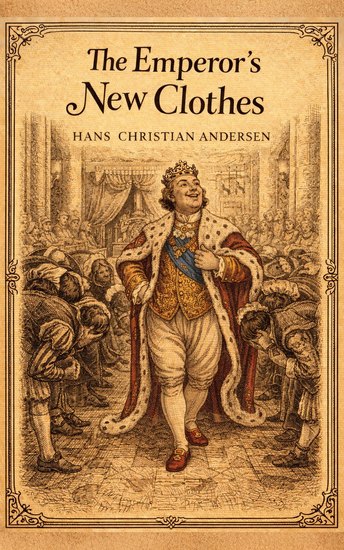
    Step into a world of vanity, deception, and surprising courage in Hans Christian Andersen's timeless classic, The Emperor's New Clothes. This beloved fairy tale tells the story of a proud and fashion-obsessed emperor who cares for little beyond his extravagant wardrobe and public image. When two cunning swindlers arrive at his court claiming they can weave the most magnificent fabric ever seen—one invisible to anyone unfit for their position or hopelessly foolish—the emperor eagerly commissions a royal suit.
    
    As the "magical" cloth is crafted, ministers and officials are sent to inspect the progress. Afraid of appearing incompetent or foolish, each one pretends to see the nonexistent fabric, praising its beauty and sophistication. The emperor himself, unwilling to admit he sees nothing, joins in the charade. Soon, the entire kingdom buzzes with admiration for a suit that does not exist.
    
    On the day of the grand procession, the emperor proudly parades through the streets wearing his "new clothes," while his subjects, equally fearful of exposing themselves as unworthy, applaud in false admiration. It is only when a small child, innocent and unafraid of judgment, speaks the simple truth—"But he isn't wearing anything at all!"—that the illusion is shattered.
    
    With humor, wit, and sharp social commentary, Andersen's tale explores themes of pride, conformity, honesty, and the power of truth. Beneath its playful storytelling lies a profound message about the dangers of vanity and the human tendency to follow the crowd rather than trust one's own judgment.
    
    The Emperor's New Clothes remains a powerful and relevant story for readers of all ages, reminding us that courage often comes from the most unexpected voices—and that sometimes, the simplest truth is the hardest to admit.
    Show book