Join us on a literary world trip!
Add this book to bookshelf
Grey
Write a new comment Default profile 50px
Grey
Subscribe to read the full book or read the first pages for free!
All characters reduced
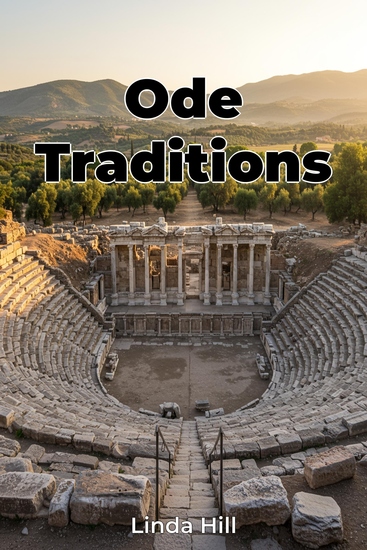
Ode Traditions - cover

Ode Traditions

Linda Hill

Translator A AI

Publisher: Publifye

  • 0
  • 0
  • 0

Summary

Ode Traditions explores the captivating journey of the ode, a poetic form that mirrors centuries of cultural values and societal shifts. From its roots in ancient Greece and Rome as formal expressions of public praise, the ode evolved into a versatile tool for personal reflection and complex social commentary. The book highlights how odes served as vehicles for expressing power dynamics and adapted across historical periods, revealing the enduring capacity to convey profound emotional and intellectual insights.

 
The book begins by establishing the foundational characteristics of the ode, then traces its development through the medieval period and the Renaissance. A significant portion of Ode Traditions analyzes the ode's flourishing in the 17th and 18th centuries, with particular attention paid to its use in celebrating national identity, commemorating historical events, and engaging in political discourse.

 
This literary history examines various odes, providing close readings and detailed analyses of their form, content, and historical significance. Offering an interdisciplinary analysis of the ode's historical development, the book is valuable to those seeking a deeper understanding of poetry's evolution and its significance as a reflection of cultural values and societal change.
Available since: 05/06/2025.
Print length: 59 pages.

Other books that might interest you

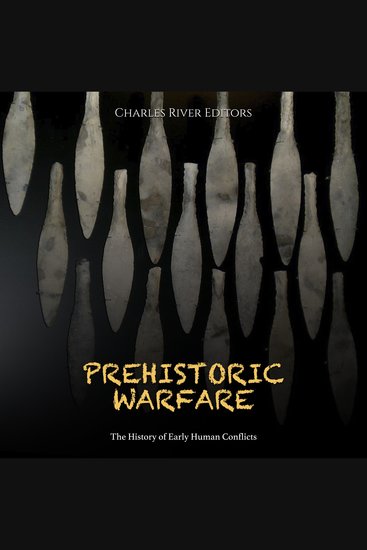
  • Prehistoric Warfare: The History of Early Human Conflicts - cover

    Prehistoric Warfare: The History...

    Editors Charles River

    • 0
    • 0
    • 0
    Raymond C. Kelly, an anthropologist and ethnologist who has written extensively on societal inequality and subsequent warfare suggests that among the hunter-gatherer groups of Homo erectus, the population density was low enough to avoid armed conflict in most cases. In the same vein, a perception has persisted that during this less populated time of Earth’s history, life among the Homo species was relatively peaceful. Archaeologists have supported this theory through early cave art, little of which ever depicts humans hunting or killing each other explicitly. Kelly theorized that the migration out of Africa by Homo erectus 1.8 million years ago was “a natural consequence of conflict avoidance.” He believes that this general period of “Paleolithic warlessness” was to persist until the appearance of Homo sapiens approximately 350,000 years ago, and that it began with the occurrence of “economic and social shifts associated with sedentism.” 
    However, depictions of humans pierced with arrows began to appear in the Aurignacian-Périgordian eras (30,000 years ago), and in the early Magdalenian era (17,000 years ago). A work of Mesolithic art (20,000 to 10,000 years ago) shows an explicit battle between groups of archers, and in Valencia, a group of three archers are seen surrounded by four of the similarly armed enemy in the Cova del Roure la Vella in Castellón. In the Ares del Maestrat in Alcañiz of Aragon, another work depicts warriors fleeing a group of eight archers, while a similar work at Val del Charco del Agua in Aragon shows seven archers with plumed headgear. Other examples show warriors in lines and columns with a “distinctly garbed leader at the front.”
    Show book
  • Patagonia: The History of the Southernmost Region in South America - cover

    Patagonia: The History of the...

    Editors Charles River

    • 0
    • 0
    • 0
    The name, "Patagonia" comes from an observation made by Ferdinand Magellan, who visited the region during his historic expedition around the world. Marveled by the height of the indigenous people, he referred to the region as a “land of giants.” Those giants were the Tehuelches, named by Magellan’s expedition as Patagones, and the chronicles of that trip, written by Antonio Pigafetta, popularized the term “Patagones,” a term that refers to their big feet (in Spanish, “patones” means "of big feet"). This description would later derive in the name Patagonia. 
    	From its discovery until the 20th century, the borders of Patagonia as well as those elements that define it as such have gone through several changes and names. The main thing for understanding its limits during the Spanish conquest is that Patagonia referred to the land south of the European area of influence. Back then, Patagonia was under control of indigenous inhabitants and, as such, outside European control or only partly influenced. It is no wonder, then, that the earliest limit was the Río de la Plata itself, where in 1536 (and again in 1580) the city of Buenos Aires was founded. Later on, the conquest of the territory, along with the work of cartographers from around the world, gave shape to the region.
    Show book
  • The Big Book of Illinois Ghost Stories - cover

    The Big Book of Illinois Ghost...

    Troy Taylor

    • 0
    • 0
    • 0
    More than 100 stories from haunted locales across the Prairie State. Compiled by Illinois's best-known author on the paranormal, Troy Taylor.
    Show book
  • The Life of Music in South India - cover

    The Life of Music in South India

    T. Sankaran

    • 0
    • 0
    • 0
    This book offers an account of Carnatic music culture drawing on the knowledge of T. Sankaran, a musician raised in an illustrious non-Brahmin devadasi family, and his long affiliation with cultural institutions including All India Radio (AIR) and the Tamil Isai Sangam (Tamil Music Academy). Sankaran examines the cultural and social matrix in which Carnatic music was cultivated and consumed in mid-twentieth century India, including the ways that musicians negotiated caste politics and the double standard for male and female musicians. The memoir provides insight into the way AIR worked as a modern, bureaucratic institution, and how the opening of government music colleges interacted with caste politics and shifted women's participation in public performance. The book is polyvocal, as Sankaran's writing is interwoven with passages from Daniel M. Neuman's book The Life of Music in North India, which inspired Sankaran's project, as well as transcripts from interviews with Sankaran by Matthew Allen. Includes rare archival photos.
    Show book
  • The Mindfulness Backpack - A Parent & Teacher Guide to Calm Emotions Boost Focus and Build Everyday Resilience for their Kids - cover

    The Mindfulness Backpack - A...

    Jules Peck

    • 0
    • 0
    • 0
    This audiobook is narrated by an AI Voice.  
    Give your child the gift of calm, focus, and everyday confidence—one mindful moment at a time. 
    The Mindfulness Backpack is a practical, engaging guide packed with ten easy-to-use tools that help kids manage emotions, build focus, and bounce back from stress. Whether it’s a meltdown before school or trouble settling at bedtime, these strategies fit right into daily routines. 
    Inside the backpack, kids will discover: 
    The Breathing Compass – a one-minute trick to reset big feelings 
    Emotion X-Ray Glasses – spot emotions before they overflow 
    Kindness Confetti – sprinkle empathy and gratitude that stick 
    Plus seven more fun, hands-on tools—each with a short story, simple steps, and a “Try It Today” activity. 
    Perfect for: 
    Kids ages 5–15 navigating anxiety, distraction, or emotional ups and downs 
    Parents, teachers, counselors, or homeschoolers 
    Anyone looking for quick, practical mindfulness—no background required 
    Backed by child psychology and written in plain English, this guide empowers children to carry calm and clarity wherever they go. 
    Click Add to Cart and help your child build lifelong inner tools—starting today.
    Show book
  • The NMLS Study Guide For The NMLS SAFE ACT Mortgage Loan Originators License Exam Prep Study Guide - cover

    The NMLS Study Guide For The...

    360 Media LLC

    • 0
    • 0
    • 0
    PASS THE NMLS SAFE ACT EXAM! 
    Are you getting ready to take the NMLS exam to become a Mortgage Loan Originator? If so, then the NMLS Exam Prep Plus app is your all in one test prep study guide designed to help you pass your exam on the first attempt. Our app includes the following features: 
    • Lessons - Get a complete review of all the critical and necessary information you’ll need to know for the NMLS SAFE exam including Federal Mortgage-Related Laws, General Mortgage Knowledge, Mortgage Loan Origination Activities, Ethics, and Uniform State Content. 
    • Vocabulary – An A to Z review of the key vocabulary terms you’ll need to know for the NMLS SAFE exam. 
    • Flash Cards – Improve your memorization of key facts, terms, and concepts with our flash cards. 
    • Practice Exam – Test your knowledge with a multiple choice exam that includes in depth explanations to each answer in order to help you understand the logic behind it. Our post exam review will help you get a better understanding of what you need to work on by allowing you to review each of the questions, answers, and explanations from the exam, or the option to review the ones marked incorrect. 
    Before you take the NMLS SAFE exam, download the app that will help you succeed on your exam! 
    NMLS is the registered trademark of the Nationwide Mortgage Licensing System & Registry. This audiobook is not endorsed by or affiliated with the Nationwide Mortgage Licensing System & Registry.
    Show book