Join us on a literary world trip!
Add this book to bookshelf
Grey
Write a new comment Default profile 50px
Grey
Subscribe to read the full book or read the first pages for free!
All characters reduced
Relationship Anarchy - Occupy Intimacy! - cover

Relationship Anarchy - Occupy Intimacy!

Juan-Carlos Pérez-Cortés

Publisher: La Oveja Roja

  • 0
  • 0
  • 0

Summary

A non-fiction best-seller that intertwines the principles of social anarchism with an extension of politics to interpersonal relationships.

This «relationship anarchy» endeavors to be a real revolution sparked from our affections, rooting not only in the long tradition of anarchism but also in contributions from the most recent sociology, anthropology, feminism, queer theory, and non-monogamous activisms. At a time when revolutionary perspectives seem to have moved beyond the horizon, the challenge of relationship anarchy is to build non-hierarchical networks of mutual care, trying to extend to intimacy the ideals that we would like to lead in society, overcoming normativity, inherited power structures, and stereotyped control mechanisms.
Available since: 01/12/2023.
Print length: 400 pages.

Other books that might interest you

  • What are we Teaching? Powerful knowledge and a capabilities curriculum - cover

    What are we Teaching? Powerful...

    Richard Bustin

    • 0
    • 1
    • 0
    Written by Richard Bustin, What are we Teaching?Powerful knowledge and a capabilities curriculum offers a fresh perspective on curriculum design, arguing that subjects are key to enabling young people to develop the powerful knowledge needed to flourish in a complex modern world. Moving ideas beyond the 'traditional vs progressive' debates that have dominated education discourse, Richard Bustin challenges the overarching emphasis on exam performance at the expense of the broader benefits of subject knowledge and capabilities such as critical and creative thinking.
    What are we Teaching? explores curriculum debates in relation to the current school climate, considering factors such as knowledge-led education, teaching to the test, and the challenge of teacher retention and recruitment issues. It includes new research involving teachers in real schools engaging with powerful knowledge, and it prompts teachers to evaluate their responsibilities as 'curriculum makers'. The book invites teachers to consider why their subject specialism is important as part of a whole school curriculum vision, and a provides language with which to articulate that.
    Part One introduces the key theories on which the book is based, including different ways of making sense of knowledge, skills and values in the curriculum, powerful knowledge and educational capabilities. What are we Teaching?is research-based, using voices of real teachers who engaged with the question 'what makes your subject powerful knowledge for young people', and Part Two, which focuses on different subject areas, examines these testimonies. The final part offers advice on building a powerful knowledge and capabilities rich curriculum in schools. Each chapter includes a set of reflective questions which can be used as part of ITE training or staff CPD.
    Essential reading for teachers, senior and subject leaders and curriculum coordinators.
    Show book
  • Fooled by the Winners - How Survivor Bias Deceives Us - cover

    Fooled by the Winners - How...

    David Lockwood

    • 0
    • 0
    • 0
    Fooled by the Winners is a book about survivor bias, the cognitive error of focusing on the winners, the successes, and the living. But in many instances, we can learn more from those who have lost, failed, or died. 


    After reading this book, you will understand how survivor bias is often used to deceive us. You will learn how to stop paying for financial services that promise more than they deliver, for health care that doesn't make us healthier, for diets that don't make us slimmer, and for advice books that don't offer good advice. You will also come away with a different view of our past, including our perilous evolutionary journey and how history has often been written by the winners. You will come to understand how we are fooled by the winners in warfare, such as in the deployment of nuclear weapons and the most famous example of survivor bias—the missing allied bombers of WWII. 


    Previous studies of survivor bias have been inaccessible to most, housed in formula-laden statistical journals. But you won't find any math or technical jargon here. Through compelling analysis and the real-life stories, this book demonstrates the deceptive influence of survivor bias in our daily lives and on our thinking.
    Show book
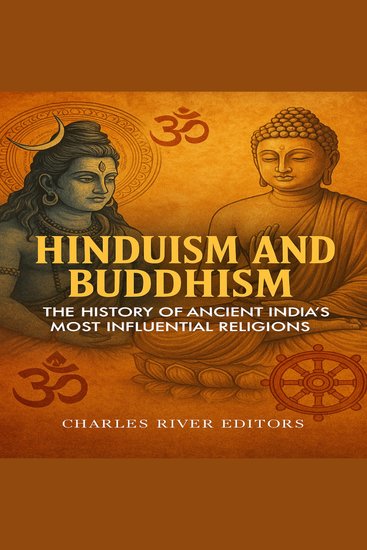
  • Hinduism and Buddhism: The History of Ancient India’s Most Influential Religions - cover

    Hinduism and Buddhism: The...

    Charles River Editors

    • 0
    • 0
    • 0
    In conjunction with the development of religions, including not just Hinduism but also Sikhism, Jainism, and Buddhism, the diverse traditions and ethnic groups that have called India home over the past 5,000 years combined to create a mythology that is as eclectic as it is interesting. Unraveling the details of India’s mythological systems is no easy task, but thankfully, hundreds of scholars who have studied Indian history have successfully translated thousands of ancient and medieval Indian texts into English and other modern Western languages. Generally speaking, Indian mythology originated from the ideas and practices of two ethnic groups, the Dravidians and the Aryans. Although the latter’s influence was more visibly dominant, the former was also integral in the development of Indian myths and Hinduism generally. It is also important to keep in mind the differences between mythology, theology, and rituals as they relate to Indian religion.  
    In the West, Buddhism is a religion that everyone has heard of but one that few truly understand aside from Buddhists themselves. For almost 2,500 years, Buddhism has been dominant on the Indian subcontinent, based on the traditions, beliefs, and practices that came about from the teachings of the Buddha (Siddhartha Gautama), the Sansrkit word for “the awakened one.” Today, three distinct branches of Buddhism have mostly fanned out across Asia, and it’s believed that upwards of half a billion people practice Buddhism today, and some of the traditional practices and principles of the religion, including the concepts of karma, reincarnation and the practice of yoga are all commonplace ideas across the world. 
    Show book
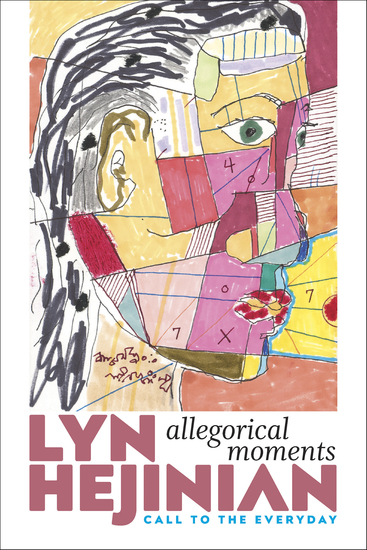
  • Allegorical Moments - Call to the Everyday - cover

    Allegorical Moments - Call to...

    Lyn Hejinian

    • 0
    • 0
    • 0
    Allegorical Moments is a set of essays dedicated to rethinking allegory and arguing for its significance as a creative and critical response to sociopolitical, environmental, and existential turmoil affecting the contemporary world. Traditionally, allegorical interpretation was intended to express an orthodoxy and support an ideology. Hejinian attempts to liberate allegory from its dogmatic usages. Presenting modern and contemporary materials ranging from the novel to poetry to painting and cinema to activist poetry of the Occupy movement, each essay in the book "begins again" with different materials and from different perspectives. Hejinian's generative scholarship looks back to experimental modernism and forward into a future for a vital, wayward poetry resistant to the crushing global effects of neoliberalism.
    Show book
  • Our Search for Belonging - How Our Need to Connect Is Tearing Us Apart - cover

    Our Search for Belonging - How...

    Howard J. Ross, JonRobert...

    • 0
    • 0
    • 0
    Why are we so divided today? Paradoxically, Howard Ross, author of Everyday Bias, says it's our compulsion to belong to a group--something hardwired into us-- that ends up making us deeply connected with some, yet deeply divided from others. Ross shows how we can overcome this growing tribalism. 
     
    We are living in a world of almost unparalleled separation. People are no longer disagreeing, but are instead disavowing each other's rights to an opinion. What is driving this polarization, and how can we overcome it? Howard Ross says that ironically it's our profound need to belong. He delves deeply into the powerful psychological, neurological, and biological forces that drive us to want to identify so strongly with a group we're sometimes even willing to sacrifice our individual identity. 
    Drawing on his decades of leadership in the diversity and inclusion field, Ross probes the depth and impact of this growing tribalism, the role social media plays in exacerbating it, the ways it impacts every aspect of the daily lives, and how to combat it.  Readers will gain tools for exploring contentious dialogue in healthier ways and guidelines for breaking down barriers and building bridges across difference, and organizations and institutions will be able to develop approaches that can open dialogue and encourage mutual understanding.
    Show book
  • Exploitation - How Inequality and the Income Gap Is Shaping the Future of Our Societies - cover

    Exploitation - How Inequality...

    Marcus Klein

    • 0
    • 0
    • 0
    Economic inequality has become one of the defining challenges of our era, shaping the trajectory of societies across the globe. The income gap between the wealthiest and the poorest continues to widen, creating a stark divide that influences not only financial security but also access to education, healthcare, and opportunities. This growing disparity raises questions about the fairness of our systems and the sustainability of our futures.  
      
    The roots of inequality are complex, intertwining historical legacies with contemporary policies and practices. In many nations, the transition from agrarian economies to industrialized and globalized markets created unprecedented wealth. However, this wealth was not evenly distributed. The rise of capitalism, technological advancements, and shifts in labor dynamics often concentrated power and resources in the hands of a few, leaving vast populations struggling to make ends meet.  
      
    The income gap is more than just an economic issue; it has profound social, political, and cultural implications. At the societal level, inequality fosters divisions, creating barriers between different classes and perpetuating cycles of poverty. Social trust diminishes as communities perceive disparities as injustices, leading to increased tension and reduced cohesion. Politically, the influence of wealth on decision-making undermines democratic ideals, allowing a small elite to shape policies that serve their interests rather than those of the broader population. 
    Show book