

Join us on a literary world trip!
Add this book to bookshelf
Grey
Write a new comment Default profile 50px
Grey
Subscribe to read the full book or read the first pages for free!
All characters reduced
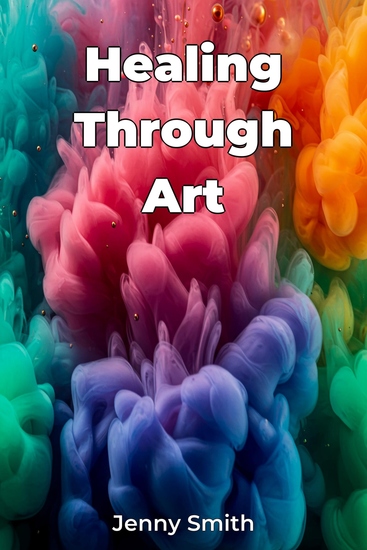
Healing Through Art - cover

Healing Through Art

Jenny Smith

Translator A AI

Publisher: Publifye

  • 0
  • 0
  • 0

Summary

Healing Through Art explores the profound connection between artistic expression and well-being, focusing on addiction recovery and emotional healing. It examines how art therapy offers unique benefits beyond traditional methods, providing a non-verbal outlet for processing difficult emotions. Did you know that art therapy's roots trace back to the mid-20th century, gaining recognition for its ability to address trauma and mental health challenges? The book emphasizes that artistic skill isn't necessary to benefit from art's therapeutic potential, making it accessible to everyone.

 
The book begins by detailing the core principles and theoretical foundations of art therapy, touching on perspectives like psychodynamic and cognitive-behavioral approaches. It then progresses through specific art modalities, such as painting and sculpting, illustrating their applications with case studies. The book highlights how creative expression can improve emotional regulation, fostering resilience and mindfulness.

 
Ultimately, this guide offers practical strategies for incorporating art-based activities into daily life, empowering both individuals and professionals.
Available since: 03/12/2025.
Print length: 80 pages.

Other books that might interest you

  • Anxiety Detox - Coping with Depression Loneliness and Panic Attacks (3 in 1) - cover

    Anxiety Detox - Coping with...

    Maria Garrets

    • 0
    • 0
    • 0
    This book consists of three titles, namely: 
    1 - Depression, also known as major depressive disorder, is a common and serious medical illness that negatively affects how a person feels, thinks, and acts. It is characterized by persistent feelings of sadness and a loss of interest in activities once enjoyed. Depression can lead to various emotional and physical problems and can decrease a person’s ability to function at work and at home. 
    2 - In an age where technology provides countless ways to connect with others, it’s paradoxical that many people are more isolated and lonely than ever. The proliferation of social media platforms, instant messaging apps, and virtual communities should, in theory, make us feel more connected. However, the opposite has often proven to be true. Instead of fostering genuine relationships, these digital connections can leave us feeling empty, misunderstood, and yearning for deeper, more authentic interactions. This phenomenon is what I call the paradox of loneliness—where the very tools designed to bring us closer together end up magnifying our sense of isolation.  
    3 - Panic attacks are sudden and intense episodes of overwhelming fear or anxiety. They can arise unexpectedly or in response to specific triggers, and typically reach their peak within minutes. During a panic attack, individuals may experience a rapid heartbeat, sweating, trembling, shortness of breath, chest pain, dizziness, and a sense of impending doom or loss of control. Other symptoms can include nausea, stomach pain, chills, or hot flashes.
    Show book
  • Wait You Need It When?!? - The Essential Guide to Time Management Productivity and Powerful Habits That Get Things Done - cover

    Wait You Need It When?!? - The...

    Peter Economy

    • 0
    • 0
    • 0
    Reclaim your time! Set priorities, stop procrastinating, and get your stuff done!While some believe that you’re either born a great time manager or you’re not, that’s not really the case at all. Anyone can learn the powerful habits of being more effective and more productive—and getting things done.Wait, You Need It When?!? is the essential guide to learning how to better manage your time, become more productive, and create the daily habits that will make this personal transformation stick in the long run—not just for a day or two. In today’s work environment, we need these habits more than ever before. Regardless of where we work—an office or traditional business establishment, at home, or at the local Starbucks—we can all benefit from applying better time management habits. Learning the abilities of self-direction and how to stay on task are long-term building blocks for any successful career.Set yourself up for success Optimize your workplace Limit outside disruptions Know the eleven habits that get things doneBased on proven approaches, the latest research, and the advice of workplace experts, Wait, You Need It When?!? will provide you with detailed and unambiguous advice on how to hone your time management skills and learn new ones. 
    Show book
  • The Seven Mountains Mandate - Exposing the Dangerous Plan to Christianize America and Destroy Democracy - cover

    The Seven Mountains Mandate -...

    Matthew Boedy

    • 0
    • 0
    • 0
    The movement to install a populist strongman in the White House with a game plan for enforcing right-wing policies and catering to evangelical Christians started well before Donald Trump's first candidacy. For decades, a well-funded network of religious and political operatives has been quietly working to dismantle democracy and replace it with Christian theocracy. Their strategy? The seven mountains mandate—a plan to seize control of seven key pillars of American society and reshape the nation: education; government; religion; family; business; media; and entertainment. 
     
    Scholar Matthew Boedy exposes how this movement laid the groundwork for Trump's presidency and is now advancing its agenda under his second administration. Discover what has motivated the key players in this movement, how they've operated, and what is the unprecedented role of millennial "kingmaker" Charlie Kirk, founder of Turning Point USA and the new face of Christian nationalism and the seven mountains movement. 
     
    With Project 2025 policies in motion, the seven mountains movement is closer than ever to its goal of turning America into a Christian nationalist state. Leaders of this movement have been playing a long game, undermining democracy to establish a theocracy, but it's not too late to halt their progress and reverse the tide.
    Show book
  • The Capture of Iwo Jima - Amphibious Operations: 16 February to 16 March 1945 - cover

    The Capture of Iwo Jima -...

    United States Navy

    • 0
    • 0
    • 0
    "The Capture of Iwo Jima: Amphibious Operations: 16 February to 16 March 1945," provides a comprehensive and detailed account of one of World War II's most pivotal and brutal battles. The book meticulously describes the planning and execution of the amphibious assault on Iwo Jima, initiated on 16 February 1945. It details the massive preparatory bombardment of the island and the challenges faced by the American forces due to the well-entrenched Japanese defenses. Concluding with the capture of the island on 16 March 1945, the book underscores the strategic significance of the battle in the broader context of the Pacific War. It also pays tribute to the extraordinary bravery and sacrifice of the American forces, particularly the Marines, who endured one of the bloodiest battles in U.S. military history.
    Show book
  • Homegrown - Guidance and Inspiration for Navigating Your Homeschooling Journey - cover

    Homegrown - Guidance and...

    Amber O'Neal Johnston

    • 0
    • 0
    • 0
    Warm and wise, grounded and liberating, Homegrown offers clarity and encouragement to homeschooling parents, asking what it means to build a life where learning and love grow side by side. 
     
    Homeschooling is the fastest-growing form of education in America, and it's here to stay. If you're a homeschool veteran, finishing up your first year, or are just homeschool curious, Homegrown is destined to become a go-to resource. 
     
    This collection of 30 original, thought-provoking pieces from a diverse group of contributors covers common questions such as 
     
    · What fuels families to educate children at home? 
    · How do relationships, culture, and vision affect the decision to homeschool? 
    · What roles do spouses, friends, extended family, and communities play in our ability to homeschool? 
    · How do culture, heritage, history, and legacy seamlessly intertwine with reading, writing, and arithmetic? 
    · Why is raising our kids this way so important, and how do we prioritize it? 
     
    Whether your aim is to nurture your child's passions, support their individual learning style, or connect with a community of like-minded families, this book will be your trusted companion every step of the way. Spanning age, race, ethnicity, political beliefs, geography, religion, family size, educational philosophy, and more, the essays in Homegrown provide parents with guidance and inspiration to kickstart or refine their homeschooling practice with creativity, connection, and confidence. 
     
    Features essays from Ainsley Arment, Sally Clarkson, Greta Eskridge, Julie Bogart, Ginny Yurich, Leslie Martino, Yvette Henry, Sonya Shafer, Leah Boden, Rea Berg, Alberta Stevens, Trisha Vuong, Susan Seay, Delina Pryce McPhaull, Erin Loechner, Richard M. Smith, Jennifer Pepito, Rachel Devenish Ford, Mandy Davis, Jason B. Esters, Elsie Iudicello, Alisha Roth, Torrie Oglesby, Erika Alicea, Brytni McNeil, Nicole Cottrell, Brenaea Fairchild, Julie Ross, Min Hwang, and editor Amber O'Neal Johnston.
    Show book
  • Ancient Rome’s Provinces: The History of the Foreign Lands Ruled by the Roman Empire in Antiquity - cover

    Ancient Rome’s Provinces: The...

    Editors Charles River

    • 0
    • 0
    • 0
    It can be argued that Roman culture was, indeed, Graeco-Roman rather than Roman. It was the Greek language that served as the lingua franca in the Eastern Empire and much of the west including Italy. Many Greek intellectuals, including Galen, were based in Rome and the Roman aristocracy more and more came to embrace Greek literature and philosophy. Homer’s epics inspired Virgil’s Aeneid and Seneca wrote in Greek. Earlier, Scipio Africanus (236 – 183 B.C.), the epitome of the Roman martial hero, studied Greek philosophy and regarded Greek culture as the benchmark against which all others had to be judged. The Roman poet and philosopher Horace studied in Athens during the Principate and, in common with many of his class, saw that city as the intellectual centre of the world. 
    In the minds of most people today, Gaul equates to modern France. However, the vast geographical area that Caesar named Gaul, in fact, was made up of a number of very distinct regions and covered, in addition to modern-day France, Belgium, Luxembourg, parts of the Netherlands, Germany, Switzerland and Northern Italy. The Romans called the northern area of the Italian peninsula, which is now part of modern Italy, Cisalpine Gaul, or Gaul on this side of the Alps. Early Romans did not even consider this region as part of Italy and repeated incursions southwards, and the sacking of Rome itself in 390 B.C., resulted in Rome taking full control of the area in 221 B.C. and thoroughly Romanizing it to the extent that even the Celtic language totally disappeared and was replaced by Latin. The region was initially a province but by the beginning of the 1st century B.C., it had become fully integrated into the Roman heartland and became an administrative region of Italy rather than a province. 
    Show book
