Join us on a literary world trip!
Add this book to bookshelf
Grey
Write a new comment Default profile 50px
Grey
Subscribe to read the full book or read the first pages for free!
All characters reduced
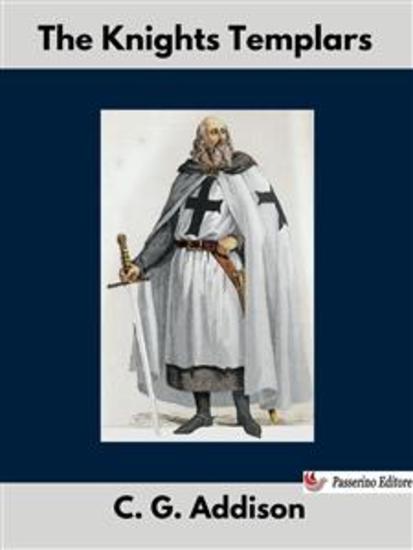
The Knights Templars - cover

The Knights Templars

G. C. Addison

Publisher: Passerino

  • 0
  • 0
  • 0

Summary

The Knights Templar were a medieval Christian military order that existed from the early 12th century until the early 14th century. They were initially formed to protect Christian pilgrims traveling to the Holy Land during the time of the Crusades. The order quickly grew in power and wealth, establishing a vast network of castles, estates, and financial infrastructure throughout Europe and the Middle East.

The Templars were recognized as a distinctive organization by the Pope in 1129 and were granted special privileges, including exemption from taxes and authority only to the Pope. They adopted a distinctive white mantle adorned with a red cross, which became their iconic symbol. The Templars followed a strict code of conduct and lived a monastic lifestyle, taking vows of poverty, chastity, and obedience.

The order became known for their military prowess and their financial and logistical abilities. They established a banking system that allowed pilgrims and crusaders to deposit money in one location and withdraw it in another, which helped to fund the Crusades. The Templars also developed an early form of international banking, becoming a trusted institution for financial transactions.

However, the order's power and wealth eventually attracted suspicion and envy. Rumors and accusations of heresy, corruption, and secrecy began to circulate. In 1307, King Philip IV of France, heavily indebted to the Templars, ordered the arrest of the order's members and the seizure of their assets. The Templars were accused of various crimes, including heresy and idolatry.

Under pressure from King Philip IV, Pope Clement V disbanded the order in 1312. Many Templars were arrested, tortured, and forced to confess to various charges. Some Templars managed to escape and went underground, while others were imprisoned or executed. The last Grand Master of the Templars, Jacques de Molay, was burned at the stake in 1314.

The Templars' legacy has endured throughout history, capturing the imagination and giving rise to numerous legends and conspiracy theories. Some modern organizations and societies claim to be the descendants or successors of the original Templar order, but these claims are largely speculative and lack historical evidence.

Today, the Knights Templar are primarily known for their role in the Crusades, their military and financial expertise, and the mystery and intrigue surrounding their downfall. They remain an important part of medieval history and continue to fascinate scholars and enthusiasts alike.
Available since: 07/06/2023.


Other books that might interest you

  • Suleiman the Magnificent: An Enthralling Guide to the Sultan Who Ruled during the Golden Age of the Ottoman Empire - cover

    Suleiman the Magnificent: An...

    Billy Wellman

    • 0
    • 0
    • 0
    Suleiman the Magnificent is regarded as the greatest ruler of the Ottoman Empire. 
    Suleiman the Magnificent certainly earned his name. He not only had a huge impact on the history of Turkey and the Middle East but also on the European politics of his day, allying himself with France against the Habsburgs of Spain. He is also known for his life-long love affair with Roxelana, a slave girl who became his wife and, some say, co-ruler of the empire. 
    The exploits of this legendary ruler come to life in this audiobook. Enjoy a thrilling story of a man who changed history and brought the Ottoman Empire to new heights. 
    In this audiobook, you will find out:Why Suleiman was a master goldsmith as well as a sultanHow he became a major patron of the arts, employing the famous architect Sinan and changing the skyline of IstanbulWhy he is known to the Turks as “Suleiman the Law Maker (Kanuni)”How close he came to taking Vienna—twice!—and why he failedHow the Ottoman Empire was run almost exclusively by former Christian slavesHow Suleiman’s faithful slave Ibrahim rose to be Grand Vizier—and how he fell from favorHow Suleiman was responsible for the execution of two of his sonsWhy Egypt was so important to the Ottoman EmpireAnd how Suleiman may have been ultimately responsible for the creation of the croissant! 
    Scroll up and click the “add to cart” button to begin learning about Suleiman today!
    Show book
  • New Welsh Review 136 (winter 2024) - East Asia - cover

    New Welsh Review 136 (winter...

    Lafcadio Hearn, Jayne Joso,...

    • 0
    • 0
    • 0
    EDITORIAL by Gwen Davies
    
    
    EAST ASIAN LITERATURE
    
    
    'The River Claims Its Debt' – Story by Phước Tiến, translated from the Vietnamese by Nguyễn An Lý
    
    'Powder to the People! The philosophy of Hokkaido capitalist ski bum, Jack Philips' – Biography/oral history by Susan Karen Burton
    
    'Hi-Mawari', the lost Welsh story of Lafcadio Hearn (alias Koizumi Yakumo) –Translated from the Japanese
    
    Jayne Joso on how Japan shapes her work
    
    
    FURTHER FICTION
    
    
    'The Banana Banshee' – Story by Deidre Brennan, translated from the Irish by the author
    
    
    REVIEW-ESSAYS
    
    
    Steven Lovatt on restoring natural and cultural ecologies in the work of Ruth Bidgood, Rae Howells and Carwyn Graves
    
    JL George on trauma and the magical child in recent novels by Lloyd Markham, Carly Holmes and Vajra Chandrasekera
    Show book
  • The Unity Blueprint - Aligning People & Purpose for Lifelong Success - cover

    The Unity Blueprint - Aligning...

    W. Jeff Williams

    • 0
    • 0
    • 0
    What if the greatest achievements in your organization, community, or life weren't dependent on your brilliance alone but on your ability to unite people around shared purpose? In The Unity Blueprint, W. Jeff Williams draws from decades of leadership experience to show how intentional unity creates extraordinary results.
    Show book
  • The Slut Inside - Part 2 - cover

    The Slut Inside - Part 2

    Mike Monsoon

    • 0
    • 0
    • 0
    It’s 22 year old Adam’s second day in London. His curiosity takes him to Hampstead Heath, where a sexual encounter is about to blow his mind in a whole new way.   
    Part 2 of an eye-opening tale of sexual adventure and how trusting our instincts can lead us to immeasurable pleasure. We are thrust in to Adam’s sexual awakening as he gives in to his needs and desires.
    Show book
  • The Norman Conquest - 1066 and Beyond - cover

    The Norman Conquest - 1066 and...

    Harris Ropes

    • 0
    • 0
    • 0
    The Norman Conquest of England in 1066 was not an isolated event but the culmination of complex political, social, and military developments. Understanding the factors that led to this momentous invasion requires an exploration of the Anglo-Saxon world, the rise of Normandy, and the political landscape that shaped the conflict. 
    By the mid-11th century, England was a prosperous but politically volatile kingdom. The Anglo-Saxon rule, established centuries earlier, had seen periods of stability and turmoil. King Edward the Confessor, who reigned from 1042 to 1066, was deeply religious but lacked a direct heir, leading to uncertainty about the kingdom’s future. His court was divided between powerful noble factions, including Earl Harold Godwinson, one of England’s most influential figures. This internal division made England vulnerable to external threats. 
    At the same time, Normandy, a powerful duchy in northern France, had been rising as a formidable force under the leadership of Duke William. The Normans, originally descended from Viking settlers, had adopted French customs, built strong political institutions, and developed an efficient military system. William, known for his ambition and strategic mind, had a close relationship with Edward the Confessor, who had supposedly promised him the English throne. However, this claim was disputed, setting the stage for conflict.
    Show book
  • Lochs and Legends: A Scotsman's Guide to the Heart of Scotland - cover

    Lochs and Legends: A Scotsman's...

    Andy the Highlander, Lilly Hurd

    • 0
    • 0
    • 0
    **THE SUNDAY TIMES BESTSELLER** 
    A Scotsman’s guide to the extraordinary tapestry of the land, history, folklore and stories of his homeland.  
    From the majestic beauty of the wild Scottish landscape to the hidden traces of its history waiting to be uncovered in every town and village, Andrew McAlindon is enthralled by the country he is lucky enough to call home. As one of Scotland’s busiest tour guides in real life and online, Andy travels around the country to ancient sites such as castles, cemeteries, burial chambers and prisons, celebrating the history, folklore, superstitions and the fascinating people that make Scotland so unique. 
    Lochs and Legends is Andy’s love letter to Scotland, a love that began when he landed a part on the worldwide phenomenon Outlander, and led to him dedicating his life to learning more about the true star of the show – Scotland. A social media sensation as Andy the Highlander, his first book opens up Scotland’s secrets to anyone, even if they can only explore it from the comfort of their armchair. It invites you to time travel with Andy, walking in the footsteps of kings and queens, lairds and ladies, murderers, farmers, poets, invading armies, and everyday folks like himself. It is Scotland as you’ve never seen it before. 
    Andy the Highlander, a popular figure in the realm of tour guides, invites you to explore the pre-historic sites of Scotland, a top destination in Britain. Discover the best of Europe's culture and history, as you delve into the legends and lochs of this extraordinary land. 
    For fans of Rick Steves (Rick Steves Snapshot Nice & the French Riviera), Sarah Brekenridge (What Not To Do), Neil Oliver (Amazing Tales for Making Men Out of Boys), Matt Haig (The Comfort Book), and Martin Dorey (Take the Slow Road). 
    HarperCollins 2024
    Show book