Join us on a literary world trip!
Add this book to bookshelf
Grey
Write a new comment Default profile 50px
Grey
Subscribe to read the full book or read the first pages for free!
All characters reduced
Mr Prokharchin - cover

Mr Prokharchin

Fyodor Dostoevsky

Publisher: Interactive Media

  • 0
  • 0
  • 0

Summary

In Mr. Prokharchin, Dostoevsky tells the story of an impoverished man who schemes to make a fortune by marrying a wealthy woman. The story is narrated by Prokharchin's friend, who tries to talk him out of the plan, warning him of the dangers of such a scheme. Despite his friend's warnings, Prokharchin goes ahead with the plan and quickly finds himself in over his head.
Available since: 06/27/2022.
Print length: 40 pages.

Other books that might interest you

  • A Wireless Message - From their pens to your ears genius in every story - cover

    A Wireless Message - From their...

    Ambrose Bierce

    • 0
    • 0
    • 0
    Ambrose Gwinnett Bierce was born on 24th June 1842 at Horse Cave Creek in Meigs County, Ohio. His parents were poor but they introduced him to literature at an early age, instilling in him a deep appreciation of books, the written word and the elegance of language.  
    Growing up in Koscuisko County, Indiana poverty and religion were defining features of his childhood, and he would later describe his parents as “unwashed savages” and fanatically religious, showing him little affection but always quick to punish. He came to resent religion, and his introduction to literature appears to be their only positive effect. 
    At age 15 Bierce left home to become a printer’s devil, mixing ink and fetching type at The Northern Indian, a small Ohio paper. Falsely accused of theft he returned to his farm and spent time sending out work in the hopes of being published. 
    His Uncle Lucius advised he be sent to the Kentucky Military Institute. A year later he was commissioned as an Officer.  As the Civil War started Bierce enlisted in the 9th Indiana Infantry Regiment.  
    In April 1862 Bierce fought at the Battle of Shiloh, an experience which, though terrifying, became the source of several short stories. Two years later he sustained a serious head wound and was off duty for several months. He was discharged in early 1865.  
    A later expedition to inspect military outposts across the Great Plains took him all the way to San Francisco. He remained there to become involved with publishing and editing and to marry, Mary Ellen on Christmas Day 1871.  They had a child, Day, the following year.  
    In 1872 the family moved to England for 3 years where he wrote for Fun magazine. His son, Leigh, was born, and first book, ‘The Fiend’s Delight’, was published.  
    They returned to San Francisco and to work for a number of papers where he gained admiration for his crime reporting. In 1887 he began a column at the William Randolph Hearst’s San Francisco Examiner.  
    Bierce’s marriage fell apart when he discovered compromising letters to his wife from a secret admirer. The following year, 1889 his son Day committed suicide, depressed by romantic rejection. 
    In 1891 Bierce wrote and published the collection of 26 short stories which included ‘An Occurrence at Owl Creek Bridge’.  Success and further works including poetry followed.  
    Bierce with Hearst’s resources helped uncover a financial plot by a railroad to turn 130 million dollars of loans into a handout. Confronted by the railroad and asked to name his price Bierce answered “my price is $130 million dollars. If, when you are ready to pay, I happen to be out of town, you may hand it over to my friend, the Treasurer of the United States”.  
    He now began his first foray as a fabulist, publishing ‘Fantastic Fables’ in 1899.  But tragedy again struck two years later when his second son Leigh died of pneumonia relating to his alcoholism.  
    He continued to write short stories and poetry and also published ‘The Devil’s Dictionary’.  
    At the age of 71, in 1913 Bierce departed from Washington, D.C., for a tour of the battlefields where he had fought during the civil war. At the city of Chihuahua he wrote his last known communication, a letter to a friend. It’s closing words were “as to me, I leave here tomorrow for an unknown destination,” Ambrose Bierce then vanished without trace.
    Show book

  • The Last Debut - From their pens to your ears genius in every story - cover

    The Last Debut - From their pens...

    Alexander Kuprin

    • 0
    • 0
    • 0
    Alexander Kuprin was born in Narovchat, Penza in Russia on 7th September 1870. 
    At 3 his Father died and he and mother moved to Moscow. By 10 he was enrolled at the Second Moscow Military High School and there his interest in literature began. The Alexander Military Academy followed and two years later he was a sub-lieutenant and posted to an Infantry Regiment for a further four years. 
    Despite his duties he was a now a keen writer and published his first short story at this time. His military duties also garnered him experiences for his breakthrough work ‘The Duel’.  Leaving the military he left for Kiev to work for local newspapers.  He continued to publish both stories and novels and by 1901 he was in St Petersburg becoming part of a group that included Chekhov, Ivan Bunin, Maxim Gorky and Leonid Andreyev.  
    In the years that followed further controversial works and acclaim followed.  His comments on the regime meant he was also put under secret police surveillance.   
    As World War I erupted, Kuprin opened a military hospital but was then given command of an infantry company in Finland. He was soon discharged on grounds of ill health.  
    The October Revolution saw him praise Lenin, but he warned that the Bolsheviks threatened Russian culture and might cause further widespread suffering to the peasants.  As Civil War raged he took his family to Helsinki and then on to Paris. 
    Exile saw his talents decline further and his succumbing to alcoholism. He became lonely and withdrawn. The family's poverty increased his malaise.   
    In May 1937, the Kuprin’s returned to Moscow.  He now saw his work published but wrote almost nothing new.  In 1938 his health rapidly deteriorated.  Already suffering from a kidney problems and sclerosis, he had now developed cancer of the oesophagus.  
    Alexander Kuprin died on 25th August 1938.
    Show book
  • Siddhartha - cover

    Siddhartha

    Hermann Hesse

    • 0
    • 0
    • 0
    Written by Hermann Hesse in 1922, Siddhartha is a timeless tale of a man’s quest for self-discovery and enlightenment. The story follows Siddhartha from youth to old age, chronicling his profound journey to understand himself and the world around him. 
    Throughout my life, I have returned to Siddhartha as a source of wisdom, discovering new insights at different stages of my own journey. This masterpiece has always been a source of inspiration, enriching my reflections on life as I seek answers to its enduring questions. 
    Life is a continuous process of growth and transformation, and Siddhartha eloquently captures this. As we navigate the myriad shades and transitions of our existence, new doors open, inviting us to explore, feel, and take the next steps on our path. 
    As a voiceover artist, it has been a great honor to narrate this enduring work. My goal in this narration was to immerse listeners in the emotional and spiritual passages of Siddhartha’s journey, guiding them through the profound themes of self-discovery, emotion, and enlightenment that continue to resonate in our contemporary world. —Lea Sakran
    Show book
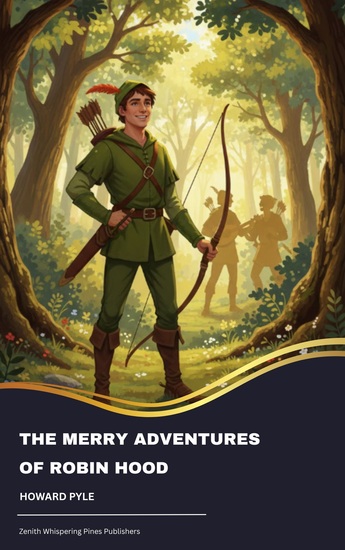
  • The Merry Adventures of Robin Hood - cover

    The Merry Adventures of Robin Hood

    Howard Pyle

    • 0
    • 0
    • 0
    An outlaw with a laughing heart. A band of loyal friends. Justice taken from the rich and given to the poor.
    In the green depths of Sherwood Forest, Robin Hood and his Merry Men outwit greedy sheriffs, protect the helpless, and live by a code of courage and generosity. From daring archery contests to clever disguises and narrow escapes, these adventures sparkle with humor, action, and timeless heroism.
    
    Celebrated as "the definitive retelling of the Robin Hood legend," Howard Pyle's beloved classic brings medieval England vividly to life. Its spirited storytelling and unforgettable characters have inspired generations of readers young and old.
    
    If you love swashbuckling adventure, noble heroes, and stories where bravery and kindness always win the day, this classic will delight you from the first page.
    
    Open the book—and ride into Sherwood Forest, where legends are born and justice wears a smile.
    Show book
  • The Island of Doctor Moreau - cover

    The Island of Doctor Moreau

    H. G. Wells

    • 0
    • 0
    • 0
    Edward Prendick finds himself floating perilously in the ocean after having been shipwrecked. He is picked up and his life saved by the curious Dr Montgomery, a medical man travelling with a cargo of various wild animals. Prendick soon finds himself once again adrift at sea after an argument with a hostile and drunken captain. 
    For a second time Montgomery appears as his saviour and he is hauled ashore on the Island of Dr Moreau, Montgomery’s mysterious colleague and mentor. 
    As he encounters some of the deformed and bestial inhabitants on the island, Prendick soon comes to realise that he has heard of this infamous Dr Moreau before. Now begins a nightmarish existence as the full truth of Moreau’s scientific ambitions become horribly apparent. 
    Head StoriesAudio presents "The Island of Dr Moreau" by H.G. Wells. Narrated by Simon Hester. With original music.
    Show book
  • The End of the Affair - cover

    The End of the Affair

    Graham Greene

    • 0
    • 7
    • 0
    Graham Greene’s masterful novel of love and betrayal in World War II London is “undeniably a major work of art” (The New Yorker).   Maurice Bendrix, a writer in Clapham during the Blitz, develops an acquaintance with Sarah Miles, the bored, beautiful wife of a dull civil servant named Henry. Maurice claims it’s to divine a character for his novel-in-progress. That’s the first deception. What he really wants is Sarah, and what Sarah needs is a man with passion. So begins a series of reckless trysts doomed by Maurice’s increasing romantic demands and Sarah’s tortured sense of guilt. Then, after Maurice miraculously survives a bombing, Sarah ends the affair—quickly, absolutely, and without explanation. It’s only when Maurice crosses paths with Sarah’s husband that he discovers the fallout of their duplicity—and it’s more unexpected than Maurice, Henry, or Sarah herself could have imagined.   Adapted for film in both 1956 and 1999, Greene’s novel of all that inspires love—and all that poisons it—is “singularly moving and beautiful” (Evelyn Waugh).
    Show book