Join us on a literary world trip!
Add this book to bookshelf
Grey
Write a new comment Default profile 50px
Grey
Subscribe to read the full book or read the first pages for free!
All characters reduced
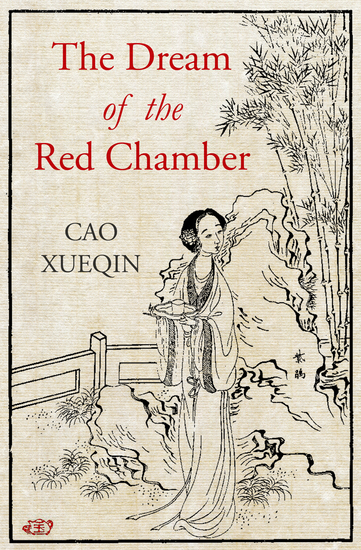
The Dream of the Red Chamber - cover

The Dream of the Red Chamber

Cao Xueqin

Publisher: Open Road Media

  • 0
  • 1
  • 0

Summary

The classic eighteenth-century saga—a masterpiece of Chinese literature— about an aristocratic family and a forbidden love during the Qing dynasty. Considered one of the four great classical novels of Chinese literature, The Dream of the Red Chamber is believed to be a semiautobiographical account of author Cao Xueqin and his aristocratic family’s rise and fall, and focuses particularly on the women in his life, including servants. Originally circulated in hand-copied manuscripts, The Dream of the Red Chamber is not only rich with psychological insight, but also enlightening in its portrayal of Chinese society during the Qing dynasty. It is an engrossing epic of imperial politics, friendship, and romantic rivalry, with an extraordinary cast of characters.
Available since: 07/28/2020.
Print length: 766 pages.

Other books that might interest you

  • Dracula - cover

    Dracula

    Bram Stoker

    • 0
    • 0
    • 0
    A POWERFUL FULL CAST DRAMATIC MARATHON  
     
    “There is a reason why all things are as they are.” 
     
    Dracula author Bram Stoker was born on November 8, 1847 in Dublin. Stoker was bedridden with an unknown illness until he started school at the age of seven when he made a complete recovery. Of this time, Stoker wrote, "I was naturally thoughtful, and the leisure of long illness gave opportunity for many thoughts which were fruitful according to their kind in later years." He was educated in a private school run by the Reverend William Woods. 
     
    Stoker visited the English coastal town of Whitby in 1890, and that visit was said to be part of the inspiration for Dracula. He began writing novels while working as the manager for London's Lyceum Theatre, beginning with The Snake's Pass in 1890 and Dracula in 1897. Stoker was part of the literary staff of The Daily Telegraph in London, and he wrote other fiction, including the horror novels The Lady of the Shroud (1909) and The Lair of the White Worm (1911). 
     
    Dracula is an epistolary novel, written as a collection of realistic but completely fictional diary entries, telegrams, letters, ship's logs, and newspaper clippings, all of which added a level of detailed realism to the story, a skill which Stoker had developed as a newspaper writer. At the time of its publication, Dracula was considered a "straightforward horror novel" based on imaginary creations of supernatural life. "It gave form to a universal fantasy and became a part of popular culture.
    Show book
  • Our Mr Wrenn - The Romantic Adventures of a Gentle Man - cover

    Our Mr Wrenn - The Romantic...

    Sinclair Lewis

    • 0
    • 0
    • 0
    Our Mr. Wrenn: The Romantic Adventures of a Gentle Man is a 1914 novel by Sinclair Lewis and the first to be published under his real name.
    Mr. Wrenn, an employee of a novelty company, quits his job after inheriting a fortune from his father. He decides to go traveling.
    Show book
  • The Black Cat - cover

    The Black Cat

    Edgar Allan Poe

    • 0
    • 0
    • 0
    Title: The Black Cat 
    Author: Edgar Allan Poe 
    Narrator: Jonathan Dunne 
    Original Publication: 1843 
    Public Domain: Yes 
    Series Placement: Number 12 in the Timeless Terrors series 
    Description: 
    The Black Cat by Edgar Allan Poe is a dark tale of guilt, madness, and the supernatural. First published in 1843 in The Saturday Evening Post, it tells the story of a man whose descent into alcoholism and cruelty leads to shocking acts of violence, culminating in a horrifying confrontation with a seemingly malevolent feline. 
    Told through the first-person perspective of the increasingly unreliable narrator, the story explores themes of conscience, obsession, and the terrifying consequences of unchecked human depravity. Poe’s mastery of psychological horror and gothic atmosphere makes this a timeless classic. 
    This recording, narrated by Amazon bestselling horror author Jonathan Dunne, brings to life the creeping tension, psychological dread, and macabre details that define Poe’s work. While the text is in the public domain, this performance is an original work and copyright © 2025 Jonathan Dunne. 
    Listeners should be prepared for a disturbing meditation on guilt, horror, and the dark impulses that lurk within the human psyche.
    Show book
  • Oroonoko - cover

    Oroonoko

    Aphra Behn

    • 0
    • 0
    • 0
    Dive into the captivating world of "Oroonoko" by Aphra Behn, now available as an enthralling audiobook. 
    In this groundbreaking work of literature, Behn tells the story of Oroonoko, a noble African prince who is tragically enslaved and transported to the colonial plantations of South America. Through Oroonoko's eyes, listeners are transported to a world of love, honor, betrayal, and ultimate sacrifice. 
    Narrated with sensitivity and depth, this audiobook brings Behn's poignant tale to life, allowing listeners to experience the full range of emotions as they journey alongside Oroonoko through his trials and tribulations. From the lush landscapes of Africa to the harsh realities of slavery, Behn's vivid prose paints a powerful portrait of the human spirit's resilience in the face of adversity. 
    With its timeless themes of love, freedom, and the inherent dignity of every individual, "Oroonoko" remains as relevant today as it was when it was first published in 1688. Whether you're a fan of historical fiction, classic literature, or simply enjoy a compelling story, this audiobook is sure to captivate and inspire. 
    So why wait? Start listening to "Oroonoko" today and embark on an unforgettable literary journey that will stay with you long after the final chapter.
    Show book
  • Les Misérables: Volume 4: The Idyll in the Rue Plumet and the Epic in the Rue St Denis - Book 1: A Few Pages of History (Unabridged) - cover

    Les Misérables: Volume 4: The...

    Victor Hugo

    • 0
    • 0
    • 0
    Victor-Marie Hugo (26 February 1802 - 22 May 1885) was a French poet, novelist, essayist, playwright, and dramatist of the Romantic movement. During a literary career that spanned more than sixty years, he wrote abundantly in an exceptional variety of genres: lyrics, satires, epics, philosophical poems, epigrams, novels, history, critical essays, political speeches, funeral orations, diaries, and letters public and private, as well as dramas in verse and prose.
    BOOK 1: A FEW PAGES OF HISTORY: 1831 and 1832, the two years which are immediately connected with the Revolution of July, form one of the most peculiar and striking moments of history. These two years rise like two mountains midway between those which precede and those which follow them.
    Show book
  • The Affair At Coulter's Creek - From their pens to your ears genius in every story - cover

    The Affair At Coulter's Creek -...

    Ambrose Bierce

    • 0
    • 0
    • 0
    Ambrose Gwinnett Bierce was born on 24th June 1842 at Horse Cave Creek in Meigs County, Ohio. His parents were poor but they introduced him to literature at an early age, instilling in him a deep appreciation of books, the written word and the elegance of language.  
    Growing up in Koscuisko County, Indiana poverty and religion were defining features of his childhood, and he would later describe his parents as “unwashed savages” and fanatically religious, showing him little affection but always quick to punish. He came to resent religion, and his introduction to literature appears to be their only positive effect. 
    At age 15 Bierce left home to become a printer’s devil, mixing ink and fetching type at The Northern Indian, a small Ohio paper. Falsely accused of theft he returned to his farm and spent time sending out work in the hopes of being published. 
    His Uncle Lucius advised he be sent to the Kentucky Military Institute. A year later he was commissioned as an Officer.  As the Civil War started Bierce enlisted in the 9th Indiana Infantry Regiment.  
    In April 1862 Bierce fought at the Battle of Shiloh, an experience which, though terrifying, became the source of several short stories. Two years later he sustained a serious head wound and was off duty for several months. He was discharged in early 1865.  
    A later expedition to inspect military outposts across the Great Plains took him all the way to San Francisco. He remained there to become involved with publishing and editing and to marry, Mary Ellen on Christmas Day 1871.  They had a child, Day, the following year.  
    In 1872 the family moved to England for 3 years where he wrote for Fun magazine. His son, Leigh, was born, and first book, ‘The Fiend’s Delight’, was published.  
    They returned to San Francisco and to work for a number of papers where he gained admiration for his crime reporting. In 1887 he began a column at the William Randolph Hearst’s San Francisco Examiner.  
    Bierce’s marriage fell apart when he discovered compromising letters to his wife from a secret admirer. The following year, 1889 his son Day committed suicide, depressed by romantic rejection. 
    In 1891 Bierce wrote and published the collection of 26 short stories which included ‘An Occurrence at Owl Creek Bridge’.  Success and further works including poetry followed.  
    Bierce with Hearst’s resources helped uncover a financial plot by a railroad to turn 130 million dollars of loans into a handout. Confronted by the railroad and asked to name his price Bierce answered “my price is $130 million dollars. If, when you are ready to pay, I happen to be out of town, you may hand it over to my friend, the Treasurer of the United States”.  
    He now began his first foray as a fabulist, publishing ‘Fantastic Fables’ in 1899.  But tragedy again struck two years later when his second son Leigh died of pneumonia relating to his alcoholism.  
    He continued to write short stories and poetry and also published ‘The Devil’s Dictionary’.  
    At the age of 71, in 1913 Bierce departed from Washington, D.C., for a tour of the battlefields where he had fought during the civil war. At the city of Chihuahua he wrote his last known communication, a letter to a friend. It’s closing words were “as to me, I leave here tomorrow for an unknown destination,” Ambrose Bierce then vanished without trace.
    Show book