Join us on a literary world trip!
Add this book to bookshelf
Grey
Write a new comment Default profile 50px
Grey
Subscribe to read the full book or read the first pages for free!
All characters reduced
Legends of the Ancient World - Odysseus - cover

Legends of the Ancient World - Odysseus

Editors Charles River

Publisher: Charles River Editors

  • 0
  • 0
  • 0

Summary

“You yellow dogs, you thought I'd never make it
 
 home from the land of Troy. You took my house to plunder,
 
 twisted my maids to serve your beds. You dared
 
 bid for my wife while I was still alive.
 
Contempt was all you had for the gods who rule wide heaven,
 
 contempt for what men say of you hereafter.
 
 Your last hour has come. You die in blood.” - Odysseus, The Odyssey
 
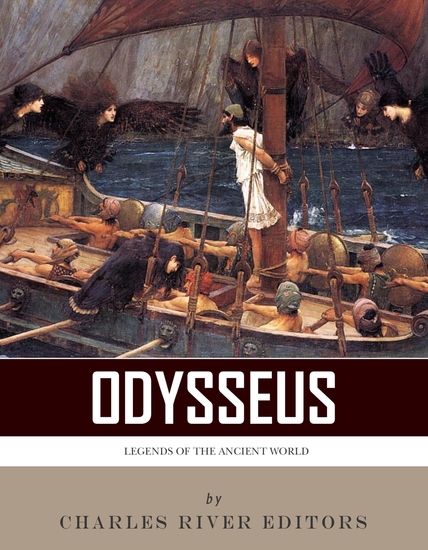
Odysseus is without question one of the most fascinating figures in classical mythology. Indeed, despite being an ancillary character in the Iliad, he was so beloved by ancient audiences that he warranted his own spinoff, the Odyssey. He was endemic throughout Greek thought and art, appearing in statues, theatrical pieces, poems and orations, and he was equally prevalent in later Roman culture. Unlike other  notable figures of classical antiquity who were forgotten during the Middle Ages (including a fair few who, unlike Odysseus himself, actually existed outside the realm of legend) Odysseus’s fame endured, and he made regular appearances in Medieval and Renaissance literature, including a memorable turn in Dante’s Inferno. To this day, Odysseus remains a highly popular character, having appeared on both the big and small screen, featuring in a slew of novels, and even making appearances in Japanese anime and video games. Characters inspired by Odysseus and his adventures are a staple of modern fiction, and locations said to match those from the Odyssey are scattered throughout the Mediterranean, particularly in Greece and Italy.
 
The true root of Odysseus’s mass appeal is that he is a figure of startling complexity. Unlike other main characters in the Epic Cycle, Odysseus does not conform to any particular archetype. While Odysseus’s defining characteristic is clearly his intelligence – he was known to the Greeks almost universally as “Cunning Odysseus” – he is no mere schemer, as he was considered also one of the bravest and most renowned warriors to fight in the Trojan War. And though depicted as a hero, he is also capable of acts of breathtaking amorality. Compared to other Greek heroes such as Ajax (all brute strength and no guile), Menelaus (filled with notions of honor and wounded dignity), or even Achilles himself (thirsty for glory at the expense of all else), Odysseus presents a far more nuanced portrait. Reluctant hero, schemer, criminal, warrior, navigator, explorer, loving (yet frequently unfaithful) husband and father, Odysseus is all this and more. Although part of this complexity may derive from the fact that the original stories adapted by Homer into the Iliad and Odyssey featured two different characters (Odysseus and Ulysses respectively), the character which has reached readers today is unique and nuanced enough to have been labeled, with reason, the first modern literary hero.
 
Legends of the Ancient World: Odysseus chronicles the legend of Odysseus’s life, comprehensively covers his role in the Iliad and Odyssey, and analyzes the literary legacy Odysseus left. Along with pictures, a bibliography and Table of Contents, you will learn about Odysseus like you never have before, in no time at all.
Available since: 05/02/2025.
Print length: 34 pages.

Other books that might interest you

  • Agatha Christie - A Very Short Introduction - cover

    Agatha Christie - A Very Short...

    Gill Plain

    • 0
    • 0
    • 0
    Agatha Christie is a global bestseller. Her work has been translated into over 100 languages and adapted for stage and screen. Christie's writing life ran from 1920 to the 1970s, and she didn't just write puzzles, she wrote plays, supernatural stories, thrillers, satires, and domestic noir. She also commented obliquely but perceptively on the social and cultural changes of a troubled century. Christie's work tells the story of a changing Britain, but perhaps her greatest achievement is not to be limited by that national context. Her stories achieve the rare feat of appearing both universal and specific and can seemingly be adapted for almost any context. 
     
    This Very Short Introduction investigates why the novels of a middle-class, middlebrow Englishwoman were so successful, and why they continue to appeal to such a broad range of readers. Chapters explore the context of Christie's writing, and the clue-puzzle detective fiction structure at which she excelled, but they also question the familiar assumptions that surround her and what we think we know about her work. Gill Plain examines Christie's capacity to register the zeitgeist, and consider how her novels reveal anxieties surrounding gender roles, the family, war, justice, ethics, and nation. Her fascination with hypocrisy, power, abuse, deceit, and despair continues to resonate with readers—and screenwriters—who respond to her light touch and dark imagination to repurpose her stories with the fears and desires most appropriate to their time.
    Show book
  • Bisexual Married Men - Stories of Relationships Acceptance and Authenticity - cover

    Bisexual Married Men - Stories...

    Robert Cohen

    • 0
    • 0
    • 0
    How much do you know about the lives of bisexual men who are married to women? Bisexual people make up a majority of the LGBT+ community, but they are still relatively hidden and misunderstood. Robert Brooks Cohen aims to address this invisibility by sharing a collection of interviews with Bi+ men who are or were married to women, helping listeners find connection, understanding, and community. 


    Their experience is often erased as "not queer enough," but these men are queer, and they are challenging societal norms in important and innovative ways. Written by the host of Two Bi Guys, this book intersperses Robert's bisexual journey with the diverse stories of other Bi+ men to help normalize sexual fluidity and create more awareness and compassion. This book shares interviews with men and a few of their wives from a wide array of cultural and regional backgrounds, religious family structures, and more, helping bisexual men find pride, validation, and joy in their sexual identity. 


    This book is written about and for bisexual and questioning men so they can see their experience represented. However, it is also for their partners, family, and friends—as well as students, researchers, clinicians with bisexual clients, and allies—so that they can better understand the unique challenges of this identity and provide meaningful support.
    Show book
  • For the Boys - The War Story of a Combat Nurse in Patton’s Third Army - cover

    For the Boys - The War Story of...

    NCR Davis

    • 0
    • 0
    • 0
    "This novelistic narrative captures both the violence and trauma of WWII and its subject’s remarkable heroism."— Publishers Weekly
    
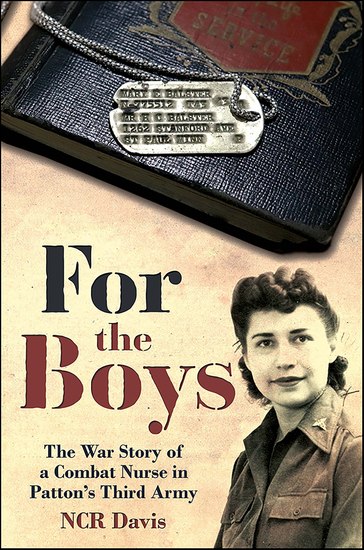
    A month after her 24th birthday, Lt. Mary Elizabeth Balster collapses among the rubble of a shelled supply room. Has the young nurse finally succumbed to the mounting emotional toll caused from months of caring for the sick and wounded just behind the front lines of General Patton’s Third Army? On the night of November 30, 1944, holed up in the Heinrich Himmler Barracks in Morhange, France, Lt. Balster’s evac receives a typical patient load (over 200 soldiers, including wounded enemy), but this time one of the admissions is a 19-year-old tanker she’d nursed back to health five months before in Normandy. The charge nurse on Surgical gently informs the lieutenant that the private is critical, admitted with two gunshot wounds and almost half his body consumed by burns. Rising determined to save him, Balster limps toward the shelled supply room determined to search for any blood plasma bottles still intact after Luftwaffe strafing.
    
    Recaptured from her mother’s reminiscences and letters home, N. C. R. Davis takes the reader through every heat-of-battle harrowing moment as Balster lived it, achieving a rare glimpse of one nurse’s point of view during the latter part of the European conflict.
    
    The book mixes Lt. Balster’s observations, memories, and dreams to re-tell the true story of a richly rebellious and intense woman trying to navigate her life and nurture her sanity while nursing the wounded and dying frontline soldiers of the Third Army. Her strong-willed, beguiling personality fosters the grit necessary for her success as a combat nurse, but these same characteristics cause two men to fall in love with her. And the personal cost of war comes to a heartrending conclusion, as she must choose one man over the other to save herself.
    Show book
  • Ancient Greece’s Most Important Islands: The History of Crete Rhodes and Sicily in Antiquity - cover

    Ancient Greece’s Most Important...

    Editors Charles River

    • 0
    • 0
    • 0
    Nearly 2,500 years after the Golden Age of Athens, people across the world today continue to be fascinated by the ancient Greeks, but who did the Ancient Greeks look up to? The answer to that question can be found in Homer’s The Odyssey, in which Odysseus makes note of “a great town there, Cnossus, where Minos reigned.” It was perhaps the earliest reference to the Minoan civilization, a mysterious ancient civilization that historians and archaeologists still puzzle over, but a civilization that renowned historian Will Durant described as "the first link in the European chain.” Nearly 2,000 years before Homer wrote his epic poems, the Minoan civilization was centered on the island of Crete, a location that required the Minoans to be a regional sea power. And indeed they were, stretching across the Aegean Sea from about 2700-1500 BCE with trade routes extending all the way to Egypt. 
    In the Archaic and Classical periods, Rhodes often stood as a prime exemplar of the highs and lows of its fellow Greek cities, and as the largest island of the Dodecanese, Rhodes’ history is largely in line with that of the rest of those islands. Rhodes would reach the zenith of its power in the Hellenistic period following the death of Alexander the Great in 323 BCE. Even as the rest of the city-states waned compared to the much larger kingdoms of Alexander’s successors in Egypt and Asia, Rhodes would come to the forefront as a main power in the Greek world, standing toe-to-toe with these Hellenistic kingdoms.  
    It was during the Classical era that, especially under the tyrants (dictators) of the Greek city of Syracuse, Sicily came the closest to being governed as a single, unified, and independent state. In time, it came to challenge the powerful trade empire of Carthage, a former Phoenician colony in North Africa, and it vied with the cities and kingdoms of mainland Greece for primacy in the Greek world.
    Show book
  • Clash at Sunday Creek: Rum Romanism & Rebellion in Corning and Rendville - cover

    Clash at Sunday Creek: Rum...

    Jobie Joseph Siemer

    • 0
    • 0
    • 0
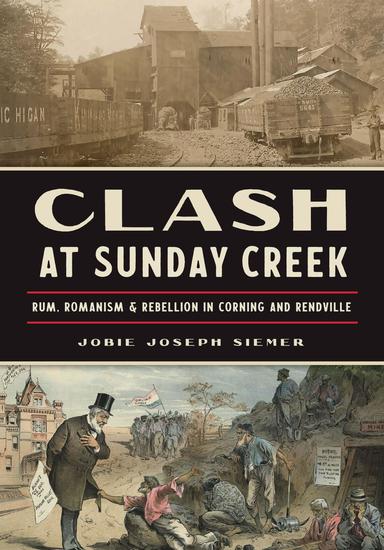
    The Tombstone of Early Ohio   Southeast Ohio's Little Cities of Black Diamonds was a rugged region in the 1800s. Nowhere was this truer than in Corning and Rendville, mining towns reminiscent of the Wild West era. Gun duels, scandals, lynchings, and murders plagued these places, as intrepid European immigrants and tenacious Black miners relied on raw grit to survive rowdy saloons and perilous coal mines. These impoverished workers also took bold stands against affluent mine operators, leading to intense clashes with the Ohio National Guard./ Author and former Green Beret Jobie Siemer reveals stories of formidable union conflicts and the unyielding resilience of miners whose faith was a beacon in a chaotic struggle to restore order to Sunday Creek./
    Show book
  • Magic and Fetishism - cover

    Magic and Fetishism

    Alfred Haddon

    • 0
    • 0
    • 0
    "Magic and Fetishism" by Alfred Haddon delves into the anthropological study of magical practices and fetishism in different cultures. Haddon explores the symbolic significance of objects, rituals, and beliefs associated with magic, shedding light on the diverse ways societies interpret and harness supernatural forces. This work contributes to the understanding of cultural diversity and the role of magical thinking in shaping human societies across the globe. Read in English, unabridged.
    Show book