
Join us on a literary world trip!
Add this book to bookshelf
Grey
Write a new comment Default profile 50px
Grey
Subscribe to read the full book or read the first pages for free!
All characters reduced
The Greatest Literary Classics Of All Time - Enriched edition 150 Books: Romeo and Juliet Emma Vanity Fair Middlemarch Tom Sawyer Faust Notre Dame de Paris… - cover

The Greatest Literary Classics Of All Time - Enriched edition 150 Books: Romeo and Juliet Emma Vanity Fair Middlemarch Tom Sawyer Faust Notre Dame de Paris…

Henry James, Edgar Allan Poe, H. P. Lovecraft, Lewis Wallace, William Shakespeare, John Milton, Jonathan Swift, Daniel Defoe, Henry Fielding, Laurence Sterne, Jane Austen, William Makepeace Thackeray, P. B. Shelley, Mary Shelley, John Keats, Charlotte Brontë, Emily Brontë, Anne Brontë, George Eliot, Charles Dickens, Thomas Hardy, Elizabeth von Arnim, D. H. Lawrence, Ann Ward Radcliffe, Bram Stoker, Arthur Conan Doyle, Joseph Conrad, Oscar Wilde, Lewis Carroll, Frances Hodgson Burnett, C. S. Lewis, George Weedon Grossmith, H. G. Wells, Wilkie Collins, G. K. Chesterton, E. M. Forster, T. S. Eliot, James Joyce, George Bernard Shaw, W. B. Yeats, Sir Walter Scott, Robert Louis Stevenson, Kenneth Grahame, George MacDonald, J. M. Barrie, Mark Twain, Jack London, Herman Melville, Nathaniel Hawthorne, Louisa May Alcott, Willa Cather, Edith Wharton, Kate Chopin, Henry David Thoreau, Walt Whitman, Kahlil Gibran, Harriet Beecher Stowe, Frederick Douglass, James Fenimore Cooper, L. M. Montgomery, Homer Homer, Plato, Apuleius, Marcus Aurelius, Johann Wolfgang von Goethe, Herman Hesse, Friedrich Nietzsche, Jules Verne, Marcel Proust, Victor Hugo, Gustave Flaubert, Gaston Leroux, Honoré de Balzac, Stendhal, Voltaire, Charles Baudelaire, Alexandre Dumas, Emile Zola, Henrik Ibsen, Leo Tolstoy, Fyodor Dostoyevsky, Ivan Turgenev, Anton Chekhov, Nikolai Gogol, Miguel de Cervantes, Benito Pérez Galdós, Pedro Calderon de la Barca, Dante, Giovanni Boccaccio, Niccolò Machiavelli, Rabindranath Tagore, Bankim Chandra Chatterjee, Kalidasa, Válmíki, Laozi Laozi, Sun Tzu, Confucius, Cao Xueqin, Princess Der Ling, Inazo Nitobé, Kakuzo Okakura, Soseki Natsume, Charlotte Perkins Gilman, F. Scott Fitzgerald, William Dean Howells, Washington Irving, L. Frank Baum, Theodor Storm, Juan Valera, Rudyard Kipling

Publisher: Musaicum Books

  • 0
  • 0
  • 0

Summary

The 'Greatest Literary Classics of All Time' is a monumental anthology that encapsulates a diverse array of profound narratives, each sculpted by distinct literary styles and epoch-defining insights. Spanning genres from epic poetry to foundational philosophical treatises, this collection showcases seminal works that have each, in their own right, shaped the contours of world literature. From the intricate psychological novels of James and the gothic horrors of Poe and Stoker, to the societal critiques of Austen and Dickens, and the existential musings of Dostoyevsky and Nietzsche, each piece stands out, contributing uniquely to this veritable mosaic of human thought and creativity. This collection draws from a wealth of literary traditions and movements, with contributors who hail from the annals of both Western and Eastern literary canons. These authors bring with them not only their geographical and cultural backgrounds but also the rich intertextuality of their eras—Renaissance humanism, the Enlightenment, Romanticism, and Modernism. The anthology thus offers a panoramic view of the cultural dialogues that have persistently influenced and propelled literary innovation and cultural discourse over centuries. 'Readers and scholars alike will find in 'The Greatest Literary Classics of All Time' an invaluable resource and a compelling invitation to delve into the rich tapestry of global literary heritage. This anthology is not merely a collection but a dialogue across time, providing an unparalleled opportunity to explore the intersections of narrative form, philosophical inquiry, and the perennial quest to understand human nature and society. For anyone seeking to comprehend the breadth and depth of literary genius, this book promises an enlightening and endlessly engaging journey.

In this enriched edition, we have carefully created added value for your reading experience:
- An Introduction draws the threads together, discussing why these diverse authors and texts belong in one collection.
- Historical Context explores the cultural and intellectual currents that shaped these works, offering insight into the shared (or contrasting) eras that influenced each writer.
- A combined Synopsis (Selection) briefly outlines the key plots or arguments of the included pieces, helping readers grasp the anthology's overall scope without giving away essential twists.
- A collective Analysis highlights common themes, stylistic variations, and significant crossovers in tone and technique, tying together writers from different backgrounds.
- Reflection questions encourage readers to compare the different voices and perspectives within the collection, fostering a richer understanding of the overarching conversation.
Available since: 12/17/2020.
Print length: 47069 pages.
Other books that might interest you

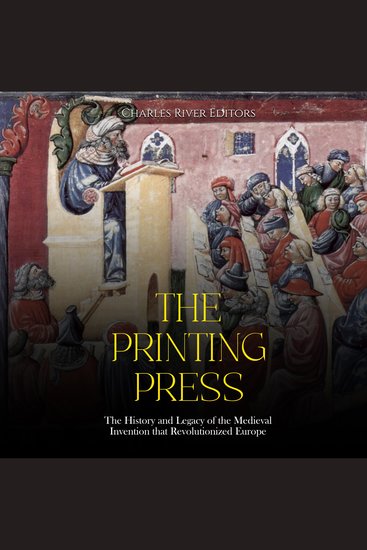
  • Printing Press The: The History and Legacy of the Medieval Invention that Revolutionized Europe - cover

    Printing Press The: The History...

    Editors Charles River

    • 0
    • 0
    • 0
    The history of printing was for ancient Asia an advancement in culture and communication, but for Europe in the 15th century, it was much more, plunging the continent into a new paradigm and aligning it for the modern world. Its importance is often overlooked, but the timeliness of the printing machine was equivalent to the invention of alphabets in antiquity and ranks up there with the digital revolution and the introduction of the internet. Put simply, it made the Renaissance possible and led to the modernization of Europe. 
    Long before the emergence of the modern world, paper was unknown in the West, and all documents were transcribed by hand onto clay, papyrus, and parchment. More importantly, few were allowed to express themselves through written media. Writing was for the most part theological in nature, reserved for scribes mostly living and working in monasteries. Books in the Middle Ages were owned almost exclusively by monasteries and educational institutions, and with reading material being such a rarity, content remained narrow and difficult to access. 
    	Based on earlier Asian principles, Johannes Gutenberg’s movable type printing press propelled an industry that led to the education of the West and ultimately removed the tight grip of the Vatican from daily European life. Within less than a century of Gutenberg’s device appearing on the scene, printing presses had churned out tens of millions of copies of books of all types, and as more people became educated, lower classes became wealthier while revolutionary principles spread across borders like wildfire. In addition to ushering in the Renaissance, the printing press also made the Reformation possible, and just as gunpowder was revolutionizing medieval warfare, the printing press led to battles over ideas and the rise of nationalism. For better and worse, after Gutenberg’s printing press became available, the world would never be the same.
    Show book
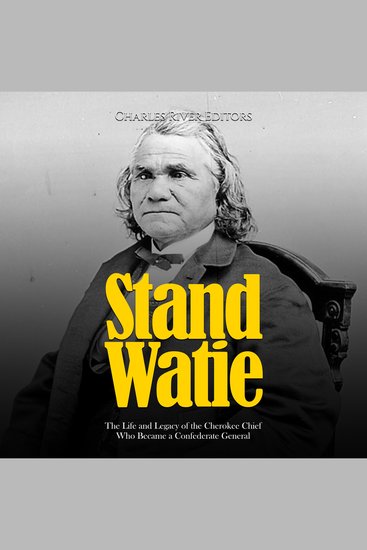
  • Stand Watie: The Life and Legacy of the Cherokee Chief Who Became a Confederate General - cover

    Stand Watie: The Life and Legacy...

    Editors Charles River

    • 0
    • 0
    • 0
    Stand Watie’s life connects the traditional Cherokee homeland in Tennessee and Georgia, the fight within the tribe over leaving for the West or staying on their homeland and trying to resist, and the Trail of Tears. At the same time, his life also includes the ongoing split between mixed-blood and full-blood Cherokee in the Cherokee Nation, and the chaos of Indian Territory during the Civil War.  
    	On the surface, Indian Territory was peaceful and fairly prosperous, but old resentments simmered under the surface. The most dangerous of these was in the Cherokee Nation. Following the Cherokee removal, the leaders of the faction of the tribe that had actually signed the Treaty of New Echota suffered violence. There had been a law that giving away Cherokee land was punishable by death, and several of the leaders who signed the treaty were murdered. Stand Watie was one of the signers, and he barely escaped, but one of his brothers was executed. 
    	The Principal Chief was John Ross. He and his faction managed to retain political control of the Cherokee tribe, but there was lasting enmity between the Watie and Ross factions of the tribe. In a broad sense, the signers of the hated treaty were mixed-blood Cherokee, and the resistance had been led by full-bloods. Stand Watie headed the mixed-blood faction and John Ross the full-blood faction. Ironically, John Ross himself was mixed-blood and Watie was a full-blood, but regardless, this tribal split had important ramifications for the Cherokee in the coming war. 
    	Like the country as a whole, the Cherokee Nation was split over the question of slavery, and with an estimated 100 slaves owned, Watie was the biggest native slaveholder in the region. At the start of the war, Watie was commissioned as a colonel in Confederate service and later as a brigadier general. His 1st Cherokee Mounted Rifles Regiment fought more engagements than any other Confederate unit west of the Mississippi River.
    Show book
  • The Rise of Rage - Harnessing the Most Misunderstood Emotion - cover

    The Rise of Rage - Harnessing...

    Julie A. Christiansen

    • 0
    • 0
    • 0
    Rage through the centuries has shown that anger can be a catalyst for change; it can also be a tool employed in fear by those resisting reform or trying to quell protests or advancements by other people. Perhaps you too have experienced the rise of rage within yourself. You might be fed up with feeling angry and not having any way to express it. But counselor and psychotherapist Julie Christiansen says that if we take time to examine the belief systems that fuel our anger, we can free ourselves from the bondage that anger puts us in, learning how to make it work for us. 


    When we map out our anger, we can learn to manage it. With a ten-step program full of practical exercises such as defining your anger style, understanding your belief systems, releasing residual anger, and more, The Rise of Rage will help you: identify the ten anger styles; develop tools for resolving anger at work; give effective feedback and criticism; listen more effectively with a view to deepening connection; enhance communication in all manner of relationships; harness the power of forgiveness and acceptance; communicate effectively with angry people. 


    Embrace this journey of self-discovery with The Rise of Rage to learn what real anger is, what real forgiveness looks like, and which safe, effective, and successful anger resolution tools work best for you.
    Show book
  • The Era of Revolution - 1775-1796 - cover

    The Era of Revolution - 1775-1796

    George Washington, Maximilien de...

    • 0
    • 0
    • 0
    Six speeches about freedom and revolution from the American, French and Irish revolutions.The first two speeches are from the American Revolutionary war (1775-1783). Patrick Henry’s “Give me Liberty or give me death” is recognized even today, two centuries since Henry spoke at the Second Virginia Convention to an audience including Thomas Jefferson and George Washington. The speech is credited with providing troops from Virginia for the revolutionary war.In the Newburgh Address, Washington and implores his army to put their faith in him. A mutiny was proposed because Congress has not paid them as promised. Washington needed to make clear to his generals that there was no option to surrender or turn away to unsettled lands, and that he was with them and on their side in the thick of both war and politics.Next is William Wilberforce’s Abolition Speech to the British parliament in 1789, the apex of a campaign that led to slavery being outlawed across the British Empire.Speeches from the French revolution then follow. First, there is the reaction from the aristocracy in England; a valediction from Edmund Burke, an MP in the British Parliament, on the beauty of Marie Antoinette and his sadness at her passing.Four speeches follow by Maximilien de Robespierre, a foundational member of the French Revolution, who laid down the political philosophy of liberty and the moral law over divinity and customary law. The speeches are filled with a passion for direct democracy and the rule of the people, not the elites.The volume ends with a more measured, but no less impassioned, address by the Irish lawyer and statesman John Curran. It was given in Curran’s defence of Archibald Rowan, who was sentenced to transportation to Australia for his treasonous activities fighting for Irish independence. While unsuccessful, this rallying cry for genuine self-determination and free speech captures the heart of the conflicts that defined the era.
    Show book
  • Beer - A Global Journey through the Past and Present - cover

    Beer - A Global Journey through...

    John W. Arthur

    • 0
    • 0
    • 0
    Beer is and has always been more than an intoxicating beverage. Its invention 13,000 years ago was one of the fundamental motivations for the domestication of grains around the world. In early states, the control over the technological knowledge and resources to produce beer contributed to social hierarchies. Beer even likely provided the capital to motivate laborers to construct the ancient pyramids and other large-scale public works. Beer is a social lubricant that brings people together and, in many Indigenous societies both past and present, is a gift connecting people to their ancestors. The same innovations pioneered by ancient brewers are transforming the types of ingredients and flavors produced by the global craft beer industry. 


    In Beer, archaeologist John W. Arthur takes listeners on an exciting global journey to explore the origins, development, and recipes of ancient beer. This unique book focuses on past and present non-industrial beers, highlighting their significance in peoples' lives through four themes: innovating new technologies, ensuring health and well-being, building economic and political statuses, and imbuing life with ritual and religious connections. As this book amply illustrates, beer has shaped our world in remarkable ways for the past 13,000 years.
    Show book
  • A History Lover's Guide to New York City - cover

    A History Lover's Guide to New...

    Alison Fortier

    • 0
    • 0
    • 0
    This guidebook to the Big Apple goes beyond the traditional tour, offering visitors a fascinating exploration of the city's rich history. 


    New York is a city of superlatives. It has the largest population, greatest wealth, broadest diversity, and most elegant museums in the nation. With that comes an amazing history that you can experience firsthand with this unique guide. 


    George Washington took his first oath of office on the steps of Federal Hall. Visitors can still dine at the famed Fraunces Tavern and worship at historic St. Paul's Chapel. From the Brooklyn Bridge to stunning skyscrapers, the city celebrates its own history and that of the nation. Join author Alison Fortier as she traces the history and heritage of America's largest metropolis.
    Show book