Join us on a literary world trip!
Add this book to bookshelf
Grey
Write a new comment Default profile 50px
Grey
Subscribe to read the full book or read the first pages for free!
All characters reduced
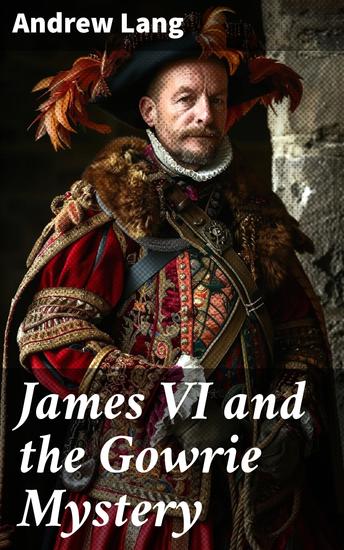
James VI and the Gowrie Mystery - Unraveling Royal Conspiracies: A Historical Dive Into Scottish Monarchy and Intrigue - cover

James VI and the Gowrie Mystery - Unraveling Royal Conspiracies: A Historical Dive Into Scottish Monarchy and Intrigue

Andrew Lang

Publisher: Good Press

  • 0
  • 0
  • 0

Summary

In "James VI and the Gowrie Mystery," Andrew Lang undertakes a rigorous investigation into one of Scotland's most perplexing historical enigmas: the 1600 incident involving the Earl of Gowrie and his brother, which culminated in their deaths and raised suspicions of conspiracy against King James VI. Lang's narrative is marked by his characteristic blend of thorough research and engaging prose, seamlessly weaving historical facts with an analysis of contemporary politics and society. The book not only brings to light the details of the incident but also situates it within the broader context of Stuart monarchy and Scottish history, contributing to the field of historical literature with its meticulous attention to archival sources and legal documents. Andrew Lang was a renowned Scottish author and critic, famously known for his works on folklore and literature. His deep-rooted interest in Scottish history and his background in classic literature shaped his investigative approach to the Gowrie Mystery. Lang's expertise as a historian is evident throughout the text, reflecting his commitment to unveiling the truth behind political machinations and societal tensions of the time. "James VI and the Gowrie Mystery" is a must-read for enthusiasts of Scottish history and political intrigue alike. Lang's compelling narrative style combined with his scholarly rigor invites readers not only to understand a pivotal moment in Scottish history but also to appreciate the complexities of governance and power dynamics in early modern Europe.
Available since: 10/04/2023.
Print length: 198 pages.
Other books that might interest you

  • A History of the United States Electric Grid - cover

    A History of the United States...

    Douglas Donovan

    • 0
    • 0
    • 0
    This audiobook is narrated by an AI Voice.   
    Did you know the device you're holding is powered by a century of innovation, battles, and brilliance? 
    "A History of the United States Electric Grid" uncovers the hidden story behind the infrastructure we take for granted. From Edison's first spark to the complexities of modern energy markets, explore the power struggles, technological leaps, and regulatory clashes that shaped America's electrical backbone. 
    Witness the "War of the Currents" between AC and DC, the rise and fall of utility empires, and the struggle to bring electricity to rural America. Discover the dark side of deregulation, the Enron scandal, and the ongoing quest to build a grid that's reliable, affordable, and sustainable. 
    But the story doesn't end there. As climate change and new technologies challenge the grid's very existence, can we learn from the past to power a brighter future? 
    Plug into the past to understand the future.
    Show book
  • How to Analyze People - Learn the Advanced Methods and Techniques of Speed Reading and Analyzing People - cover

    How to Analyze People - Learn...

    Kevin Hallstone

    • 0
    • 0
    • 0
    In this volume, our focus shifts slightly to the actual personality types; everyone should be aware of and susceptible to when they cross our paths. These are the people you probably don't want to know. 
    Why? They're people who really don't like other people. Well, they do, but what they like about people is exploiting, damaging, and controlling them. They like people for what they can do for them financially, in their careers, and in terms of their status in society. 
    We've covered some of the general personality types in Book One of our series. That information will have given you some insight into the people you meet and how to read them. But what I've saved for this volume is an examination of those who walk among us who are corrosive and psychologically compromised. Also, in this book, you'll be reading about the role of intuition in detecting the truth about situations and people and how to foster and use it to protect yourself and others from the excesses of the disorders described in this book. 
    We'll be focusing on personality disorders, the behaviors of those who are burdened with them, and how to see them coming. There are tell-tale signs early on in interactions with these people that can save you a lot of drama and chaos.  
    As you move along, you'll note an overlap between symptoms and behaviors. In the Cluster B personality disorders, we'll be looking at, the symptomatic overlap is not only common but expected. Further, those who fall under the headings in the cluster often have what is referred to as "co-morbidities." These are the double whammy types, who live with more than one personality challenge or disorder.
    Show book
  • Royal Navy Versus the Slave Traders - Enforcing Abolition at Sea 1808–1898 - cover

    Royal Navy Versus the Slave...

    Bernard Edwards

    • 0
    • 0
    • 0
    On 16 March 1807, the British Parliament passed The Abolition of the Slave Trade Act. In the following year the Royal Navy's African Squadron was formed, its mission to stop and search ships at sea suspected of carrying slaves from Africa to the Americas and the Middle East. With typical thoroughness, the Royal Navy went further, and took the fight to the enemy, sailing boldly up uncharted rivers and creeks to attack the barracoons where the slaves were assembled ready for shipment. 


    For much of its long campaign against the evil of slavery, Britain's Navy fought alone and unrecognized. Its enemies were many and formidable. Ranged against it were the African chiefs, who sold their own people into slavery, the Arabs, who rode shotgun on the slave caravans to the coast, and the slave ships of the rest of the world, heavily armed, and prepared to do battle to protect their right to traffic in the forbidden so-called "black ivory." 


    The war was long and bitter and the cost to the Royal Navy in ships and men heavy, but the result was worthy of the sacrifices made. The abolition of the slave trade led to a scramble for empires and, in place of slaves, Africa began to export cocoa, coffee, timber, palm oil, cotton and ores, all very much in demand in the West.
    Show book
  • Christopher Columbus - The Famous Explorer and His Voyages Across the Atlantic Ocean - cover

    Christopher Columbus - The...

    Kelly Mass

    • 0
    • 0
    • 0
    Christopher Columbus was an Italian navigator and explorer who made 4 explorations across the Atlantic Ocean, paving the course for European discovery and settlement of the Americas. His journeys were the first European contacts with the Caribbean, Central America, and South America, and were financed by the Catholic Monarchs of Spain. 
    Christopher Columbus is an Anglicization of “Christophorus Columbus,” a Latin name. Columbus was born in the Republic of Genoa and spoke a Ligurian dialect as his mother tongue, according to most intellectuals. He went to sea at an early age and traveled all over the world, as far north as the British Islands and as far south as Ghana. He wed Filipa Moniz Perestrelo, a Portuguese noblewoman, and resided in Lisbon for some years, but later on wed a Castilian girlfriend, with whom he had one child. Columbus, who was primarily self-taught, was skilled in geography, astronomy, and history. He created a technique to find a western sea path to the East Indies, with the objective of benefiting from the wealthy spice trade. 
    Christopher Columbus has had a huge impact on the discovery of the American continent, and is still honored and respected to this day, despite of the controversies around his behavior and interaction with the locals. Let’s see what these contradicting opinions are all about.
    Show book
  • Socialism Looks Forward - cover

    Socialism Looks Forward

    John Strachey

    • 0
    • 2
    • 0
    The author and politician analyzes the troubled state of Britain’s post–World War II political and economic systems, and proposes a solution.When World War II ended for Great Britain in 1945, MP John Strachey wondered what he and his country were going to do with the freedom they had fought for and won. The men who ran the country before the war had taken England so far down the road to disaster that it seemed almost impossible to save. To prevent history from repeating itself, changes needed to be made.In Socialism Looks Forward, Strachey shares his plan to lead Great Britain into a prosperous future in which its people are free from want. Examining both political and economic factors, he breaks down why the system in Britain was in such disrepair prior to World War II, with some of its citizens being even better off during the war. He then outlines his proposed solution—Socialism—explaining what it would be like and how Britain could make it happen. Originally published in 1945, Socialism Looks Forward provides insight into Great Britain’s political and economic history in the post–World War II era, as well as an introduction to Socialist thought.
    Show book
  • The Facilitator's Guide for White Affinity Groups - Strategies for Leading White People in an Anti-Racist Practice - cover

    The Facilitator's Guide for...

    Robin DiAngelo, Amy Burtaine

    • 0
    • 0
    • 0
    While there are a few short articles and guides addressing the challenges and complexities of leading white affinity groups, there has never been a detailed handbook exclusively for white racial affinity group facilitators. There are many challenges in facilitating these groups, including the need to have a deep theoretical understanding of racism, a high degree of racial self-awareness, sensitivity to and the ability to work with the range of skills and degrees of awareness participants bring, and strong facilitation and conflict-resolution skills. This book is the first in-depth guide for educators, mediators, workplace consultants and trainers, workplace diversity groups, community organizers, conference organizers, members of faith communities, and members of racial and social justice groups. Dr. Robin DiAngelo and Amy Burtaine, who collectively bring over twenty years of experience leading anti-racist education and racial affinity groups, present the following: · a theoretical framework for understanding racism; · a case for the value of racial affinity groups as a tool for challenging racism; · guidelines for setting up affinity groups in a variety of contexts; · the skills and perspectives needed for effective facilitation; · scenarios to illustrate common challenges; · a glossary of definitions; · exercises, discussion prompts, and assessment tools. · an extensive list of common patterns and group dynamics and how to address them This accessible guide is an important reference for anyone committed to anti-racism work.
    Show book