

Join us on a literary world trip!
Add this book to bookshelf
Grey
Write a new comment Default profile 50px
Grey
Subscribe to read the full book or read the first pages for free!
All characters reduced
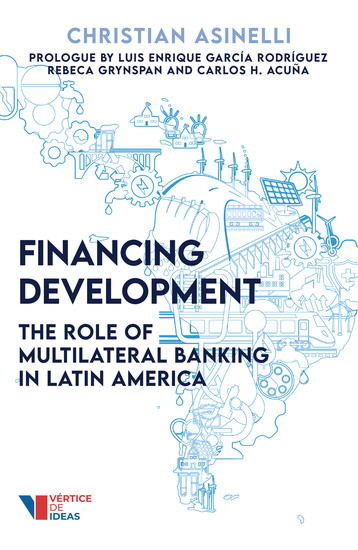
Financing Development - The Role of Multilateral Banking in Latin America - cover

Financing Development - The Role of Multilateral Banking in Latin America

Christian Asinelli

Publisher: Vértice de Ideas

  • 0
  • 0
  • 0

Summary

What is the role of development banks? What are the vested interests behind the negotiations between governments and multilateral banks to approve loans? Do development banks impose their worldviews? Does the political orientation of governments play a role? 
 
Christian Asinelli examines three multilateral institutions (IDB, World Bank and CAF, the Development Bank of Latin America) in ten Latin American countries (Argentina, Bolivia, Brazil, Chile, Colombia, Ecuador, Paraguay, Peru, Uruguay and Venezuela), the political orientation of the government (pro-State/pro-market) and the typology of the loan (investment or adjustment) in order to understand the behaviour of banks and governments when implementing projects with international financing. 
 
In order to explain the fluctuations, successes and failures of this relationship, the author draws on his first-hand knowledge of the object of study, as an official of the Argentine State and international organisations, as well as his academic training in the field of political science; in fact, the basis of the analysis presented here comes from the research for his doctoral thesis.
 
The author also adds the perspectives of Enrique García, former Executive President of CAF; Rebeca Grynspan, Secretary of the Ibero-American General Secretariat (SEGIB); and Carlos H. Acuña, an academic in the field of political science and senior researcher at CONICET.
 
This is a highly topical issue, which the crisis caused by the pandemic has brought back to the centre of academic and political debate as a problem for research and as a focus for action, and which offers us a historic opportunity to rethink the role and strategy of international financing, in order to place it at the service of the development of all the countries of the region.
Available since: 01/27/2025.
Print length: 254 pages.

Other books that might interest you

  • Tragedias de William Shakespeare - cover

    Tragedias de William Shakespeare

    William Shakespeare, Vicente...

    • 2
    • 5
    • 0
    Dos de las tragedias más importantes de Shakespeare traducidas por Vicente Molina Foix.  
    Reunimos en un estuche especial las tragediasdel escritor más importante en lengua inglesa y uno de los más célebres de la literatura universal. 
    La tragedia de Hamlet, príncipe de Dinamarca: Joven heredero con veleidades intelectuales y algo señorito, el príncipe Hamlet se enfrenta al peor de los fantasmas, el de la sucesión. Con la muerte de un padre a quien no le han unido lazos de afecto ni confianza mutua y perdido el confiado amor a su madre, Hamlet recibe una carga irrenunciable: la usurpada corona de Dinamarca. 
    La tragedia del rey Lear:El rey Lear cree que su muerte está cercana. Para aliviar su vejez y evitar futuras disputas, divide el reino entre sus hijas mayores, Goneril y Regan, y destierra a la menor, Cordelia. Desposeído de su poder, Lear es repudiado por las dos hijas elegidas y sufrirá un desvarío, físico primero, mental después. La guerra y la muerte de los miembros de la familia son un horizonte ineludible.
    Show book
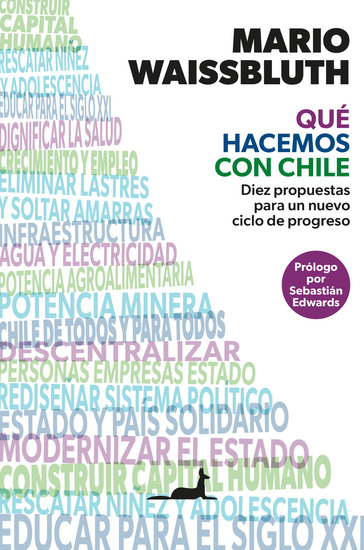
  • Qué hacemos con Chile - Diez propuestas para un nuevo ciclo de progreso - cover

    Qué hacemos con Chile - Diez...

    Mario Waissbluth

    • 1
    • 1
    • 0
    Chile enfrenta una paradoja: hemos logrado avances extraordinarios en las últimas décadas, pero el pesimismo domina el debate público. ¿Estamos realmente en crisis o hemos perdido la capacidad de vernos con claridad?
    Mario Waissbluth propone en este manifiesto un antídoto contra la parálisis: diez áreas de intervención urgente, basadas en datos y experiencia, para recuperar el optimismo y construir una visión compartida de futuro. No son sugerencias teóricas ni ejercicios académicos, sino caminos concretos para enfrentar nuestros desafíos más críticos.
    Desde rescatar a la niñez y educar para el siglo XXI, hasta eliminar la permisología que frena las inversiones y modernizar el Estado, estas propuestas están organizadas en tres pilares fundamentales: construir capital humano, reactivar el crecimiento y el empleo, y forjar un Chile verdaderamente de todos.
    Con la franqueza que lo caracteriza y el rigor de tres décadas estudiando políticas públicas, Waissbluth nos recuerda una verdad incómoda: "para hacer tortillas hay que quebrar huevos".
    Un llamado urgente a la acción para quienes creen que Chile puede —y debe— aspirar a más.
    Show book
