Join us on a literary world trip!
Add this book to bookshelf
Grey
Write a new comment Default profile 50px
Grey
Subscribe to read the full book or read the first pages for free!
All characters reduced
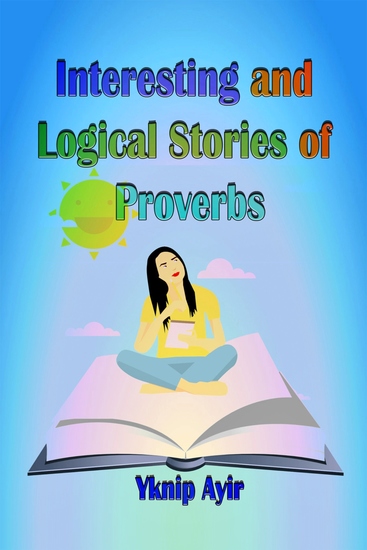
Interesting and Logical Stories of Proverbs - cover

Interesting and Logical Stories of Proverbs

Yknip Ayir

Publisher: Publishdrive

  • 0
  • 0
  • 0

Summary

Stories of Wisdom: Lessons from Proverbs is a rich collection of engaging tales inspired by timeless proverbs from around the world. Each story is carefully written to bring a proverb to life, offering readers a deeper understanding of its meaning through relatable and often thought-provoking narratives. From humorous anecdotes to profound life lessons, the book showcases the practical value of traditional wisdom in our modern lives. These stories are more than just entertainment—they serve as educational tools that encourage reflection, inspire better decision-making, and foster personal growth. Whether the proverb is widely known or a hidden gem, each story highlights how these age-old sayings remain relevant today. By connecting readers to the moral and logical core of each proverb, this book becomes both a source of enjoyment and a guide to living a more thoughtful and meaningful life.
Available since: 04/30/2025.
Print length: 300 pages.

Other books that might interest you

  • Flair - cover

    Flair

    Jeffrey Hanlon

    • 0
    • 0
    • 0
    An eclectic mix of short stories from the audacious mind of Jeffrey Hanlon, produced by Zither Studios.
    Show book
  • God Sees the Truth But Waits - From their pens to your ears genius in every story - cover

    God Sees the Truth But Waits -...

    Leo Tolstoy

    • 0
    • 0
    • 0
    Leo Tolstoy was born in 1828 in the Russian province of Tula to a wealthy noble family. As a child, he had private tutors but he showed little interest in any formal education. When he went to the University of Kazan in 1843 to study oriental languages and law, he left without completing his courses.  Life now was relaxed and idle but with some writing also taking place.  Gambling debts forced an abrupt change of path and he joined the army to fight in the Crimean War.  He was commended for his bravery and promoted but was appalled at the brutality and loss of life.  He recorded these and other earlier experiences in his diaries which formed the basis of several of his works. 
    In 1852 ‘Childhood’ was published to immediate success and was followed by ‘Boyhood’ and ‘Youth’. 
    His experience in the army and the horrors he witnessed resulted in ‘The Cossacks’ in 1862 and the trilogy ‘Sevastopol Tales’. After the war he travelled around Europe, visiting London and Paris and meeting such luminaries as Victor Hugo and Charles Darwin.  
    It was now that Tolstoy began his masterpiece, ‘War and Peace’. Published in 1869 it was an epic work that changed literature. He quickly followed this with ‘Anna Karenina’.  
    These successes made Tolstoy rich and helped him accomplish many of his dreams but also brought problems as he grappled with his faith and the lot of the oppressed poor. These revolutionary views became so popular that the authorities now kept him under surveillance.  
    He led a life of asceticism and vegetarianism and put his socialist ideals into practice by establishing numerous schools for the poor and food programmes. He also believed in giving away his wealth, which caused much discord with his wife.  
    His writing continued to bring forth classics such as ‘The Death of Ivan Ilyich’ and many brilliant and incisive short stories such as ‘How Much Land Does A Man Need’.  
    In 1901 Tolstoy was excommunicated from the Church and controversially deselected for the Nobel Prize for Literature. 
    Whilst undertaking a pilgrimage by train in October 1910 with his daughter Aleksandra he caught pneumonia in the nearby town of Astapovo.  Leo Tolstoy died on November 9th, 1910, he was 82.
    Show book
  • Top 10 Short Stories The - Eastern Europe - The top ten short stories of all time written by authors from Eastern Europe - cover

    Top 10 Short Stories The -...

    Franz Kafka, Anton Chekhov,...

    • 0
    • 0
    • 0
    The Top 10 – Eastern Europe - An Introduction 
     
    From the Central plain of Europe to the Urals, many thousands of miles away, the nations of Eastern Europe have risen to become Empires and fallen underfoot to others.  Their literary tradition has always been strong and vibrant, bold and beguiling.  Within the many cultures and societies the narrative of the human condition is told in many startling and beautiful ways. 
     
    Short stories have always been a sort of instant access into an author’s brain, their soul and heart.  A few pages can lift our lives into locations, people and experiences with a sweep of landscape, narration, feelings and emotions that is difficult to achieve elsewhere. 
     
    In this series we try to offer up tried and trusted ‘Top Tens’ across many different themes and authors. But any anthology will immediately throw up the questions – Why that story? Why that author?  
     
    The theme itself will form the boundaries for our stories which range from well-known classics, newly told, to stories that modern times have overlooked but perfectly exemplify the theme.  Throughout the volume our authors whether of instant recognition or new to you are all leviathans of literature. 
     
    Some you may disagree with but they will get you thinking; about our choices and about those you would have made.  If this volume takes you on a path to discover more of these miniature masterpieces then we have all gained something. 
     
    Some you may disagree with but they will get you thinking; about our choices and about those you would have made.  If this volume takes you on a path to discover more of these miniature masterpieces then we have all gained something. 
     
    1 - The Top Ten - Eastern Europe - An Introduction 
    2 - A Hunger Artist by Franz Kafka 
    3 - The Lady with the Dog by Anton Chekhov 
    4 - The Cloak by Nikolai Gogol also known as 'The Overcoat' 
    5 - The District Doctor by Ivan Turgenev 
    6 - The Shot by Alexander Pushkin 
    7 - A Legend of Old Egypt by Boleslaw Prus 
    8 - Hide And Seek or Pliatki by Fyodor Sologub 
    9 - Silence by Leonid Nikolaevich Andreyev 
    10 - The Bundle of Letters by Moritz Jokai 
    11 - The Chamomile Drops by Jaroslav Hasek
    Show book
  • Death at 830 - From their pens to your ears genius in every story - cover

    Death at 830 - From their pens...

    Christopher St John Sprigg

    • 0
    • 0
    • 0
    The bookshelves of British literature are incredible collections that have gathered together centuries of very talented authors.  From these Isles their fame spread and whilst among their number many are now forgotten or neglected their talents endure.  Among them is Christopher St John Sprigg.
    Show book
  • The Doorway Prince - cover

    The Doorway Prince

    Dawn Blair

    • 0
    • 0
    • 0
    The king’s advisor has a problem. The dead king left no heirs. 
    Eclipse searches for the kingdom's next ruler, but his calculations are skewed and unfocused. He doesn’t understand why he can’t get a handle on them. Worse, the royal council presses him for a decision. 
    He has only a star to assist his way through these dark times, and it lights his way to a teen, frightened, alone, and sleeping in a doorway. 
    In escorting the boy to the back to the castle, the young man is genuinely afraid of crossing through doorways. In one moment, Eclipse has a hold of him, and in the next, the teen is gone. 
    Will the star guide Eclipse across time and space, against others who also pursue the teen, to find the boy who would be king? 
    Travel the Wells of the Onesong for an epic fantasy quick read adventure by the author of The Loki Adventures.
    Show book
  • A Lickpenny Lover - From their pens to your ears genius in every story - cover

    A Lickpenny Lover - From their...

    O Henry

    • 0
    • 0
    • 0
    William Sydney Porter was born on 11th September 1862 in Greensboro, North Carolina. At age 3 his mother died from tuberculosis. From an early age it was clear Porter had a large appetite for reading as he absorbed the world around him. 
    He first attended at a school run by his aunt before enrolling at the Lindsey Street High School and then worked at his uncle’s drugstore and gained a pharmacists’ license in 1881.  
    A persistent cough took him to Texas in the hope that a change of climate would help his symptoms. He took on various types of work, initially from ranch hand and cook and then as varied as pharmacist, draftsman, bank teller and journalist. He also began to write, though for now, purely as a hobby. 
    He was a member of several singing and dramatic groups when he met 17 year old Athol Estes, daughter of a wealthy Austin family. Despite her mother’s objection owing to Athol’s tuberculosis, they began courting and in July 1887, they eloped and soon married. 
    Athol, impressed by his writing, encouraged him to get them published. A job as a draftsman at the Texas General Land Office paid a healthy $100 dollars per month and life was good. 
    But then life turned cruel. His son died a few hours after birth although a daughter, Margaret, came the following year.  His job had to be vacated but another was found at the First National Bank of Austin. The bank operated informally and Porter was careless in keeping the books. He lost that job but began writing for the humourous weekly The Rolling Stone and the Houston Post. Some time later the federal Bank auditors went through his former accounts and he was arrested on charges of embezzlement. 
    Porter fled the day before his trial to Honduras. Holed up for several months he began to write.  Athol had become too ill to travel to meet him and learning that her health was deteriorating he surrendered to the court in February 1897.  Bail was obtained so that he could stay with Athol during her final days.  
    Porter was sentenced to five years at the Ohio Penitentiary in Columbus. His pharmacy qualifications got him the job of night druggist.  His sentence also gave him time to write and publish fourteen short stories. In December 1899 in McClure’s Magazine he published a short story as O Henry.  
    He was released two years early in July 1901, and reunited with Margaret, now 11, in Pittsburgh.  He now began his most prolific period of writing; a short story per week for the New York World, while also publishing works in other magazines.  Eventually over 600 of his short stories were published. 
    Porter was a heavy drinker and in 1908 his health, which had deteriorated for several years, took a dramatic turn for the worse, as did his writing.  
    O Henry died of cirrhosis of the liver complicated by diabetes and an enlarged heart on 5th June 1910.
    Show book