Join us on a literary world trip!
Add this book to bookshelf
Grey
Write a new comment Default profile 50px
Grey
Subscribe to read the full book or read the first pages for free!
All characters reduced
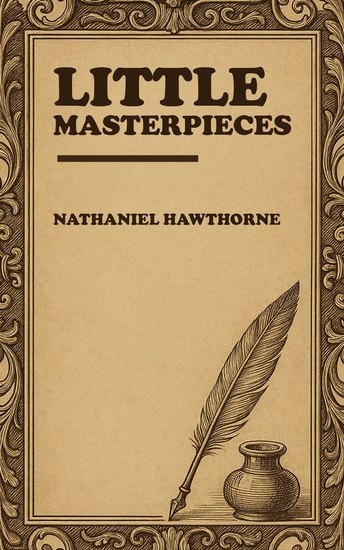
Little Masterpieces - cover

Little Masterpieces

Nathaniel Hawthorne

Publisher: CLXBX

  • 0
  • 0
  • 0

Summary

Little Masterpieces is a distinguished collection of Nathaniel Hawthorne's shorter works, bringing together some of the most memorable and finely crafted examples of his storytelling genius. This volume offers readers a rich introduction to Hawthorne's literary artistry, showcasing his ability to blend imagination, symbolism, and moral reflection within concise yet powerful narratives.

The stories in Little Masterpieces span a range of moods and themes, from quiet domestic scenes to tales infused with allegory and gentle fantasy. Hawthorne's characteristic concern with conscience, human frailty, and the unseen consequences of moral choices runs throughout the collection. Each piece, though brief, is carefully constructed to leave a lasting impression, revealing deeper truths beneath simple events and familiar settings.

Written in Hawthorne's elegant and thoughtful prose, these works exemplify the author's belief that short fiction can be as profound and emotionally resonant as a full-length novel. His mastery of atmosphere, symbolism, and psychological insight transforms everyday experiences into meaningful reflections on life, character, and morality.

Little Masterpieces is ideal for readers seeking a curated selection of Hawthorne's shorter writings, whether as an introduction to his work or a companion to his more famous novels such as The Scarlet Letter and The House of the Seven Gables. The collection is equally well suited for students, educators, and lovers of classic American literature.

Timeless in its themes and refined in its execution, Little Masterpieces stands as a testament to Nathaniel Hawthorne's enduring influence on the short story form and his ability to capture the complexities of the human spirit in even the smallest of literary gems.
Available since: 02/06/2026.
Print length: 121 pages.
Other books that might interest you

  • Buried Frozen plus You Are the Protagonist - cover

    Buried Frozen plus You Are the...

    A. J. Payler

    • 0
    • 0
    • 0
    What's buried beneath the frozen ground… will change his world forever 
    The only thing that made those seemingly unending days in prison bearable was knowing what was waiting for him on the outside, buried deep in the frozen ground where she'd sworn to leave his share of the loot. 
    And after years of isolation, all he has to do is dig it up, rejoin her, and get back to the life that's rightfully his.  
    But even the best laid plans oft go awry. And sure, they'd never claimed to be the best of the best, but still… he never could have imagined what he'd find waiting for him, cold and dark at the bottom of that hole. 
    From A. J. Payler, author of The Killing Song, Bank Error in Your Favor, and Terror Next Door comes Buried, Frozen—a story of the terror that lies at the heart of the human condition and the fear that creeps in the darkest, coldest hours of the night. 
      
    Also featuring bonus story, You Are the Protagonist (as seen in Flash in a Flash)! 
    As originally published in Dead of Winter: 13 Tales of Winter Terror (M Presents, January 31, 2024) and Flash in a Flash (May 13, 2024).
    Show book
  • The Gold-Bug - cover

    The Gold-Bug

    Edgar Allan Poe

    • 0
    • 0
    • 0
    This audiobook is narrated by an AI Voice. William Legrand has lost his fortune and retreated to a hut on Sullivan's Island off the coast of Charleston, with only his servant Jupiter for company. When he finds a strange scarab beetle of unnatural weight and colour, his friend the narrator begins to fear for his sanity. 
     
    Legrand sketches the beetle on a scrap of parchment picked up on the shore. Held near the fire, the parchment reveals a death's head, a goat, and a long string of figures and symbols where nothing had been before. It is a cipher, and Legrand is certain it leads to the buried treasure of Captain Kidd. 
     
    What follows is one of the most famous puzzles in literature: a step-by-step decipherment by letter frequency, then a night expedition inland with a spade, a tulip tree, and instructions that must be followed exactly or the whole thing fails. 
     
    First published in 1843 and an immediate popular sensation, Edgar Allan Poe's tale of ciphers and buried gold effectively invented the cryptographic puzzle story and shaped everything from Treasure Island to The Da Vinci Code. This unabridged audiobook edition presents the complete original text.
    Show book
  • The Whale - (or Moby Dick) - cover

    The Whale - (or Moby Dick)

    Herman Melville

    • 0
    • 0
    • 0
    "Moby Dick" (or "The Whale" as it was one known) is the unforgettable story of Captain Ahab’s quest to avenge the whale that ‘reaped’ his leg.  The quest and the novel is a story of how man can become blindly obsessed.  The tale is also a testament to democracy and liberation, as the ship's crew work together for a common end. 
    Ishmael, the novel’s narrator is a young, ordinary sailor learning the practice of whaling. 
    Moby Dick is one of the greatest novels ever written and a timeless classic.
    Show book
  • A Handful Of Beginnings - Collection of five short stories - cover

    A Handful Of Beginnings -...

    Abhiram Ravikumar

    • 0
    • 0
    • 0
    A Handful of Beginnings is a collection of five short stories, each with a unique theme and setting, yet all exploring different aspects of life. Each story stands out distinctly, offering a memorable, single-sitting read. 
     
    1. One Hour 
     
    2. Raymond 
     
    3. The Best 
     
    4. Beyond the Classroom 
     
    5. In the Heart of an Enchanted Forest
    Show book
  • 100 Legendary Fairy Tales of All Time - cover

    100 Legendary Fairy Tales of All...

    Hans Christian Andersen, Andrew...

    • 0
    • 0
    • 0
    Included 1. The Princess and the Pea by Hans Christian Andersen2. Little Ida's Flowers by Hans Christian Andersen3. Little Tiny or Thumbelina by Hans Christian Andersen4. The Saucy Boy by Hans Christian Andersen5. The Travelling Companion by Hans Christian Andersen6. This Fable is Intended for You by Hans Christian Andersen7. The Talisman by Hans Christian Andersen8. God Can Never Die by Hans Christian Andersen9. The Little Mermaid by Hans Christian Andersen10. The Emperor's New Suit by Hans Christian Andersen11. The Frog-King, or Iron Henry by The Brothers Grimm12. Cat and Mouse in Partnership by The Brothers Grimm13. Our Lady's Child by The Brothers Grimm14. The Story of the Youth Who Went Forth to Learn What Fear Was by The Brothers Grimm15. The Wolf and the Seven Little Kids by The Brothers Grimm16. Faithful John by The Brothers Grimm17. The Good Bargain by The Brothers Grimm18. The Strange Musician by The Brothers Grimm »19. The Twelve Brothers by The Brothers Grimm20. The Pack of Ragamuffins by The Brothers Grimm21. The Bronze Ring by Andrew Lang22. Prince Hyacinth and the Dear Little Princess by Andrew Lang23. Little Red Riding Hood by Andrew Lang24. The Sleeping Beauty in the Wood by Andrew Lang25. Beauty and the Beast by Andrew Lang26. The Water-Lily. The Gold-Spinners by Andrew Lang      27. The Terrible Head by Andrew Lang28. The History of Whittington by Andrew Lang29. Prince Darling by Andrew Lang30. The Brave Little Tailor by Andrew Lang31. The History of Jack the Giant-Killer by Andrew Lang32. The Black Bull of Norroway by Andrew Lang33. The Sleeping Beauty in the Wood by Charles Perrault34. Blue Beard by Charles Perrault35. Master Cat by Charles Perrault36. The Fairies by Charles Perrault37. Riquet with the Tuft by Charles Perrault38. Beauty and the Beast by Charles Perrault39. Princess Minute and King Floridor by Charles Perrault  by Charles Perrault40. Prince Chéri BY CHARLES PERRAULT41. Young and Handsome by Charles Perrault42. The Palace of Revenge by Charles Perrault43. East of the Sun and West of the Moon by Peter Christen Asbjørnsen, & Jørgen Moe44. The Blue Belt  by Peter Christen Asbjørnsen, & Jørgen Moe45. Prince Lindworm by Peter Christen Asbjørnsen, & Jørgen Moe46. The Lassie and Her Godmother by Peter Christen Asbjørnsen, & Jørgen Moe47. The Husband Who Was to Mind the House by Peter Christen Asbjørnsen, & Jørgen Moe48. The Lad Who Went to the North Wind by Peter Christen Asbjørnsen, & Jørgen Moe49. The Three Princesses of Whiteland by Peter Christen Asbjørnsen, & Jørgen Moe50. Soria Moria Castle by Peter Christen Asbjørnsen, & Jørgen Moe51. The Giant Who Had No Heart in His Body by Peter Christen Asbjørnsen, & Jørgen Moe 52. The Princess on the Glass Hill by Peter Christen Asbjørnsen, & Jørgen Moe53. Connla and the Fairy Maiden by Joseph Jacob54. Guleesh  by Joseph Jacob55. The Field of Boliauns  by Joseph Jacob56. The Horned Women  by Joseph Jacob57. Conall Yellowclaw  by Joseph Jacob58. Hudden and Dudden and Donald O'Neary  by Joseph Jacob59. The Shepherd of Myddvai  by Joseph Jacob60. The Sprightly Tailor  by Joseph Jacob61. The Story of Deirdre  by Joseph Jacob62. Munachar and Manachar by Joseph Jacob63. Green Willow by Grace James64. The Flute  by Grace James65. The Tea-Kettle  by Grace James66. The Peony Lantern  by Grace James67. The Sea King and the Magic Jewels  by Grace James68. The Good Thunder  by Grace James69. The Black Bowl  by Grace James70. The Star Lovers  by Grace James71. Horaizan  by Grace James72. Reflections  by Grace James73. The Young King  by Oscar Wilde74. The Birthday of the Infanta  by Oscar Wilde75. The Star-Child  by Oscar Wilde76. The Happy Prince by Oscar Wilde77. The Nightingale78. The Selfish Giant by Oscar Wilde and more...
    Show book
  • At Christmas Time - From their pens to your ears genius in every story - cover

    At Christmas Time - From their...

    Anton Chekhov

    • 0
    • 0
    • 0
    Anton Pavlovich Chekhov was born on 29th January 1860 in Taganrog, on the south coast of Russia.  
    His family life was difficult; his father was strict and over-bearing but his mother was a passionate story-teller, a subject Chekhov warmed to. As he later said; ‘our talents we got from our father, but our soul from our mother’.  
    At school Chekhov was distinctly average. At 16 his father mis-managed his finances and was declared bankrupt. His family fled to Moscow. Chekhov remained and eked out a living by various means, including writing and selling short sketches to newspapers, to finish his schooling. That completed and with a scholarship to Moscow University obtained he rejoined his family. 
    He was able to help support them by selling satirical sketches and vignettes of Russian lifestyles and gradually obtained further commissions. In 1884, he qualified as a physician and, although it earned him little, he often treated the poor for free, he was fond of saying ‘Medicine is my lawful wife, and literature is my mistress.’ 
    His own health was now an issue as he began to cough up blood, a symptom of tuberculosis.  Despite this his writing success enabled him to move the family into more comfortable accommodation.  
    Chekhov wrote over 500 short stories which included many, many classics including ‘The Kiss’ and ‘The Lady with a Dog’.  His collection ‘At Dusk’ won him the coveted Pushkin Prize when was only 26.  
    He was also a major playwright beginning with the huge success of ‘Ivanov’ in 1887.   
    In 1892 Chekhov bought a country estate north of Moscow. Here his medical skills and money helped the peasants tackle outbreaks of cholera and bouts of famine. He also built three schools, a fire station and a clinic.  It left him with less time for writing but the interactions with real people gained him detailed knowledge about the peasantry and their living conditions for his stories.  
    His most famous work, ‘The Seagull’ was received disastrously at its premiere in St Petersburg. It was later restaged in Moscow to highlight its psychological aspects and was a huge success. It led to ‘Uncle Vanya’, ‘The Three Sisters’ and ‘The Cherry Orchard’.  
    Chekhov suffered a major lung hemorrhage in 1897 while visiting Moscow. A formal diagnosis confirmed tuberculosis and the doctors ordered changes to his lifestyle.  
    Despite a dread of weddings the elusive literary bachelor quietly married the actress Olga Knipper, whom he had met at rehearsals for ‘The Seagull’, on 25th May 1901. 
    By May 1904 with his tuberculosis worsening and death imminent he set off for the German town of Badenweiler writing cheerful, witty letters to his family and assuring them his health was improving.  
    On 15th July 1904 Anton Chekhov died at Badenweiler.  He was 44.
    Show book