Join us on a literary world trip!
Add this book to bookshelf
Grey
Write a new comment Default profile 50px
Grey
Subscribe to read the full book or read the first pages for free!
All characters reduced
Silly Superstitions - cover

Silly Superstitions

Xena Mindhurst

Translator A AI

Publisher: Publifye

  • 0
  • 0
  • 0

Summary

Silly Superstitions explores the fascinating world of superstitions, examining their cultural roots and psychological influences on human behavior. Bridging social science and psychology, the book investigates why these irrational beliefs persist even in modern societies. It reveals how superstitions, such as avoiding the number 13, offer psychological comfort in times of uncertainty and create a sense of control over unpredictable events. The book also points out that many superstitions originated as pre-scientific attempts to explain the world. 

 
The text delves into the historical context of superstitions, tracing their origins across different cultures and time periods. It also explores the psychological factors behind superstitious adherence, including the need for control and confirmation bias. 

 
The book progresses systematically, starting with definitions and historical origins, followed by psychological underpinnings and social impacts. It uses diverse evidence, from historical accounts to psychological experiments, to provide a comprehensive understanding of these pervasive cultural beliefs.
Available since: 02/12/2025.
Print length: 66 pages.

Other books that might interest you

  • Imperial Japan - Expansion World War and the Rise of a Global Power - cover

    Imperial Japan - Expansion World...

    Rolf Hedger

    • 0
    • 0
    • 0
    The rise of Imperial Japan is a remarkable story of transformation and ambition. It was a journey from isolation to global power, marked by rapid modernization, industrialization, and an expanding empire. At the start of the 19th century, Japan was still a feudal society, deeply rooted in its traditional ways, with the Tokugawa shogunate governing the country in relative peace for over two centuries. However, Japan’s world would change forever when the United States, under Commodore Matthew Perry, forced the country to open its ports in 1854 after a period of strict isolation. 
    This marked the beginning of the Meiji Restoration in 1868, a pivotal event that reshaped Japan’s destiny. The Meiji Restoration was a time of intense reform, where Japan sought to modernize in order to survive and compete with the Western powers. The young Emperor Meiji played a crucial role in transforming Japan from a feudal society into a centralized, modern state. The Japanese government adopted Western methods of governance, education, and technology, while also developing a new sense of national pride and unity. The feudal system was dismantled, and Japan was rapidly industrialized, building a powerful military and a burgeoning economy. 
    The Meiji government’s aggressive modernization policies allowed Japan to catch up with the West in terms of technological and military advancements. Railroads, factories, and telegraphs quickly spread throughout the country. The education system was restructured, producing a new generation of skilled workers and intellectuals who were eager to contribute to Japan’s growing power. By the late 19th century, Japan had established a modern, strong economy capable of competing on the world stage.
    Show book
  • How to Chain a Cheater: A Woman’s Guide to Controlling the Unfaithful Male - cover

    How to Chain a Cheater: A...

    A.A. Castor

    • 0
    • 0
    • 0
    What if love isn't enough to keep him loyal? What if discipline is the only language he respects? 
    How to Chain a Cheater is not a book for the soft-hearted or the blindly forgiving. It's for the woman who's tired of begging, bleeding, and blaming herself for a man's betrayal. This brutally honest, unapologetically strategic guide exposes what no therapist will tell you: some men don't stop cheating until they're trained, tamed—or replaced. 
    In these pages, you won't find fairy tale advice. You'll find a battle plan. 
    Discover:Why men cheat even when they "love" youHow to install fear, consequence, and accountability without raising your voiceThe psychological warfare that flips the power dynamic in your favorHow to chain a cheater emotionally, financially, sexually—and spirituallyWhen to walk away, when to punish, and when to reward consistency 
    This book is your weapon. It's your shield. It's the reality check every woman needs before wasting another tear on an unfaithful man. With dark humor, razor-sharp insights, and no sugarcoating, author A.A. Castor hands women the blueprint to take control, reclaim respect, and—if you choose to stay—make him fear the price of losing you more than he craves the thrill of betrayal. 
    If you've ever whispered, "He'll change if I love him harder," this book will scream back: 
    "He'll only change when it costs him more to lose you than to keep you."
    Show book
  • Sasanian Empire - Ancient Mysteries of the Persians Made Known - cover

    Sasanian Empire - Ancient...

    Kelly Mass

    • 0
    • 0
    • 0
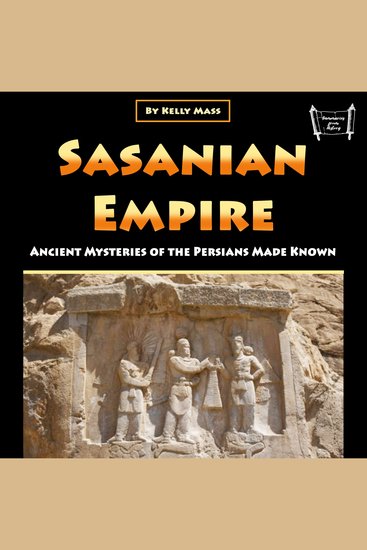
    The Sasanian Empire, often referred to by historians as the Neo-Persian Empire, was the last significant Iranian empire before the Muslim invasions of the 7th and 8th centuries AD. Named after the House of Sasan, this empire lasted nearly four centuries, from 224 to 651 AD, making it the longest-lived Persian imperial dynasty. The Sasanian Empire emerged during late antiquity, succeeding the Parthian Empire and re-establishing Persian prominence in the region, rivaling the Roman Empire (later known as the Byzantine Empire after 395 AD). 
    Ardashir I, an Iranian prince, founded the Sasanian Empire following the decline of Parthia, which was weakened by internal strife and pressures from Rome. After defeating the last Parthian king, Artabanus IV, at the Battle of Hormozdgan in 224, Ardashir set out to restore the glory of the Achaemenid Empire by expanding Iran's territories. Under the Sasanian rule, the empire stretched from the eastern Mediterranean, including Anatolia and Egypt, to parts of modern-day Pakistan. It also extended across southern Arabia, the Caucasus, and Central Asia. According to mythology, the Derafsh Kaviani served as the vexilloid of the Sasanian Empire. 
    The Sasanian period was marked by significant advancements in culture, architecture, and religion. Zoroastrianism became the state religion, shaping the empire's identity and influencing its governance. The Sasanians promoted a rich cultural life, characterized by advancements in art, science, and philosophy. They established grand cities with impressive architecture, including palaces, fire temples, and public spaces that highlighted their achievements.
    Show book
  • The Rise of Fragmentation - A New Economic Security Era? - cover

    The Rise of Fragmentation - A...

    Alessandro Gili, Filippo Fasulo

    • 0
    • 0
    • 0
    Multiple crises have shaken the foundations of the global economy, and the resulting instability has yet to recover. Instead, it has led to increasing fragmentation along political and ideological lines. The current geoeconomic order is increasingly defined by the use of advanced trade defense and economic security tools, such as tariffs, trade barriers, sanctions, and export restrictions, which have become more sophisticated. Major economies are adapting to this new reality by shaping their own definitions of economic security, particularly to safeguard critical and high-tech sectors. The EU, the US, and China are each calibrating their economic security strategies, seeking a balance between openness and protection that maximizes their respective advantages. However, in this shifting international landscape, new actors are emerging with the potential to influence the global balance of power.
    What type of "new globalization" is emerging? Could economic security tools become the new normal in the global economy? What are the key economic security strategies adopted by the world's leading economies?
    Show book
  • The Creative Self - Beyond Individualism - cover

    The Creative Self - Beyond...

    Mari Ruti, Gail M. Newman

    • 0
    • 0
    • 0
    "Be the best you can be!" Practically from the moment we are born, we are taught to optimize our lives—to devote ourselves to increasing our productivity and efficiency, which, we are told, will make us happier and more successful. The imperative of constant self-improvement, however, drains us dry even as it promises to build us up. 


    The Creative Self delves into the hegemony of neoliberal self-optimization and turns to psychoanalysis in search of an alternative. In paired chapters, Mari Ruti and Gail M. Newman examine the works of the psychoanalysts Marion Milner and Donald W. Winnicott. They provide deeply personal accounts of how these thinkers resonate with day-to-day life, exploring modes of selfhood that subtly but profoundly resist the lure and escape the trap of competitive individualism. Milner urges us to relinquish the ego in the face of loss and lack, and Winnicott asks us to accept the paradoxes of the self instead of demanding their resolution. Together, their insights help us flourish where neoliberal self-improvement would stifle us. Combining the intellectual, the personal, and the political from two perspectives that converge and diverge in striking ways, this book offers an antidote to transactional individualism and envisions forms of creative living beyond its confines.
    Show book
  • Race and Entertainment - Reflections on Racism in Film TV and the Media - cover

    Race and Entertainment -...

    Thandi Lubimbi

    • 0
    • 0
    • 0
    As a screenwriter you always want to have characters with real depth and authenticity, but too often Black characters fall victim to superficial tropes and negative stereotyping. 


    This book begins by asking the listener if they can write a Black character. It then asks the reader questions about their knowledge and understanding of race and racism. Exploring the popular representation of law and order, healthcare and celebrity in the entertainment industry, and comparing this with the reality of these institutions throughout history and today, Lubimbi opens up the discussion and offers solutions to problems surrounding race, representation, and stereotyping. 


    Part analysis and part workbook, Race and Entertainment: Reflections on Racism in Film, TV and the Media will help screenwriters and creative professionals to understand the social construct of racism and how it affects the Black experience, in order for them to be able to write an authentic Black character.
    Show book