Join us on a literary world trip!
Add this book to bookshelf
Grey
Write a new comment Default profile 50px
Grey
Subscribe to read the full book or read the first pages for free!
All characters reduced
Hugs And Hormones - cover

Hugs And Hormones

Xena Mindhurst

Publisher: Publifye

  • 0
  • 0
  • 0

Summary

"Hugs and Hormones" explores the fascinating intersection of physical touch and human biology, revealing how something as simple as a hug profoundly impacts our brain chemistry and overall health. This comprehensive work demonstrates that physical affection isn't just a social nicety but a biological necessity, supported by decades of research in neurobiology and behavioral endocrinology.

 
The book skillfully explains how touch triggers complex hormonal cascades, particularly involving oxytocin, which influence everything from stress reduction to immune system function. The narrative progresses logically through three main sections, beginning with the evolutionary origins of human touch and social grooming behaviors. It then delves into the intricate neurochemistry of physical contact, mapping out hormone systems and their interactions, before concluding with practical applications in healthcare, education, and personal relationships.

 
Through clear explanations and evidence-based research, readers discover how regular physical affection serves as a crucial biological regulator for maintaining both psychological and physiological balance. What sets this book apart is its ability to bridge the gap between complex neurobiological concepts and everyday experience, making it valuable for both professionals and general readers interested in human development and brain chemistry.

 
The work synthesizes findings from multiple disciplines, including evolutionary psychology and neurochemistry, while maintaining scientific rigor and accessibility. It offers practical insights for improving personal relationships and professional practices, all while acknowledging cultural variations in how physical affection is expressed and received.
Available since: 01/12/2025.
Print length: 117 pages.

Other books that might interest you

  • Vaccine Nation - America’s Changing Relationship with Immunization - cover

    Vaccine Nation - America’s...

    Elena Conis

    • 0
    • 0
    • 0
    With employers offering free flu shots and pharmacies expanding into one-stop shops to prevent everything from shingles to tetanus, vaccines are ubiquitous in contemporary life. The past fifty years have witnessed an enormous upsurge in vaccines and immunization in the United States: American children now receive more vaccines than any previous generation, and laws requiring their immunization against a litany of diseases are standard. Yet, while vaccination rates have soared and cases of preventable infections have plummeted, an increasingly vocal cross section of Americans have questioned the safety and necessity of vaccines. In Vaccine Nation, Elena Conis explores this complicated history and its consequences for personal and public health. 
    Vaccine Nation opens in the 1960s, when government scientists—triumphant following successes combating polio and smallpox—considered how the country might deploy new vaccines against what they called the “milder” diseases, including measles, mumps, and rubella. In the years that followed, Conis reveals, vaccines fundamentally changed how medical professionals, policy administrators, and ordinary Americans came to perceive the diseases they were designed to prevent. She brings this history up to the present with an insightful look at the past decade’s controversy over the implementation of the Gardasil vaccine for HPV, which sparked extensive debate because of its focus on adolescent girls and young women. Through this and other examples, Conis demonstrates how the acceptance of vaccines and vaccination policies has been as contingent on political and social concerns as on scientific findings. 
    By setting the complex story of American vaccination within the country’s broader history, Vaccine Nation goes beyond the simple story of the triumph of science over disease and provides a new and perceptive account of the role of politics and social forces in medicine.
    Show book
  • Stop Drinking Alcohol Addiction Sleep Hypnosis Meditation - cover

    Stop Drinking Alcohol Addiction...

    Harmooni

    • 0
    • 0
    • 0
    Are you tired of the grip that alcohol has on your life? Does the struggle to quit drinking seem insurmountable, leaving you longing for a life free from the chains of addiction? Can you envision a future where you wake up clear-headed, reinvigorated, and in control of your choices? The path to breaking free from alcohol addiction begins with the Stop Drinking Alcohol Addiction Sleep Hypnosis Meditation. 
    Imagine drifting into a deep, restorative sleep, leaving behind the cravings and dependencies that have held you captive. This remarkable audio book is expertly designed to guide you into a state of profound relaxation, helping you rewire your mind and break the cycle of alcohol addiction. Through powerful hypnosis and transformative meditations, you'll find the strength to regain your life. 
    Bid farewell to the chaos, health risks, and emotional turmoil that alcohol addiction brings and welcome a future of sobriety, health, and clarity. This audio book isn't just a guide; it's your roadmap to lasting freedom from alcohol's hold. 
    As you embark on this life-changing journey, you'll gain the tools to overcome cravings, find healthier coping mechanisms, and embrace a life filled with purpose and fulfillment. Say hello to a life where you're in control of your destiny, health, and well-being. 
    The Stop Drinking Alcohol Addiction Sleep Hypnosis Meditation is your trusted companion on the path to sobriety. Don't let alcohol control your life any longer – take the first step toward a future of lasting recovery tonight.
    Show book
  • Mastering OpenCV with Python - Use NumPy Scikit TensorFlow and Matplotlib to learn Advanced algorithms for Machine Learning through a set of Practical Projects - cover

    Mastering OpenCV with Python -...

    Ayush Vaishya

    • 0
    • 0
    • 0
    Unlocking Visual Insights: OpenCV Made Simple and Powerful. 


    ???Book Description
    "Mastering OpenCV with Python" immerses you in the captivating realm of computer vision, with a structured approach that equips you with the knowledge and skills essential for success in this rapidly evolving field. 


    From grasping the fundamental concepts of image processing and OpenCV to mastering advanced techniques such as neural networks and object detection, you will gain a comprehensive understanding. Each chapter is enriched with hands-on exercises and real-world projects, ensuring the acquisition of practical skills that can be immediately applied in your professional journey. 


    This book not only elevates your technical proficiency but also prepares you for a rewarding career. The technological job landscape is constantly evolving, and professionals who can harness the potential of computer vision are in high demand. 


    By mastering the skills and insights contained within these pages, you will be well-prepared to explore exciting career opportunities, ranging from machine learning engineering to computer vision research. This book is your ticket to a future filled with innovation and professional advancement within the dynamic world of computer vision. 


    Table of Contents
    
    1. Introduction to Computer Vision
    2. Getting Started with Images
    3. Image Processing Fundamentals
    4. Image Operations
    5. Image Histograms
    6. Image Segmentation
    7. Edges and Contours
    8. Machine Learning with Images
    9. Advanced Computer Vision Algorithms
    10. Neural Networks
    11. Object Detection Using OpenCV
    12. Projects Using OpenCV   
    Index
    Show book
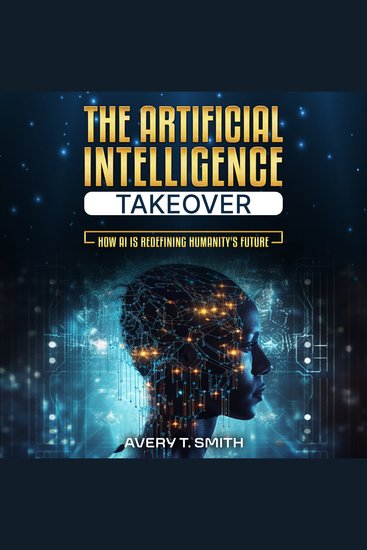
  • The Artificial Intelligence Takeover - How AI is Redefining Humanity's Future - cover

    The Artificial Intelligence...

    Avery T. Smith

    • 0
    • 0
    • 0
    Dive deep into the transformative world of artificial intelligence with "The Artificial Intelligence Takeover." This book is more than just a guide—it's a journey through the intricate tapestry of AI, woven with history, innovation, and a touch of speculation. From its humble beginnings to its monumental impact on our daily lives, AI is not just a technological marvel; it's a testament to human ingenuity. 
    Explore the myriad ways AI intersects with sectors as diverse as healthcare, the arts, and space exploration. But this exploration doesn't stop at marveling at AI's capabilities. It delves deep into the heart of pressing debates: Can AI truly replicate human creativity? What are the implications of an omnipresent surveillance system powered by AI? And where does humanity fit in a world increasingly influenced by algorithms? 
    With a blend of meticulous research and engaging narrative, this book breaks down complex AI concepts, making them accessible to both novices and tech enthusiasts. It celebrates the potential of AI while also cautioning against its unchecked growth. As AI continues to shape our future, this book stands as a lighthouse, illuminating both the promises and the challenges of this technological frontier. 
    AI's future is unfolding before our eyes, and its trajectory is intertwined with our choices and understanding. "The Artificial Intelligence Takeover" is your compass in this evolving landscape, guiding you to a future where technology and humanity coexist in harmony.
    Show book
  • Drift Into Failure - From Hunting Broken Components to Understanding Complex Systems - cover

    Drift Into Failure - From...

    Sidney Dekker

    • 0
    • 0
    • 0
    What does the collapse of sub-prime lending have in common with a broken jackscrew in an airliner’s tailplane? Or the oil spill disaster in the Gulf of Mexico with the burn-up of Space Shuttle Columbia? These were systems that drifted into failure. While pursuing success in a dynamic, complex environment with limited resources and multiple goal conflicts, a succession of small, everyday decisions eventually produced breakdowns on a massive scale. We have trouble grasping the complexity and normality that gives rise to such large events. We hunt for broken parts, fixable properties, people we can hold accountable. Our analyses of complex system breakdowns remain depressingly linear, depressingly componential - imprisoned in the space of ideas once defined by Newton and Descartes. The growth of complexity in society has outpaced our understanding of how complex systems work and fail. Our technologies have gotten ahead of our theories. We are able to build things - deep-sea oil rigs, jackscrews, collateralized debt obligations - whose properties we understand in isolation. But in competitive, regulated societies, their connections proliferate, their interactions and interdependencies multiply, their complexities mushroom. This book explores complexity theory and systems thinking to understand better how complex systems drift into failure. It studies sensitive dependence on initial conditions, unruly technology, tipping points, diversity - and finds that failure emerges opportunistically, non-randomly, from the very webs of relationships that breed success and that are supposed to protect organizations from disaster. It develops a vocabulary that allows us to harness complexity and find new ways of managing drift.
    Show book
  • Dao De Jing - cover

    Dao De Jing

    Lao Laozi

    • 0
    • 0
    • 0
    The Dao De Jing exists on the border between poetry and philosophy, embracing both mythos and logos. Its poetic form can stand alone, but it is enriched when its timeless ideas are analyzed and explained through careful scholarship. For example: “He who knows others is knowledgeable. He who knows himself is wise.” These words resemble Socrates’ account of his own quest in Plato’s Apology.
     
    Ancient philosophy, both in China and in Greece, places self-­‐ knowledge at the center of the search for wisdom. Contemporary philosophers are often misled about this way of thinking, because the self has been detached from external things and separated from nature and society. The wisdom of China and of Europe unites human existence and nature.
    Show book