Join us on a literary world trip!
Add this book to bookshelf
Grey
Write a new comment Default profile 50px
Grey
Subscribe to read the full book or read the first pages for free!
All characters reduced
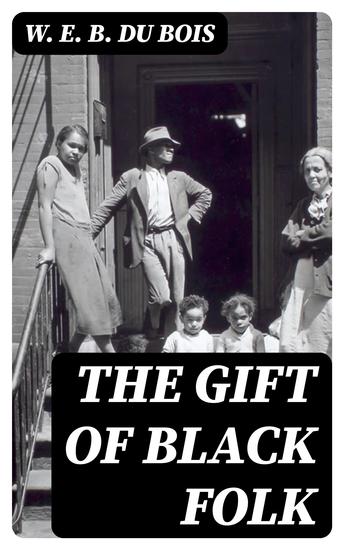
The Gift of Black Folk - cover

The Gift of Black Folk

W. E. B. DuBois

Publisher: DigiCat

  • 0
  • 0
  • 0

Summary

In "The Gift of Black Folk," W. E. B. Du Bois crafts a compelling exploration of the contributions of African Americans to American culture and civilization. Written in a lyrical yet scholarly style, Du Bois artfully weaves personal narrative, historical analysis, and sociological insight, positioning Black folk not merely as victims of oppression but as vital agents of culture and progress. The literary context of the book reflects the early 20th-century discourse on race and identity, challenging prevailing narratives and highlighting the resilience, creativity, and strength found in the African American experience. W. E. B. Du Bois, a prominent intellectual, historian, and civil rights activist, drew upon his own experiences to pen this evocative work. Educated at Fisk University and later at Harvard, Du Bois profoundly understood the systemic racism facing Black Americans. His commitment to social justice and advocacy for equality, established through his founding role in the NAACP and his involvement in the Pan-African movement, lends credibility and urgency to his exploration of the diverse talents and heritage of Black Americans. This book is a must-read for anyone seeking to understand the rich tapestry of American history through the lens of African American contributions. Du Bois's incisive prose invites readers to reconsider the narratives surrounding race and encourages a deeper appreciation for the cultural gifts of Black folk, urging all to acknowledge their influence in shaping a more inclusive society.
Available since: 10/11/2022.
Print length: 191 pages.

Other books that might interest you

  • Dropping the Baby and Other Scary Thoughts - Breaking the Cycle of Unwanted Thoughts in Parenthood 2nd Edition - cover

    Dropping the Baby and Other...

    Karen Kleiman, Abby Adler...

    • 0
    • 0
    • 0
    This accessible guide addresses the nature of the intrusive and unwanted thoughts that can be common in new parenthood, and offers practical answers and advice on how to tackle these. 


    With fresh material focusing on how to overcome barriers to disclosure and stigma, and updated treatment approaches and case descriptions, this revised edition explains exactly what these negative thoughts are, why they come about, and what can be done about them. Chapters offer information on the specific nature of perinatal anxiety and related disorders, along with take-home points and evidence-based strategies for symptom relief that clinicians can use effectively with new parents. 


    Written by two leading clinicians in the perinatal community, in collaboration with two promising leaders in this specialized field, Dropping the Baby and Other Scary Thoughts, 2nd edition offers a compassionate approach to breaking the cycle of scary thoughts that is invaluable to new parents and clinicians alike.
    Show book
  • Phocion - Good Citizen in a Divided Democracy - cover

    Phocion - Good Citizen in a...

    Thomas R. Martin

    • 0
    • 0
    • 0
    "Elegant and enlightening." —Dominic Green, Wall Street Journal 


    Phocion (402–318 BCE) won Athens's highest public office by direct democratic election an unmatched forty-five times and was officially honored as a "Useful Citizen." A student at Plato's Academy, Phocion gained influence and power during a time when Athens faced multiple crises stemming from Macedonia's emergence as an international power under Philip II and his son Alexander the Great. Following Athens's defeat by Macedonia, Phocion unsuccessfully sought mild terms of surrender. Oligarchy was imposed on democratic Athens, and more than twelve thousand "undesirable" Athenians were exiled. When the oligarchic regime was overthrown and the exiles returned, dispossessed Athenians took out their volcanic anger on Phocion, who throughout his career had often been a harsh critic of the citizens' political decisions. His inflammatory rhetoric contributed to the popular conclusion that he lacked a genuine sense of belonging to the community he wished so desperately to preserve. When he was eighty-four, the Athenians convicted him of treason and condemned him to die by hemlock. In this fresh biography, Thomas R. Martin explores how and why Phocion ultimately failed as a citizen and as a leader. His story offers unsettling lessons for citizens in democracies today.
    Show book
  • The Dream of a Ridiculous Man - A Profound Reflection on Life Redemption and the Search for Truth - cover

    The Dream of a Ridiculous Man -...

    Fyodor Dostoevsky, Tim Zengerink

    • 0
    • 0
    • 0
    What if the voice of one “ridiculous” man could reignite your faith in humankind? 
    Plagued by hopelessness, a solitary man prepares for the ultimate escape—until a staggering dream hurls him into a world of pure beauty.  
    When that heaven turns to ruin, he wakes with a mission: persuade every living soul that love can save the earth. 
    What you’ll hear inside: 
     — A Riveting Inner Monologue – Immerse yourself in the raw honesty of a mind on the brink 
     — A Cosmic Dreamscape – Vivid soundscapes recreate the fall of a perfect world 
     — Timeless Insights on Freedom and Responsibility – Dostoevsky’s powerful challenge to modern cynicism 
     — A Clear, Contemporary Performance – Narration that honors the original emotion while speaking directly to today’s listener 
    At just over an hour, this audio experience packs a universe of wisdom into a single breath.  
    Press play and let one dream change the way you see the world.
    Show book
  • Our Vampires Ourselves - cover

    Our Vampires Ourselves

    Nina Auerbach

    • 0
    • 0
    • 0
    Nina Auerbach shows how every age embraces the vampire it needs, and gets the vampire it deserves. Working with a wide range of texts, as well as movies and television, Auerbach locates vampires at the heart of our national experience and uses them as a lens for viewing the last two hundred years of Anglo-American cultural history.“[Auerbach] has seen more Hammer movies than I (or the monsters) have had steaming hot diners, encountered more bloodsuckers than you could shake a stick at, even a pair of crossed sticks, such as might deter a very sophisticated ogre, a hick from the Moldavian boonies....Auerbach has dissected and deconstructed them with the tender ruthlessness of a hungry chef, with cogency and wit.”—Eric Korn, Times Literary Supplement”This seductive work offers profound insights into many of the urgent concerns of our time and forces us to confront the serious meanings that we invest, and seek, in even the shadiest manifestations of the eroticism of death.”—Wendy Doniger, The Nation”A vigorous, witty look at the undead as cultural icons.”—Kirkus Review”In case anyone should think this book is merely a boring lit-crit exposition...Auerbach sets matters straight in her very first paragraph. ’What vampires are in any given generation,’ she writes, ’is a part of what I am and what my times have become. This book is a history of Anglo-American culture through its mutating vampires.’...Her book really takes off.”—Maureen Duffy, New York Times Book Review
    Show book
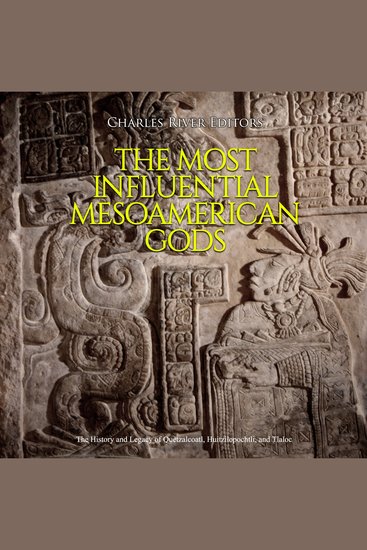
  • Most Influential Mesoamerican Gods The: The History and Legacy of Quetzalcoatl Huitzilopochtli and Tlaloc - cover

    Most Influential Mesoamerican...

    Editors Charles River

    • 0
    • 0
    • 0
    Gilgamesh, Hercules, Aeneas, and Lancelot are instantly recognized as mythological heroes in the West, evoking visions of Persian monsters, ghastly labors, and the founding and glorification of cities, but the names of Mesoamerican gods remain as mysterious as their spelling. Even those who have come across their names when learning about the history of Mesoamerica – particularly the Aztec and various gods’ roles in the Spanish conquest of their empire – are often unaware that the Mesoamerican deities have tales that equal any of those in the repertoire of the mythological figures mentioned above. 
    As archaeologists quickly learned, there are numerous temples dedicated to gods all across Mesoamerica, from the Olmec and Toltec to the Aztec and Maya. Furthermore, thousands of people still gather in the ruins of Mesoamerican cities. 
    From the Aztec to the Maya, Quetzalcoatl - the Feathered Serpent - rears his beautiful head from magnificent relief carvings in temples no less grandiose than the largest pyramid in the region, that of Cholula in Mexico. Furthermore, thousands of people still gather in the great Mayan city of Chichén Itzá during the spring and autumn equinoxes to watch the shadow of the Feathered Serpent slither its way down the temple known as El Castillo. 
    To the Aztec, Huitzilopochtli wore a blue-green hummingbird helmet and was draped in pure white heron feathers. He carried a smoking mirror, an obsidian mirror, a shield, darts, and the serpent Xiuhcoatl that carried with it the fury and might of the sun. Everything about him - from his clothes to his weapons - emanated and defined royalty. His name meant Hummingbird of the South or Hummingbird of the Left (meaning the “Southern Part of the World”) in the native language of the Aztec, Nahuatl. In his kingly role he was not only irrevocably intertwined with war and conquest but also with trade, the things most important to the great Aztec Empire.
    Show book
  • Flying the Flag - 'One of the leading voices in women's football' Mirror Sport - cover

    Flying the Flag - 'One of the...

    Carrie Dunn

    • 0
    • 0
    • 0
    From the author of Woman Up, shortlisted for the 2024 Vikki Orvice Award for Women's Sport Writing, and Unsuitable for Females, shortlisted for The Sunday Times Football Book of the Year 2023 
    'One of the most talented and considered minds working in women's football today' THE ATHLETIC 
    'The perfect person to guide us through the constantly changing landscape of women's football' KELLY CATES 
    'One of the most prolific writers about women's football in the UK' EVENING STANDARD 
    Before Mary Earps, Jess Fishlock, and Lucy Bronze, there were the trailblazers who defied the odds. 
    In 1921, the FA banned women from playing football, but these rebels refused to quit. Leaving behind jobs, families, and their homeland, they sought opportunities abroad, where they could fulfil their footballing potential. 
    This book uncovers the untold stories of those pioneering women who paved the way for today’s stars. The original Lioness who started a new life in the Netherlands as a teenager, the first woman of colour to play for England, the girl who gave up the chance of international recognition to play in Italy – through their reflections, we explore their extraordinary journeys, the evolution of women’s football, and the dreams they still hold for the future. 
    'Fabulous' That's So Offside Podcast 
    'Carrie writes the stories we're convinced would otherwise be lost forever... a MUST READ! Be prepared to feel aggrieved and inspired in equal measure' The Offside Rule podcast 
    'A vital and beautifully told piece of football history... essential reading for anyone who cares about the true story of women's football' Anita Asante, former England international and football pundit 
    'Flying the Flag tells the stories you otherwise will never hear... So please, I beg, tell your daughters and granddaughters about it because without context the achievements of current and future generations can't be properly appreciated' Lynsey Hooper, broadcaster 
    'Without a doubt one of the most important books about women's football to date... incredibly fun and educational' The WoSo Show
    Show book