Join us on a literary world trip!
Add this book to bookshelf
Grey
Write a new comment Default profile 50px
Grey
Subscribe to read the full book or read the first pages for free!
All characters reduced
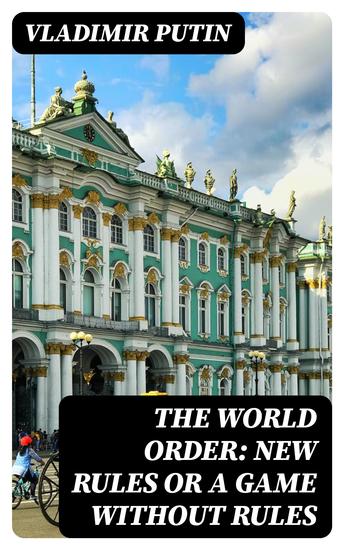
The World Order: New Rules or a Game without Rules - Enriched edition Putin talks to Valdai Club in Sochi - cover

The World Order: New Rules or a Game without Rules - Enriched edition Putin talks to Valdai Club in Sochi

Vladimir Putin

Publisher: DigiCat

  • 0
  • 0
  • 0

Summary

In "The World Order: New Rules or a Game without Rules," Vladimir Putin articulates his vision of international relations and geopolitics in the post-Cold War era. The book is a reflective exploration of power dynamics, presenting a critical analysis of Western dominance and advocating for a multipolar world. Putin employs a direct and assertive literary style, infusing personal anecdotes and historical references that illustrate the intricacies of global governance. This work is situated within the context of rising tensions between Russia and the West, offering insights into the Kremlin's strategic imperatives and its interpretation of international law and order. Vladimir Putin, a seasoned political leader and former intelligence officer, draws upon his extensive experience in statecraft and international diplomacy. His tenure in various governmental roles—from his early days in the KGB to his presidency—has profoundly shaped his worldview. Having witnessed the dissolution of the Soviet Union and the subsequent geopolitical shifts, Putin's arguments reflect his commitment to Russia's sovereignty and its rightful place on the global stage, making this book a response to what he perceives as unjust challenges to Russian authority. This book is essential reading for scholars, policymakers, and anyone interested in understanding the undercurrents of contemporary geopolitical conflict. Putin's provocative insights encourage readers to rethink conventional narratives about world order and to engage critically with the concept of power in an increasingly complex international landscape.

In this enriched edition, we have carefully created added value for your reading experience:
- A succinct Introduction situates the work's timeless appeal and themes.
- The Synopsis outlines the central plot, highlighting key developments without spoiling critical twists.
- A detailed Historical Context immerses you in the era's events and influences that shaped the writing.
- An Author Biography reveals milestones in the author's life, illuminating the personal insights behind the text.
- A thorough Analysis dissects symbols, motifs, and character arcs to unearth underlying meanings.
- Reflection questions prompt you to engage personally with the work's messages, connecting them to modern life.
- Hand‐picked Memorable Quotes shine a spotlight on moments of literary brilliance.
- Interactive footnotes clarify unusual references, historical allusions, and archaic phrases for an effortless, more informed read.
Available since: 05/29/2022.
Print length: 48 pages.
Other books that might interest you

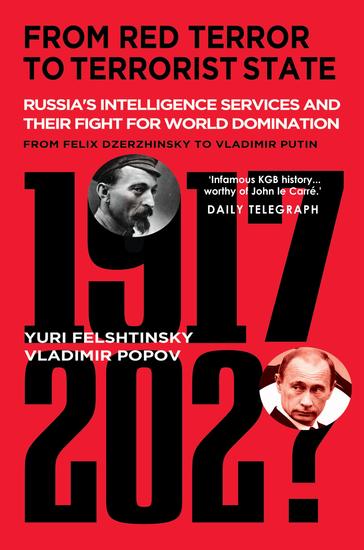
  • From Red Terror to Terrorist State - Russia's Secret Service and Its Fight for World Domination: from Felix Dzerzhinsky to Vladimir Putin - cover

    From Red Terror to Terrorist...

    Yuri Felshtinsky, Vladimir Popov

    • 0
    • 0
    • 0
    'Detail worthy of a John le Carre novel.' Telegraph The history of modern Russia traditionally has Communism at its centre: Lenin defines its rise, Gorbachev its fall, and Putin its aftermath. In this radical new history, Yuri Felshtinsky and Vladimir Popov, however, introduce a new historical axis: the Cheka―the Bolsheviks' nebulous revolutionary intelligence service. Wrapped around the Party in a fight to the death from 1918 under its first head Felix Dzerzhinsky, only Stalin was able to resist its stranglehold at the cost of enormous bloodshed. Luring Russia into submission over less than a century, its murder-plots and unrivalled scheming culminated in the capture of the Kremlin in 2000. Drawing on Popov's secret documents of over two decades as a senior officer in one of the KGB's key covert sections, and on Felshtinsky's encyclopedic knowledge of Russian state archives open in the 1990s, little-known sources, and access to leading oligarchs, a new Russian history emerges. The story they tell is often unexpected while introducing a new cast of characters still of great influence―potentially surpassing Lenin's role―on our world today. From Red Terror to Terrorist State is the first complete history of the Cheka. Written from the inside, it fundamentally transforms our understanding of Russia and rethinks the way today's Kremlin views itself and the rest of the world. Animated by lifelong study, this authoritative narrative by two exceptional Russian-intelligence experts presents ground-breaking new insights based on an unrivalled wealth of new factual details.
    Show book
  • The Fall of Communism - Understanding the Collapse of the Soviet Union and Its Impact - cover

    The Fall of Communism -...

    Arlo Holders

    • 0
    • 0
    • 0
    The origins of communism can be traced back to the mid-19th century, largely shaped by the theories of Karl Marx and Friedrich Engels. Marx's writings, particularly The Communist Manifesto (1848), presented a vision for a classless society where the working class, or proletariat, would overthrow the capitalist bourgeoisie and establish a dictatorship of the proletariat. Marx believed this revolution would lead to the eventual abolition of private property, creating a system where resources and wealth were shared equally among all people. Engels, Marx’s collaborator, helped to spread these ideas, laying the theoretical foundation for communism as a political ideology. 
    In the early 20th century, the ideas of Marxism found fertile ground in Russia, where economic disparity and social unrest were widespread. The Russian Empire, under Tsar Nicholas II, faced increasing pressure from industrialization, a growing working class, and a largely disenfranchised peasantry. The Russian Revolution of 1917, led by the Bolshevik Party under Vladimir Lenin, marked the beginning of communism’s practical implementation. The Bolsheviks sought to establish a socialist state where the working class would control the means of production and dismantle the old Tsarist monarchy. 
    Following the revolution, the Soviet Union was formed in 1922, uniting the Russian Federation and several other Soviet republics under a single communist government. The new government, however, faced significant challenges, including civil war, foreign intervention, and the task of restructuring a country that had been predominantly agrarian into a socialist industrialized state. Lenin’s death in 1924 led to the rise of Joseph Stalin, who consolidated power through brutal purges and policies such as forced collectivization and rapid industrialization.
    Show book
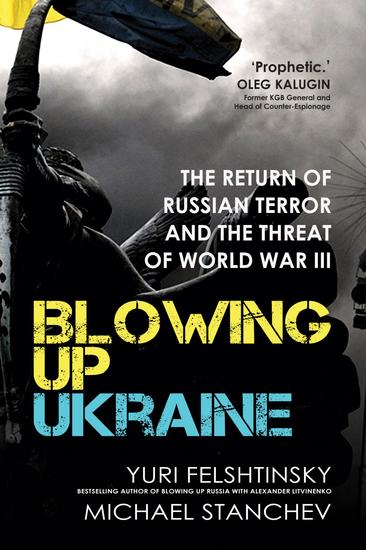
  • Blowing up Ukraine - The Return of Russian Terror and The Threat of World War III - cover

    Blowing up Ukraine - The Return...

    Yuri Felshtinsky, Michael Stanchev

    • 0
    • 0
    • 0
    Presciently researched before the invasion of Ukraine, Blowing up Ukraine is the first comprehensive investigation into the lethal methods Russia has used since 1999 to take over Ukraine – culminating in full-blown unprovoked war in 2022 and mounting atrocities. In this chilling, riveting and alarming narrative the authors cite ample evidence, draw historical analogies, and marshal sources that are new, little known, or anonymous by necessity.Over twenty years, Vladimir Putin skilfully manipulated Ukraine's self-serving politicians and oligarchs, only to be thwarted time and again by peaceful revolutions of ordinary Ukrainians – the Maidan – against government corruption and being pushed into Russia's arms. As Putin became obsessed with conquering Ukraine, Blowing up Ukraine shows how the Kremlin has become a threat to global stability and Ukraine is almost certain to be the first battleground of World War III if the West is not careful to take a stance
    Show book
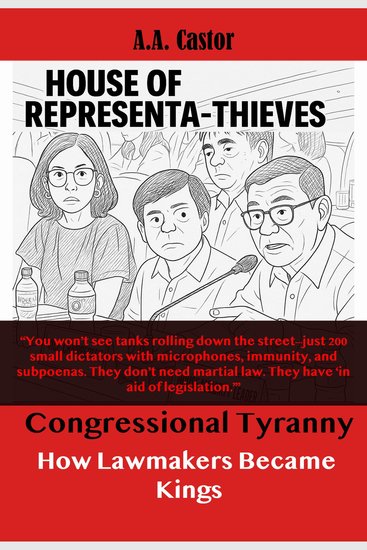
  • Congressional Tyranny: How Lawmakers Became Kings - cover

    Congressional Tyranny: How...

    A.A. Castor

    • 0
    • 0
    • 0
    What if the real dictators never wore military uniforms—but barongs and lapel pins? 
    In Congressional Tyranny, A.A. Castor pulls back the velvet curtain on one of the most dangerous illusions in modern Philippine democracy: that power resides in the President. With razor-sharp satire and sobering analysis, this book explores how lawmakers have quietly transformed themselves from representatives into rulers—armed not with guns, but with gavels, budgets, and contempt powers. 
    From weaponized budget hearings to backdoor appointments, media manipulation, and the jailing of critics without due process, Castor dissects how Congress has become the country's most powerful, unaccountable institution. With chapters like "Tyranny by Default" and "The Budget Becomes a Weapon," this book shines a light on the quiet coup happening under the guise of public service. 
    Congressional Tyranny is not a conspiracy theory—it's a mirror held up to a system designed to protect itself. A must-read for anyone who still believes that the greatest threat to democracy comes from above, when in truth, it may already be seated in session.
    Show book
  • Critique of Interventionism - cover

    Critique of Interventionism

    Ludwig Von Mises

    • 0
    • 0
    • 0
    In "Critique of Interventionism," Ludwig von Mises delves into the economic consequences and philosophical underpinnings of government intervention in the market. Mises argues that interventionism, which involves state interference in economic affairs while maintaining private ownership, inevitably leads to unintended consequences, distortions, and economic inefficiencies. The book is a critical analysis of interventionist policies, examining their impact on individual freedom, economic coordination, and the overall functioning of a market economy.
    Show book
  • Collective Action and the Evolution of Social Norms: Book Summary & Analysis - cover

    Collective Action and the...

    Briefly Summaries

    • 0
    • 0
    • 0
    This is a concise summary and analysis of Collective Action and the Evolution of Social Norms, by Elinor Ostrom.
     
    It is not the original book and is not affiliated with or endorsed by 
     Elinor Ostrom.
     
    Ideal those seeking a quick and insightful overview.
     
    This insightful book delves into the complexities of collective action and how social norms evolve to facilitate cooperation among individuals and communities. Exploring the intersection of economics, sociology, and political science, it examines the mechanisms through which trust, reciprocity, and shared understanding emerge in diverse social contexts. Through real-world examples and rigorous analysis, the book challenges traditional theories of centralized authority, offering a groundbreaking perspective on how communities self-organize to address common-pool resource problems and other collective challenges.
    Show book