Join us on a literary world trip!
Add this book to bookshelf
Grey
Write a new comment Default profile 50px
Grey
Subscribe to read the full book or read the first pages for free!
All characters reduced
Mrs Dalloway - cover

Mrs Dalloway

Virginia Woolf

Publisher: Ancient Chapters

  • 0
  • 0
  • 0

Summary

A landmark modernist novel exploring time, emotion, and human connection.

Over the course of a single day in London, Clarissa Dalloway prepares for an evening gathering while reflecting on love, memory, choices, and the passage of life. Through interconnected thoughts and experiences, the novel reveals the emotional depth hidden beneath everyday moments.

Elegant, psychological, and beautifully written, the story explores identity, society, loneliness, and the complexity of the human mind.

Written by Virginia Woolf.

Step into one of the greatest works of modern literature—download your copy today.
Available since: 05/22/2026.
Print length: 190 pages.

Other books that might interest you

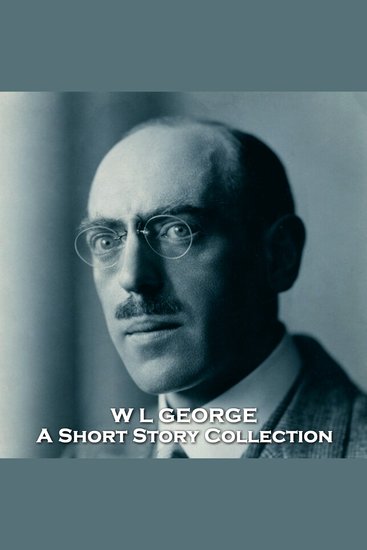
  • W L George - A Short Story Collection - Turn of the century writer that supported feminism pacifisim and labour reform - cover

    W L George - A Short Story...

    W L George

    • 0
    • 0
    • 0
    Walter Lionel George was born to British parents on the 20th March 1882 in Paris, France. 
     
    It was not until he was a young man of 20 that he learned English.  In 1905 he moved to London to work in an office but soon found himself working as a journalist, and as a foreign correspondent, for various London newspapers. 
     
    By 1911, with the publication of his first novel ‘A Bed of Roses’, which portrayed the fall of a penniless young woman into prostitution, his efforts were rewarded, and he turned to literature as a full-time career. 
     
    His writings now sold well.  He added short stories to his offerings as well as literary essays and several tracts that discussed left-wing themes.  Some critics thought his subject matter to be difficult and poorly chosen. His political views gained him little credit amongst his peers although such luminaries as George Orwell praised both subject matter and style. 
     
    His personal life was also turbulent.  His three marriages left him widowed twice.  In 1908 he married Helen Porter who died in 1914.  Helen Agnes Moorhead followed in 1916 but died only 4 years later.  His last marriage was to Kathleen Geipel in 1921. 
     
    W. L George died on 30th January 1926.  He was 43.
    Show book
  • Journey to the Center of the Earth - cover

    Journey to the Center of the Earth

    Verne Jules

    • 0
    • 0
    • 0
    Journey to the Center of the Earth" is one of Jules Verne's best-known works and one of the most classic tales of adventure ever written. 
    It is the story of the German geology professor Otto Lidenbrock who discovers a manuscript from a 16th century explorer who claims to have discovered a passageway that leads to the center of the earth. 
    The professor hastily sets off with his nephew Axel and an Icelandic guide by the name of Hans to find the center of the earth. Great obstacles and wondrous sights await them on their journey.
    Show book
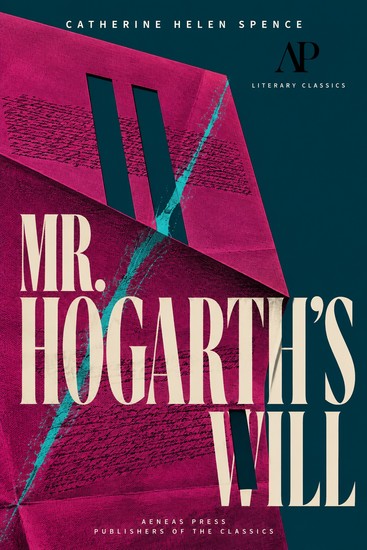
  • Mr Hogarth's Will - cover

    Mr Hogarth's Will

    Catherine Helen Spence

    • 0
    • 0
    • 0
    Mr Hogarth leaves his fortune to a nephew nobody knew existed, and his two nieces — raised as heiresses and educated like men — are left with nothing and must earn. One goes to Australia. Spence emigrated from Scotland to South Australia at fourteen and became the colony's conscience: its first woman novelist, its first female political candidate, and the campaigner who gave the world proportional representation.
    Show book
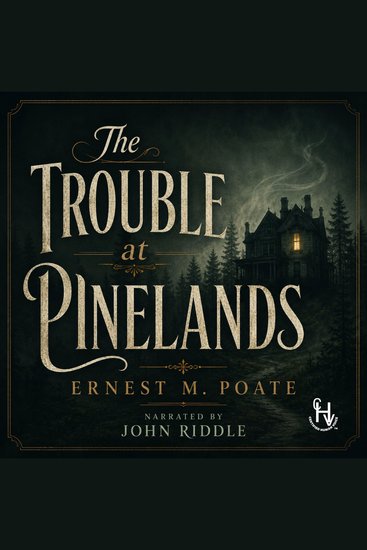
  • The Trouble at Pinelands - cover

    The Trouble at Pinelands

    Ernest M. Poate

    • 0
    • 0
    • 0
    A haunted house. A murdered physician. A bridegroom found holding the smoking gun. 
     
    George Uhlman has reluctantly agreed to watch over his niece, Dorothy McGregor, as she prepares to marry young physician Lewis Parker. His stay at Fort House should be uneventful—but the gloomy North Carolina mansion is already troubled by unexplained noises, shattered dishes, missing food, and rumors of a destructive poltergeist. 
     
    Then the disturbances take a deadly turn. 
     
    After a bitter confrontation between Lewis and his professional rival, Dr. Gaskell, a shotgun blast shatters the early-morning quiet. Gaskell is discovered dead in the scrub oaks, and Lewis is found nearby with the weapon in his hands. 
     
    The evidence appears damning. The townspeople demand justice, the authorities close in, and Dorothy’s future collapses around her. But when Lewis’s sharp-minded best man, Dr. Floyd Somers, arrives in Pinelands, he refuses to accept the obvious solution. 
     
    Behind the ghostly disturbances lies a household filled with secrets. Behind the murder lies a web of jealousy, old grudges, hidden criminal activity, and carefully arranged deception. 
     
    First published in 1922, *The Trouble at Pinelands* is an atmospheric American mystery combining a seemingly haunted house, small-town rivalries, courtroom intrigue, and a classic puzzle of detection. 
     
    Narrated by John Riddle.
    Show book
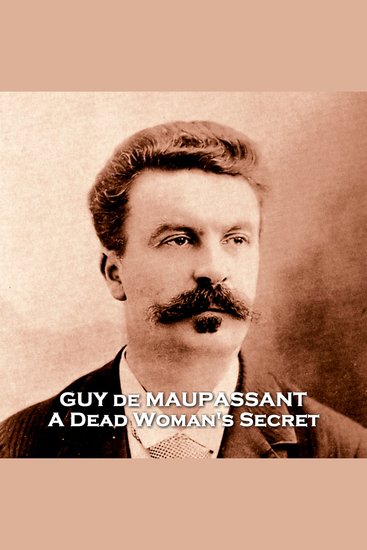
  • A Dead Woman's Secret - From their pens to your ears genius in every story - cover

    A Dead Woman's Secret - From...

    Guy De Maupassant

    • 0
    • 0
    • 0
    Henri René Albert Guy de Maupassant was born on August 5th, 1850 near Dieppe in France.  
    Maupassant’s early life was badly torn when at age 11 (his younger brother Hervé was then five) his mother, Laure, a headstrong and independent-minded woman, risked social disgrace in order to obtain a legal separation from her husband. 
    After the separation, Laure kept custody of her two boys. With the father now forcibly absent, Laure became the most influential and important figure in the young boy's life.   
    Maupassant’s education was such that he rebelled against religion and other societal norms but a developing friendship with Gustave Flaubert began to turn his mind towards creativity and writing. 
    After graduation he volunteered for the Franco-Prussian war. With its end he moved to Paris to work as a clerk in the Navy Department.  Gustave Flaubert now took him under his wing.  Acting as a literary guardian to him, he guided the eager Maupassant to debuts in journalism and literature.  For Maupassant these were exciting times and the awakening of his creative talents and ambitions. 
    In 1880 he published what is considered his first great work, ‘Boule de Suif’, (translated as as ‘Dumpling’, ‘Butterball’, ‘Ball of Fat’, or ‘Ball of Lard’) which met with a success that was both instant and overwhelming.  Flaubert at once acknowledged that it was ‘a masterpiece that will endure.’ Maupassant had used his talents and experiences in the war to create something unique.  
    This decade from 1880 to 1891 was to be the most pivotal of his career.  With an audience now made available by the success of ‘Boule de Suif’ Maupassant organised himself to work methodically and relentlessly to produce between two and four volumes of work a year.  The melding of his talents and business sense and the continual hunger of sources for his works made him wealthy. 
    In his later years he developed a desire for solitude, an obsession for self-preservation, and a fear of death as well as a paranoia of persecution caused by the syphilis he had contracted in his youth.  
    On January 2nd, 1892, Maupassant tried to commit suicide by cutting his throat.  Unsuccessful he was committed to the private asylum of Esprit Blanche at Passy, in Paris.  It was here on July 6th, 1893 that Henri René Albert Guy de Maupassant died at the age of only 42.
    Show book
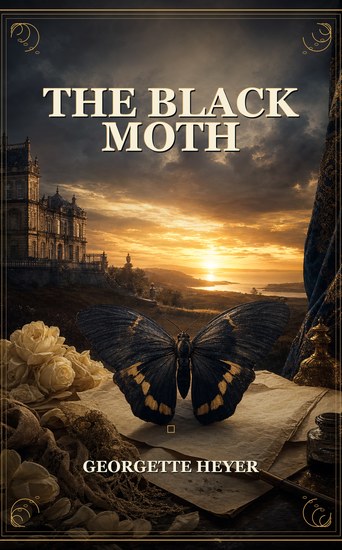
  • The Black Moth - cover

    The Black Moth

    Georgette Heyer

    • 0
    • 0
    • 0
    We rely on your support to help us keep producing beautiful, free, and unrestricted editions of literature for the digital age. Will you support our efforts with a donation ? The Black Moth focuses on Lord Jack Carstares, an 18th-century earl who has retreated from society and become a highwayman after taking the blame for cheating at cards years ago. He meets our heroine, Diana Beauleigh, when he rescues her from an attempted abduction by the Duke of Andover, and the three of them proceed to have grand adventures. Published in 1921, The Black Moth is Georgette Heyer's first novel, and marks her debut as one of the originators of the modern historical romance. Set in the Georgian period, the novel features many of the elements that are characteristic of Heyer's work: action, romance, and aristocratic characters in a historical setting, all focusing on themes of love and honor. Georgette Heyer (died 1974) was a significant literary figure of the 20th century. Their work has endured across generations and continues to be read and studied worldwide. As a work of classic literary fiction, The Black Moth exemplifies the narrative craft and social insight that defined great storytelling of its era. Literary fiction of this period was characterized by careful attention to character psychology, social milieu, and the moral questions that animated public discourse.
    Show book