Join us on a literary world trip!
Add this book to bookshelf
Grey
Write a new comment Default profile 50px
Grey
Subscribe to read the full book or read the first pages for free!
All characters reduced
Between the Acts - cover

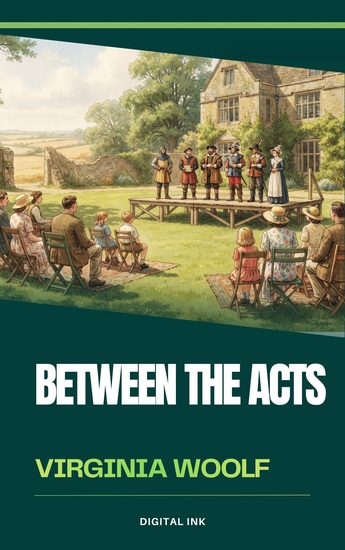
Between the Acts

Virginia Woolf

Publisher: Digital Ink

  • 0
  • 0
  • 0

Summary

Behind an ordinary country gathering lies a thoughtful reflection on an entire society.

In Between the Acts, Virginia Woolf presents a richly layered portrait of English life on the eve of the Second World War. Set during a village pageant at an English country house, the novel follows members of the audience as they experience performances, conversations, personal memories, and shifting emotions.

Through fragmented perspectives, poetic imagery, and subtle social observation, Woolf explores the relationship between individuals, communities, history, and national identity.

The novel reflects on the tensions of a changing world while examining the fragile connections that bring people together.

Published posthumously in 1941, Between the Acts is a significant work of literary modernism and one of Woolf's most distinctive novels.

Experience a thoughtful and beautifully written exploration of society and human consciousness. Get your copy today!
Available since: 11/23/2026.
Print length: 72 pages.
Other books that might interest you

  • The Haunted Baronet - cover

    The Haunted Baronet

    Joseph Sheridan Le Fanu

    • 0
    • 0
    • 0
    "The lake does not give up its dead easily, and the House of Mardykes has a long memory."
    
    Sir Bale Mardykes is a man of iron will and a cold heart, living in the ancestral home of Mardykes Hall near the secluded village of Golden Friars. He believes he is the master of his own fate, but he is haunted by a centuries-old prophecy of doom. When he cruelly causes the death of his secretary and distant relative, Philip Feltram, Sir Bale believes he has cleared a nuisance from his path. But when Feltram returns—changed, silent, and carrying the chill of the lake—Sir Bale realizes that the dead have a way of reclaiming what is theirs. It is a slow-burn masterpiece of Gothic tension, where the environment itself seems to conspire against the living.
    
    The Environment as Antagonist: Le Fanu utilizes the "Atmospheric Gothic" to its fullest potential here. The swirling mists of the Lake District, the echoes in the mountain passes, and the bottomless depths of the lake serve as metaphors for Sir Bale's mounting paranoia. The house and the land are not just settings; they are active participants in the baronet's downfall.
    
    A Study in Psychological Ruin: Unlike many contemporary ghost stories, the horror in The Haunted Baronet is deeply internal. We watch Sir Bale's skepticism slowly erode as the supernatural elements become undeniable. The figure of the "Returned" Feltram is one of Le Fanu's most effective creations—a ghost that doesn't just haunt, but inhabits the social space of the living.
    
    The Weight of Ancestry: Le Fanu explores the idea that we are never truly free from the actions of our forefathers. Sir Bale is a victim of his own bloodline as much as his own choices. The novella builds to a tragic and inevitable climax that proves that some debts can only be paid in lifeblood.
    
    Beware the calm waters of Golden Friars. Purchase "The Haunted Baronet" today.
    Show book
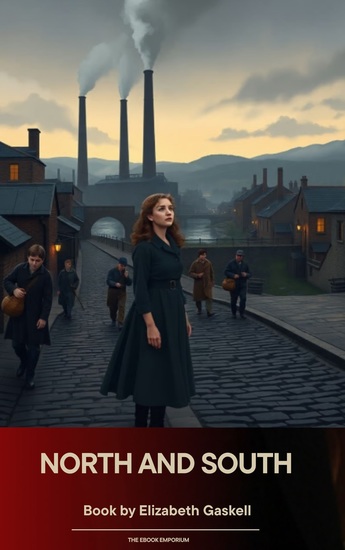
  • North and South - cover

    North and South

    Elizabeth Gaskell

    • 0
    • 0
    • 0
    "I believe I've seen the end of the world... it's all smoke and noise and iron."
    
    Margaret Hale, a parson's daughter from the genteel, sun-drenched South of England, is forced to move to the gritty, smoke-shrouded industrial town of Milton in the North. Horrified by the poverty and the harsh realities of the cotton mills, she quickly clashes with John Thornton, a self-made, stern mill owner who epitomizes the new manufacturing class. As strikes loom and the gap between "master and man" widens, Margaret and Thornton must navigate their deep-seated prejudices to find a common ground that could change both their lives forever.
    
    The Heart of the Industrial Revolution: Gaskell provides a vivid, unflinching look at the birth of modern industry. Through Margaret's eyes, we witness the human cost of progress—the lung-clogging "fluff" of the mills, the desperation of the workers, and the rise of labor unions. Yet, through Thornton, we see the pride, ambition, and terrifying instability of the men who built the British Empire's economic engine.
    
    A Romance for the Ages: Often called the "industrial Pride and Prejudice," the relationship between Margaret and Thornton is a masterclass in slow-burn tension. Their journey is not just one of romance, but of mutual education. Margaret learns to see the dignity in labor and the necessity of trade, while Thornton learns that authority without empathy is a recipe for ruin.
    
    A Timeless Social Masterpiece: North and South remains startlingly relevant, exploring themes of economic inequality, religious doubt, and the struggle for women's agency in a male-dominated world. It is a story that proves that even in the coldest, most industrial heart, the warmth of human connection can still prevail.
    
    Where iron meets heart. Purchase "North and South" today and experience the definitive industrial romance.
    Show book
  • When God Laughs and Other Stories - Stories of the Ring the Sea and the Mill - cover

    When God Laughs and Other...

    Jack London

    • 0
    • 0
    • 0
    Complete and unabridged, with 60 full-page plates by Spencer Gore, Robert Bevan and John Lavery. Twelve stories, and hardly a comfortable one among them: a boy who has worked in a mill since childhood and simply walks away from it, a Chinese coolie in Tahiti guillotined for another man's crime because the names sound alike, two burglars who poison each other over the takings, a ship's crew driven to cannibalism, a captain fighting to get round the Horn, and, in A Piece of Steak, an ageing boxer who loses his fight for want of one good meal. London collected them in 1911, and the anger in them is exact rather than loud. Sixty plates after Frederic Remington and William Bradford, from Arctic whaling and Havana to clipper ships, give these stories of the ring, the sea and the mill their weather.
    Show book
  • The Good Time Coming - A Novel of Deferred Living - cover

    The Good Time Coming - A Novel...

    T. S. Arthur

    • 0
    • 0
    • 0
    Complete and unabridged, with 58 full-page plates by Edvard Munch, Winslow Homer and John George Brown. A man devotes his life to getting on, and the good time is always one more year away — while his wife and children have the life he is postponing. Arthur left school at thirteen, half-blind and apprenticed to a watchmaker, and became one of the most widely read Americans of his century; the moral is on the surface, and the portrait of a household waiting for a father to arrive at his own life is underneath it. Fifty-eight plates, from Bingham's Jolly Flatboatmen in Port to Munch's Two Women under a Tree, picture the ordinary hours a life of getting on leaves behind.
    Show book
  • The Wind in the Rose-Bush - And Other Supernatural Stories - cover

    The Wind in the Rose-Bush - And...

    Mary Wilkins

    • 0
    • 0
    • 0
    Ford Village has no railroad station, being on the other side of the river from Porter’s Falls, and accessible only by the ford which gives it its name, and a ferry line.The ferry-boat was waiting when Rebecca Flint got off the train with her bag and lunch basket. When she and her small trunk were safely embarked she sat stiff and straight and calm in the ferry-boat as it shot swiftly and smoothly across stream. There was a horse attached to a light country wagon on board, and he pawed the deck uneasily. His owner stood near, with a wary eye upon him, although he was chewing, with as dully reflective an expression as a cow. Beside Rebecca sat a woman of about her own age, who kept looking at her with furtive curiosity; her husband, short and stout and saturnine, stood near her. Rebecca paid no attention to either of them. She was tall and spare and pale, the type of a spinster, yet with rudimentary lines and expressions of matronhood. She all unconsciously held her shawl, rolled up in a canvas bag, on her left hip, as if it had been a child. She wore a settled frown of dissent at life, but it was the frown of a mother who regarded life as a forward child, rather than as an overwhelming fate. Listen and enjoy.
    Show book
  • Jean craig finds romance - cover

    Jean craig finds romance

    KAY LYTTLETON

    • 0
    • 0
    • 0
    The Craig family were newcomers to the country, newcomers in the eyes of the natives of Elmhurst, Connecticut, for they had moved there a year and a half ago seeking peace and rest for Mr. Craig, who was slowly recovering from a nervous breakdown. The family's adventures and problems in making their home in the country were told in Jean Craig Grows Up. Jean, eighteen and ambitious for an artist's career, had spent part of the previous winter studying in a New York art school and her experiences there were described in Jean Craig in New York.
    Show book