Join us on a literary world trip!
Add this book to bookshelf
Grey
Write a new comment Default profile 50px
Grey
Subscribe to read the full book or read the first pages for free!
All characters reduced
The Beautiful: An Introduction to Psychological Aesthetics - Enriched edition - cover

The Beautiful: An Introduction to Psychological Aesthetics - Enriched edition

Vernon Lee

Publisher: DigiCat

  • 0
  • 0
  • 0

Summary

In "The Beautiful: An Introduction to Psychological Aesthetics," Vernon Lee meticulously explores the intersection of beauty and psychology, offering an innovative perspective on aesthetic experience. This seminal work, characterized by Lee's elegant prose and incisive analysis, draws on contemporary philosophical ideas while also engaging with the rich tradition of aesthetic theory. Lee argues that the appreciation of beauty is a deeply psychological phenomenon, intricately linked to the sensory experiences and emotional responses elicited by art and nature. Her integration of psychological insights into aesthetic theory marks a significant contribution to the field, encouraging readers to reconsider the essence of beauty in both art and everyday life. Vernon Lee, born Violet Paget, was a prominent figure in the late 19th and early 20th centuries, known for her extensive writings on aesthetics, fiction, and essays. Lee's unique background as a cultivated intellectual in Europe contributed to her profound understanding of the complex interplay between aesthetics and psychology. Her exposure to various artistic movements and philosophical discussions of her time significantly shaped her approach to beauty, making her insights particularly relevant in an age grappling with the subjectivity of artistic value. "The Beautiful" is recommended for readers interested in aesthetic theory, psychology, and the arts. Its thoughtful examination of beauty invites both scholars and general readers to engage with the deeper dimensions of aesthetic enjoyment. Lee's compelling arguments and stylistic elegance make this work an essential addition to any library of critical thought.

In this enriched edition, we have carefully created added value for your reading experience:
- A succinct Introduction situates the work's timeless appeal and themes.
- The Synopsis outlines the central plot, highlighting key developments without spoiling critical twists.
- A detailed Historical Context immerses you in the era's events and influences that shaped the writing.
- A thorough Analysis dissects symbols, motifs, and character arcs to unearth underlying meanings.
- Reflection questions prompt you to engage personally with the work's messages, connecting them to modern life.
- Hand‐picked Memorable Quotes shine a spotlight on moments of literary brilliance.
- Interactive footnotes clarify unusual references, historical allusions, and archaic phrases for an effortless, more informed read.
Available since: 09/16/2022.
Print length: 145 pages.

Other books that might interest you

  • Secrets of Mesoamerica - What Did the Aztec Maya and Olmec Really Know? - cover

    Secrets of Mesoamerica - What...

    Alda Dagny

    • 0
    • 0
    • 0
    How much do you know about the ancient civilizations that molded our world today? 
    Modern society has come a long way. The digital era is well and truly upon us, and technology continues to advance and dominate our everyday lives. 
    While there are many benefits to this, it has also led to many people wanting to learn more about those who came before us, with one big question they want to answer. 
    How did ancient civilizations survive with so many fewer resources than we have available today? 
    You’ve come to the right place to find the answer! 
    Introducing Secrets of Mesoamerica, a must-read for anyone who wants to know everything there is to learn about the rich history of this significant era of our history. 
    With all of the commodities and knowledge available today, it is almost impossible to fathom how civilizations survived before us. 
    But not only did the Mesoamericans survive, they also thrived. 
    This book will show you how and teach you everything you could want to know about this fascinating time. 
    Inside Secrets of Mesoamerica, discoverthe Olmec, Mayan, and Aztec civilizations.the inventions and progress made during these civilizations.how Mesoamerican society and politics operated.the medical advancements made in this era.the most famous mysteries from this era. 
    Immerse yourself in this incredible cultural period, which helped shape our modern society. 
    Grab a copy of Secrets of Mesoamerica today!
    Show book
  • Russian Political Warfare - Essays on Kremlin Propaganda in Europe and the Neighbourhood 2020-2023 With a foreword by Nathalie Loiseau - cover

    Russian Political Warfare -...

    Anton Shekhovtsov

    • 0
    • 0
    • 0
    Shekhovtsov’s essays delve into practices of Russian political warfare designed to advance Moscow’s objectives in European countries and certain African states.
    Show book
  • Creating Space - Story Reflection and Practice in Healthcare Chaplaincy - cover

    Creating Space - Story...

    Sacha Pearce, Jan Collis

    • 0
    • 0
    • 0
    Creating Space tells a professional and personal story of healthcare chaplaincy and models the way in which practice development emerges from reflecting on the human story. This book reveals to healthcare, the Church and the community, the unique role of the chaplain’s experiences as a resource to others. It is written for professional practitioners, prompting their own contextual learning and development, whether as chaplains, pastoral carers, parish clergy, lay ministers, volunteers in any caring context, those who work in listening therapies, those who provide care and support to others of any kind, or those who use or teach reflective practice.
    
     
    The authors connect in a straightforward way their view of healthcare chaplaincy as a model of practical theology, based on key practical theologians who see the human story as a source of learning. They outline their own reflective practice tool for learning and share the way in which they see each pastoral encounter as a reflective source of learning. They discover how their experiences have developed the discernment process for chaplaincy vocation, urging the Church to see beyond the parish model in today’s world.
    Show book
  • Connections That Count - Build a Network That Works for You Strengthens Your Brand and Creates Lasting Relationships - cover

    Connections That Count - Build a...

    Anonymous

    • 0
    • 0
    • 0
    Feeling disconnected in a world obsessed with connection? This book reveals why traditional networking fails—and how modern relationships demand emotional clarity, personal discipline, and strategic openness. If you’ve ever felt invisible, misunderstood, or stuck on the outside of meaningful circles, this is your roadmap back in. 
    You’ll learn how to build trust, tell your story, and create a network that doesn’t just look good—it feels real. Don’t wait. Every day without these tools deepens the gap between you and the life you’re meant to live.
    Show book
  • urban Geography and Land Use - The Spatial Organization of Cities (3 in 1) - cover

    urban Geography and Land Use -...

    Lyric Vale

    • 0
    • 0
    • 0
    Cities are fundamentally exercises in spatial organization—complex arrangements of human activity, physical infrastructure, and natural systems that collectively define how metropolitan regions function, evolve, and adapt. The geographic logic of urban environments—how different uses are distributed, how resources are allocated, and how communities develop within specific physical contexts—represents one of the most profound expressions of human social organization and values. This comprehensive exploration delves into the intricate domains of Urban Geography, Urban Land Use, and Community Development—examining how spatial patterns emerge, how they reflect deeper social and economic forces, and how they ultimately shape the lived experiences of urban inhabitants. 
    The narrative of urban spatial organization is far more than a technical study of land allocation; it encompasses the dynamic interactions between physical geography, economic systems, social forces, and political decisions that collectively determine the form and function of our cities. By examining the complex mechanisms that drive urban spatial development—from market dynamics and zoning regulations to community activism and cultural preferences—this book illuminates how cities represent physical manifestations of our collective choices, priorities, and power structures. Readers will journey through diverse urban landscapes—from the historic patterns of concentric development to the fragmented geographies of postindustrial cities and the emerging forms of sustainable urbanism—while exploring how community development initiatives seek to reshape urban spaces to better serve human needs.
    Show book
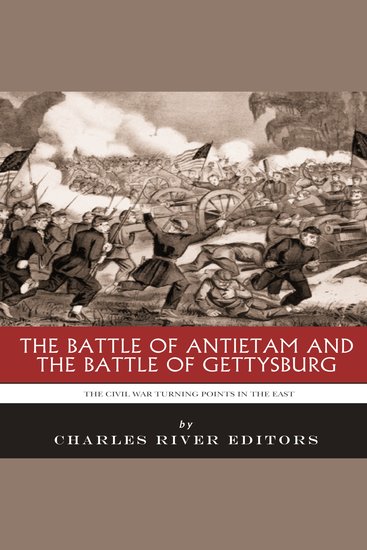
  • Civil War Turning Points in the East The: The Battle of Antietam and the Battle of Gettysburg - cover

    Civil War Turning Points in the...

    Editors Charles River

    • 0
    • 0
    • 0
    The bloodiest day in American history took place on the 75th anniversary of the signing of the Constitution. On September 17, 1862, Robert E. Lee’s Confederate Army of Northern Virginia fought George McClellan’s Union Army of the Potomac outside Sharpsburg along Antietam Creek. That day, nearly 25,000 would become casualties, and Lee’s army would barely survive fighting the much bigger Northern army. Although the battle was tactically a draw, it resulted in forcing Lee’s army out of Maryland and back into Virginia, making it a strategic victory for the North and an opportune time for President Abraham Lincoln to issue the Emancipation Proclamation, freeing all slaves in the rebellious states. For those reasons, Antietam is remembered as one of the major turning points of the Civil War, even as it is often overlooked that the bloody battle only represented the climactic culmination of a 3 week campaign that saw George McClellan cautiously pull a fragmented Union army together and begin tracking Lee’s army into Maryland.  
    	Without question, the most famous battle of the American Civil War took place outside of the small town of Gettysburg, Pennsylvania, which happened to be a transportation hub, serving as the center of a wheel with several roads leading out to other Pennsylvanian towns. From July 1-3, Robert E. Lee’s Confederate Army of Northern Virginia tried everything in its power to decisively defeat George Meade’s Union Army of the Potomac, unleashing ferocious assaults that inflicted nearly 50,000 casualties in all. Day 1 of the battle would have been one of the 25 biggest battles of the Civil War itself, and it ended with a tactical Confederate victory. But over the next two days, Lee would try and fail to dislodge the Union army with attacks on both of its flanks during the second day and Pickett’s Charge on the third and final day.
    Show book