
Join us on a literary world trip!
Add this book to bookshelf
Grey
Write a new comment Default profile 50px
Grey
Subscribe to read the full book or read the first pages for free!
All characters reduced
Wilson's Tales of the Borders and of Scotland Volume 22 - Tales of Scottish Borders: Folklore Tradition and Culture - cover

Wilson's Tales of the Borders and of Scotland Volume 22 - Tales of Scottish Borders: Folklore Tradition and Culture

Various Various

Publisher: Good Press

  • 0
  • 0
  • 0

Summary

"Wilson's Tales of the Borders and of Scotland, Volume 22" is a captivating anthology that presents a rich tapestry of Scottish folklore, history, and local color. This volume encapsulates the essence of the Scottish Borders, blending fictional tales with historical narratives that evoke the spirit of the region. Employing a vivid, narrative-driven style, the contributors utilize dialogue and descriptive prose to transport readers into the heart of 19th-century Scotland. These tales not only entertain but also serve to preserve cultural memories, reflecting the socio-political environment of their time, including themes of patriotism, struggle, and community resilience. The collective authorship of this volume includes a diverse array of writers, each contributing their unique perspective and voice to the work. Many were influenced by the romanticism of the time, combined with a deep-seated appreciation for Scottish heritage and landscape. This literary perspective likely fueled their desire to document and celebrate the rich oral traditions and folk narratives that encapsulate the vivid character of Scotland's Borders. I highly recommend "Wilson's Tales of the Borders and of Scotland, Volume 22" to anyone interested in Scottish culture, folklore, and history. This volume not only offers a glimpse into the region's past but also enchants readers with its engaging storytelling and rich narrative style.
Available since: 08/12/2023.
Print length: 186 pages.

Other books that might interest you

  • Striving for Justice - A Black Sheriff in the Deep South - cover

    Striving for Justice - A Black...

    Nathaniel Glover

    • 0
    • 0
    • 0
    On a sweltering day in August 1960, in the segregated Deep South city of Jacksonville, Florida, a seventeen-year-old Black boy finished his dishwashing job at Morrison’s Cafeteria, walked out the back door, and found himself in the middle of a nightmare. 
     
    Hundreds of white men with ax handles and baseball bats were attacking Black sit-in protestors in Hemming Park. Suddenly surrounded, the young man endured menacing blows and racist taunts. He called for help from a white police officer standing nearby, but no help came.  
    And he felt an unwarranted shame he determined never to feel again. 
     
    His name was Nat Glover. 
     
    Nat’s life could have ended that day, but instead, the ordeal reinforced his plans to become a police officer. His belief in a better world could have faded to cynicism, but instead, it took root in his spirit. His desire to overcome the poverty and racism of his youth could have given in  
    to shame, but instead, Nat resolved to dedicate his life to honoring the dignity of all people. 
     
    Nat Glover went on to serve in law enforcement for thirty-seven years, became the first Black sheriff in Jacksonville and the state of Florida since Reconstruction, and chose—again and again—to do the right thing at the right time for the sake of justice, compassion, and truth. 
     
    In Striving for Justice, Nat recounts his history-making years in police reformation,the values that fuel him as a leader and American citizen, and what he believes will move this country forward toward hope and healing just as he once rose again … against all odds. 
     
    Features an exclusive interview with Florida's first Black sheriff
    Show book
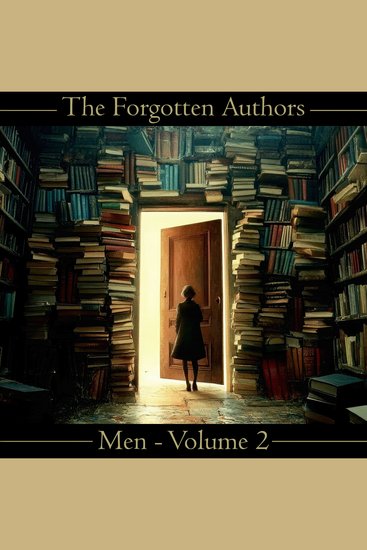
  • Forgotten Authors The - Men - Volume 2 - William E Burton to Richard Garnett - cover

    Forgotten Authors The - Men -...

    Clotilde Graves

    • 0
    • 0
    • 0
    Throughout the long centuries of human history is the want, and the need, to share information, to exchange ideas and for that knowledge and experience, for curiosity and learning, to be the basis of a civil society. 
    In literature the ambition is much narrower.  In order to be known, to be popular, you had to be published.  And for that people had to know you existed and your ideas worth reading.  Obviously for most of humanity’s time people couldn’t read and texts couldn’t be published in any great number. 
    In the 15th Century Gutenberg’s printing press began the revolution to address the second and by the 19th century had gathered pace with startling speed and mass distribution.  Education for the many was brought in to help people understand more of their world and, with new skills, how to have a better place within it.  Now, if the powers that owned the presses and means of distribution agreed an audience would now be able to avail themselves of your ideas, your printed words.  
    Sadly, in the thirst for the new, the recent and the past fell from sight, relegated to dark corners and dusty shelves.   
    But the printed word is rarely without someone, somewhere busying themselves through piles of papers and books rediscovering what a good story is, whatever its age. 
    In this volume we offer up a small selection of those talents whose time has now come again.
    Show book
  • The Real Death in Paradise - Mystery Murder and Mayhem - A true story of a British detective fighting crime in the Caribbean - For fans of the Hit BBC show - cover

    The Real Death in Paradise -...

    Richard Preston

    • 0
    • 0
    • 0
    For fans of the hit show, Death in Paradise, comes the real story of a British detective fighting crime and uncovering mysteries in the Caribbean sun...  The Real Death in Paradise recounts the two years ex-DCI Richard Preston spent as one of the twelve young police officers sent to work on the tropical island of the Cayman Islands, in the Caribbean. Who wouldn't love the opportunity to work in a tropical paradise, meet the locals and experience the idyllic local culture, while learning to scuba dive and buy a share in a speedboat? What could possibly go wrong...?When faced with the reality of life in the Caribbean - including drug raids, kidnappings and mysterious murders - Richard soon found out that the truth was far more interesting than he ever could have imagined.Follow along in the adventures in this sun-kissed memoir, for fans of the BBC show everywhere!
    Show book
  • aka bpNichol - A Preliminary Biography - cover

    aka bpNichol - A Preliminary...

    Frank Davey

    • 0
    • 1
    • 0
    Reflecting on the career of a prominent poet, this biography focuses on Canadian wordsmith Barrie Nichol — more commonly known by his pen name, bpNichol — who was a practicing lay psychoanalyst and vice president of one the largest and long-lasting North American communes for more than a decade. Recognizing his international influence as both a visual and sound poet, Nichol's literary achievements are reviewed, including The Martyrology, a renowned, seven-volume poem, four novels, two musical comedies, six children's books, hundreds of hand-drawn visual poems, and even 10 episodes of Jim Henson's hit television series Fraggle Rock. Penned by one of Nichol's numerous literary collaborators, this account reveals the close connections among the writer's various activities, particularly how the autobiographical inquiries and Freudian dream theory linked with the young poet's biographical self-awareness. The book demonstrates how the Subject's main psychoanalytic client was his own writing, following Nichol as he explored its slips, accidental puns, and unintended meanings and implications for the communal future of the human species, both in high literature and comical prime time television.
    Show book
  • Selina Hastings (Countess of Huntingdon) - Evangelical Hero - cover

    Selina Hastings (Countess of...

    Joel R. Beeke, Douglas Bond

    • 0
    • 0
    • 0
    What do George Whitefield, Elisabeth Elliot, and J. Gresham Machen have in common? They were all Evangelical Heroes. In the Evangelical Heroes series, Joel Beeke and Douglas Bond present thirty biographical sketches of faithful evangelical leaders from the eighteenth, nineteenth, and twentieth centuries. From George Whitfield to Charles Spurgeon to R.C. Sproul, these men and women held firm to the authority of Scripture and the reality of Christ's death and resurrection in the face of rising liberalism in the Church. These inspiring volumes introduce us to faithful Christians from the past and encourage us to stand firm today!
    Show book
  • Blood - From their pens to your ears genius in every story - cover

    Blood - From their pens to your...

    Hanns Heinz Ewers

    • 0
    • 0
    • 0
    Hanns Heinz Ewers was born on 3rd November 1871 in Düsseldorf, Germany. 
    His first published poem was at 17 on the death, after a reign of only 99 days, of the German Emperor Frederick III. 
    A stint in the German military was cut short after only 44 days because of his myopia.  Writing was to be the way forward for him with a book of satiric verse published in 1901. At the same time he co-founded a literary vaudeville troupe that toured central and eastern Europe before censors and expenses forced its closure.  An inveterate traveller he was in South America when the Great War enveloped Europe and he relocated to New York. 
    From here his story darkens. Although by now a successful and admired author he was arrested in the U S in 1918 as a German Agent on the pretext of his travels and a falsified Swiss passport. Interned, he was released in 1921 and returned to Germany.  He claimed only to be raising money for the German Red Cross. 
    His literary fame is decidedly easier to clarify. His novels beginning with ‘The Sorcerer’s Apprentice’ in 1910 are dark, they bristle with evil intent and are littered with characters who have a dubious moral compass and yet, along with his short stories, are brazen, brilliant feats of literary narrative. 
    He also wrote and published plays, fairy tales, opera librettos, critical essays and lectured for many years on ‘The Religion of Satan’ and was one of the first to write scripts for the cinema, which he considered a legitimate art form. 
    As the Weimar republic began its chaotic death throes Ewers became attracted to the rising Nazi Party.  At first he was warmly received despite disagreeing with its anti-semitism (his most famed literary character had a Jewish mistress) and he was even commissioned by Hitler to write a biography of the Nazi martyr Horst Wessel.  This together with his own homosexuality culminated with his works being banned in 1934 and his assets and property seized.  It took him many years to have the ban lifted.  This association rightfully clouds his personal reputation but has meant his literary contributions are also overlooked and neglected. 
    Hanns Heinz Ewers died of tuberculosis on 12th June 1943 in his Berlin apartment.
    Show book