Join us on a literary world trip!
Add this book to bookshelf
Grey
Write a new comment Default profile 50px
Grey
Subscribe to read the full book or read the first pages for free!
All characters reduced
The American Operations in WW2: East Indies - cover

The American Operations in WW2: East Indies

U.S. Army Center of Military History, Charles R. Anderson

Publisher: Madison & Adams Press

  • 0
  • 0
  • 0

Summary

World War II was the largest and most violent armed conflict in the history of mankind. Highly relevant today, World War II has much to teach us, not only about the profession of arms, but also about military preparedness, global strategy, and combined operations in the coalition war against fascism. This book follows military operations of the US Army in the East Indies from 1 January to 22 July 1942. 
On 7 December 1941 Japan turned its war on the Asian mainland south and eastward into the Pacific. Attacks within hours on the Malay Peninsula, Hong Kong, Hawaii, Wake, Guam, and the Philippines not only shocked Allied governments, who believed Japanese envoys had been negotiating in good faith in Washington, but also caught them poorly prepared for war along the Asian rimlands. By the end of the day a sizable Japanese amphibious force had established itself on the Malay Peninsula; the backbone of the U.S. Pacific Fleet lay twisted and burning in the mud of Pearl Harbor; hundreds of Western aircraft sprawled crumpled on airfields and hillsides across the Central and South Pacific; and neither the British Eastern Fleet nor Royal Netherlands Navy units in the Pacific could steam safely through the Indian Ocean, around Malaya, or in the East Indies. It was imperative that the Western Powers somehow stop the Japanese southward advance, which now threatened to drive a wedge between the British in the Indian Ocean and the Americans in the Pacific, to seize the East Indies with its valuable natural resources, and to isolate Australia from both the United States and the British Commonwealth...
Available since: 09/05/2023.
Print length: 21 pages.
Other books that might interest you

  • The Art Of War - The Classic Work With Comprehensive Annotations From The Greatest Chinese Commentators - cover

    The Art Of War - The Classic...

    Lionel Giles, Sun Tzu

    • 0
    • 0
    • 0
    There are many versions of this work in English, and it is included as a useful reflection once one has pondered Daoism’s key texts. The title is properly ‘'Sun Tzu's Military Method'. It was written at the time of the Dao and Zhuang Zi, several centuries before the Lieh Tzu. For fifteen hundred years, it was part of China’s canonical strategic anthology, which became known as the Seven Military Classics.In modern Anglophone culture it is often the only strategic text someone has read, supplanting and exceeding the previous dominant strategic text (von Clausewitz’s On War, 1832, tr. 1874). Leaders from Mao Zedong and Takeda Shingen to Võ Nguyên Giáp and Norman Schwarzkopf Jr. have explicitly acknowledged the book’s influence on them. This translation is notably the second major version of it in English. It follows a translation by Everard Ferguson Calthrop that Giles found deeply contemptible, as one can see from the introduction. It is important to note that most scholars do not consider the Art of War one of the classic Daoist texts. While it is a product and application of the philosophy, it is more of an exegetical monograph than a consideration of the philosophical underpinnings of Daoism. Much like the Zhuang Zi, it takes the core ideas and realizes them in specific practical situations. It does so with such certainty that many contest it as a ‘true’ Daoist work. As you will see from the discussions embedded elsewhere, the key Daoist texts value contradiction and paradox far too much to be as procedurally simple as the Art of War is.It is not clear that this criticism is fair, however. A much kinder perspective is that Daoism’s great failure is in its apparent lack of any utilitarian or social value. While Confucianism provides a balance, Sun Tzu’s work attempts to build a more practical version of Daoism than the key texts allow for.
    Show book
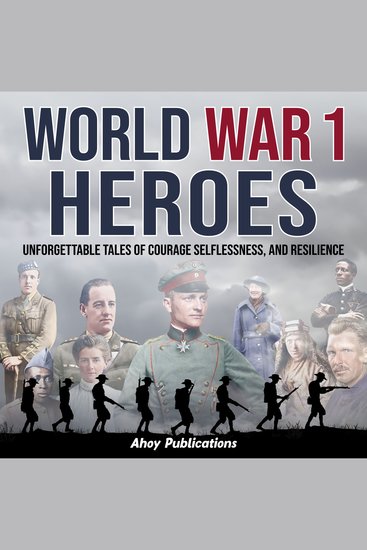
  • World War 1 Heroes: Unforgettable Tales of Courage Selflessness and Resilience - cover

    World War 1 Heroes:...

    Ahoy Publications

    • 0
    • 0
    • 0
    Live through the experiences of the most memorable World War 1 heroes! 
    Explore the unforgettable tales of resilience, courage, and selflessness that marked the most prominent heroes of World War I. 
    Are you a history buff looking to venture beyond the confines of common history facts regarding World War I? 
    Do you want to explore the lives and personal narratives of the individual participants instead? 
    Do you want to learn how the unsung heroes of the Great War cemented their name in history? 
    Unlike most history audiobooks, this one doesn’t stop at describing how a particular hero made their contribution to a prominent wartime event. Each chapter highlights one World War I actor, including their personal and professional traits. 
    The heroes include:Manfred von Richthofen - Learn how Manfred von Richthofen advanced in his military career and became the famous Red Baron.Lawrence of Arabia - Dive into the life and background of Lawrence of Arabia, one of the most famous saboteurs of the era.Nurse Edith Cavell - Take a journey through the chronicles of Nurse Edith Cavell, the Angel of Mercy.Alvin York - See how Alvin York transformed from a religious opponent to the violence of one of the most famous sharpshooters on the battlefield.Follow Eugene Bullard’s journey as the first African-American combat pilot.Noel Godfrey – Delve into the interesting world of Noel Godfrey and see how he went from athlete to notable doctor.Henry Johnson - Understand his role – and that of the Harlem Hellfighters –in the war. 
    Click on the “Add to Cart” button and explore these personal, fascinating narratives concerning World War I!
    Show book
  • Japan's Surrender - The Path to Victory in the Pacific and the End of World War II - cover

    Japan's Surrender - The Path to...

    Sage Winters

    • 0
    • 0
    • 0
    The Pacific theater of World War II was a brutal and protracted conflict, defined by fierce battles, shifting strategies, and immense human cost. By 1945, the war had entered its final stages, with the Allied forces, led primarily by the United States, gradually gaining the upper hand over Imperial Japan. The end of the Pacific War seemed inevitable, yet the path to Japan's surrender was far from straightforward. The road to victory in the Pacific involved a combination of military ingenuity, strategic alliances, and significant geopolitical shifts. However, the culmination of this path was not solely the result of battlefield victories but also of profound shifts in the political, economic, and moral considerations of both the Japanese leadership and the Allied powers. 
      
    The turning point in the Pacific War came with key battles such as the Battle of Midway in 1942, which severely crippled Japan’s naval forces, and the Allied island-hopping strategy, which successfully isolated and neutralized key Japanese strongholds in the Pacific. Despite these significant losses, Japan’s leadership remained determined to continue the war, believing that they could negotiate a favorable peace settlement or, at worst, fight to a bloody conclusion. In 1945, as Japan’s ability to defend its empire steadily diminished, the Allied forces intensified their efforts, culminating in the invasion of Okinawa—an operation that proved to be one of the bloodiest of the war. 
      
    As the war raged on, the Japanese home islands were subjected to relentless bombing campaigns, both conventional and, later, nuclear. The United States, having developed the atomic bomb, found itself at a crossroads. The decision to deploy this new weapon was fueled by the desire to force Japan’s surrender without having to launch a full-scale invasion, which would likely result in catastrophic casualties for both sides.
    Show book
  • How To Talk To Absolutely Anyone & Master Emotional Intelligence (2 in 1): Develop EQ Social & Conversation Skills Small Talk Witty Banter Charisma & Effective Communication - cover

    How To Talk To Absolutely Anyone...

    Chris M. Brooks

    • 0
    • 0
    • 0
    If you've always wanted to confidently talk to anyone, master emotional intelligence, and become the go-to person in any social or professional setting but struggle with awkward silences, social anxiety, or ineffective communication, then keep reading… 
    Are you sick and tired of feeling tongue-tied or misunderstood in conversations? 
    Have you tried endless other solutions, like memorizing conversation starters or reading body language tips, but nothing seems to work for more than a few weeks? 
    Do you finally want to say goodbye to missed opportunities and discover something that truly works for you? 
    If so, then you've come to the right place. 
    You see, mastering the art of conversation and emotional intelligence doesn't have to be difficult. 
    Even if you've tried forcing yourself into social situations, practicing in front of a mirror, or following generic advice that didn't quite fit, this 2-in-1 guide can transform your interactions. 
    Here's just a tiny fraction of what you'll discover in How To Talk To Absolutely Anyone & Master Emotional Intelligence (2 in 1):The 4 pillars of effective communication that will help you start, maintain, and end conversations with easeWhy trying to be "more interesting" is actually hurting your social skills – and what to do insteadA cool trick used by top influencers to keep conversations flowing effortlesslyThe 3 best techniques to develop an irresistible presence, even if you're an introvert 
    …and much, much more! 
    Take a second to imagine how you'll feel once you start captivating anyone you talk to, and how your friends, family, and colleagues will react when they see the new, confident you. 
    So even if you're a naturally shy person or have been labeled as "awkward" in the past, you can master communication and emotional intelligence with the guidance in this book.
    Show book
  • Virginia's Civil Rights Hero Curtis W Harris Sr - cover

    Virginia's Civil Rights Hero...

    William Lazarus

    • 0
    • 0
    • 0
    In 1924, the Virginia State Legislature passed the Racial Integrity Act. The act banned interracial marriage down to "a single drop" of African blood. Just three months later, Curtis W. Harris was born in Dendron, Virginia. Harris was the sixth child of impoverished sharecroppers, living in a desolate outpost of the Commonwealth, but in time he would lead the fight against the Racial Integrity Act and many other racially restrictive laws. Despite being arrested multiple times and beaten, Rev. Harris would help reverse centuries of racial discrimination that began when slaves first arrived in Virginia in 1619. Author William Paul Lazarus tells the story of Harris' determination in the face of intense hostility, which took him to the forefront of America's Civil Rights Movement, arm-in-arm with the Rev. Martin Luther King Jr.
    Show book
  • Who Gets to Write Fiction? - Opening Doors to Imaginative Writing for All Students - cover

    Who Gets to Write Fiction? -...

    Ariel Sacks

    • 0
    • 0
    • 0
    Writing and sharing fiction allows adolescents to glimpse other lives 


    The current curricular emphasis on analytical writing can make it feel risky to teach creative writing in ELA classrooms. But the opportunity to write fiction in school opens many doors for young people: doors the author argues are critical to the development of our students, our education system, and even our democracy. 


    This book will delight English teachers weary of focusing relentlessly on argument and information writing. Veteran teacher Ariel Sacks vividly describes the many academic, social–emotional, and community-building advantages of teaching imaginative writing in the classroom, not least of which is the impact it has on equity for marginalized students. Her book is a teacher-to-teacher text that folds in detailed, practical guidance about how to design lessons and meet standards, while presenting a powerful central argument: that the writing of fiction should be treated not as a luxury for some, but as a center of the English curriculum for all students.
    Show book