Join us on a literary world trip!
Add this book to bookshelf
Grey
Write a new comment Default profile 50px
Grey
Subscribe to read the full book or read the first pages for free!
All characters reduced
The US Army in World War I - Enriched edition - cover

The US Army in World War I - Enriched edition

United States Army, Center of Military History, Eric B. Setzekorn

Publisher: DigiCat

  • 0
  • 0
  • 0

Summary

The U.S. Army in World War I offers a comprehensive exploration of the critical role played by the United States Army during one of history's most pivotal conflicts. Expertly curated, this anthology delves into the multifaceted experiences and contributions of the army as they navigated the challenges of warfare on a global scale. The collection balances in-depth historical analysis with personal narratives, providing a unique blend of perspectives that paint a vivid portrait of the era. Notable pieces impart the soldier's journey from recruitment to battlefield heroics, all couched within the broader context of evolving military strategies and international relations. The anthology benefits from the combined expertise of the United States Army, Center of Military History, and Eric B. Setzekorn, whose scholarly insights anchor the collection within the broader discourses of military and historical studies. The contributors, each bringing their distinctive academic backgrounds and expertise, collectively examine the U.S. Army's transformation during World War I, aligning their analyses with the broader cultural and political dynamics of the early 20th century. Together, these voices illuminate the ways in which military action and innovation were intertwined with societal shifts and international policies. This volume is a must-read for those seeking a nuanced understanding of World War I's complexities as seen through American military eyes. By engaging with this anthology, readers are invited into a layered conversation about the interplay of military necessity, human experience, and strategic innovation. The U.S. Army in World War I not only educates but also enriches the dialogue concerning the lasting impact of the Great War, making it an indispensable resource for historians, students, and military enthusiasts alike.

In this enriched edition, we have carefully created added value for your reading experience:
- Hand‐picked Memorable Quotes shine a spotlight on moments of literary brilliance.
- Interactive footnotes clarify unusual references, historical allusions, and archaic phrases for an effortless, more informed read.
Available since: 12/14/2023.
Print length: 11140 pages.

Other books that might interest you

  • Discover Harmony: Transform Your World with Compassionate Communication - Elevate your journey! Access powerful audio insights to master Compassionate Communication and Transform Your World - cover

    Discover Harmony: Transform Your...

    Dorian Fairbanks

    • 0
    • 0
    • 0
    Discover Harmony: Transform Your World with Compassionate Communication 
    ⭐⭐ Simplified Audio Guide ⭐⭐ 
    Are you seeking to foster inner peace and enhance your communication skills through compassionate conversations? 
    Looking for a comprehensive guide that provides all the necessary insights to transform your interactions with heartfelt communication? 
    Your search ends here! 
    This guide serves as your ultimate companion for deepening your understanding, applying your skills, and engaging in practical exercises. You're geared for success in fostering harmonious relationships. 
    Updated insights for mastering compassionate communication. 
    Key features of this enriched guide: 
    - Profound insights about achieving inner peace through heartfelt dialogue 
    - Detailed explanations of compassionate communication techniques 
    - Effective strategies for preparing and engaging in meaningful conversations 
    Our guide distinguishes itself through comprehensive coverage, which is essential for your personal and relational growth. Concepts aren't merely skimmed; they are delved into with precision. 
    Designed with a clear structure and easy-to-understand language, our guide ensures smooth transitions between topics. Say goodbye to dense jargon and welcome clear, precise, and technically accurate content. 
    Discover Harmony: Transform Your World with Compassionate Communication 
    So, why wait? Click the BUY NOW button, secure your guide, and begin your journey to mastering compassionate communication!
    Show book
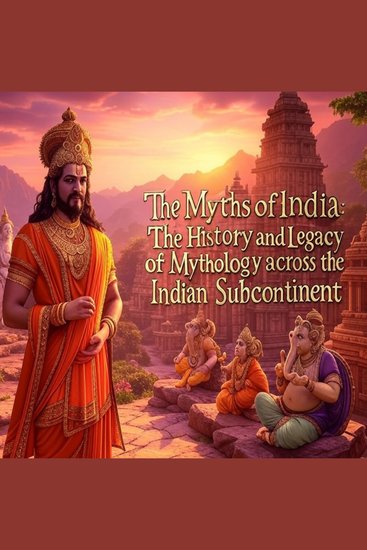
  • Myths of India The: The History and Legacy of Mythology across the Indian Subcontinent - cover

    Myths of India The: The History...

    Editors Charles River

    • 0
    • 0
    • 0
    Though it was one of the most advanced civilizations of its time and responsible for the most ancient prehistoric urban sites across the Indian subcontinent, the Indus Valley Civilization was forgotten for millennia, until 20th century archaeologists rediscovered and began excavations at Mohenjo-daro and Harappa. Although the civilization primarily flourished between approximately 3000 and 1500 BCE, these ancient Indians had longer lasting influences on the urbanization of the Indian subcontinent for centuries after, thanks to their monumental buildings and walls, enormous manmade platforms, innovative architectural techniques, and evidence that they engaged in trade over vast distances, with high-quality artifacts sent from the Indus Valley as far as Mesopotamia and even Africa.  
    	Of course, the Indus Valley Civilization and their successors, the Aryans, also influenced indigenous Indian religion and mythology. In the West, Hinduism is a religion that everyone has heard of but one that few non-practitioners truly understand. Today it is widely regarded as one of the world’s great religions and considered the indigenous religion of India, with practices and beliefs stretching back thousands of years.  
    	In reality, Hinduism as it is conceived of today is a conglomerate of a number of indigenous Indian religions. In fact, prior to the migration of Islam and the corporate invasion of the British, Hinduism may not have existed at all. Rather, a number of local religious traditions had very old belief systems dating back hundreds or thousands of years, depending on the tradition, and many worshiped gods that are no longer worshiped today. In essence, it was only through the non-indigenous populations in India, namely the Turks and later the British, who defined what Hinduism was.
    Show book
  • Split - a life shared: living with Multiple Personality Disorder - cover

    Split - a life shared: living...

    Maggie Walters

    • 0
    • 0
    • 0
    How does a child survive years of unimaginable abuse? 
    She splits. 
    And splits again. And again. And again. 
    And she does survive. But not without consequences. 
    As a young adult, years after her physical abuse has ended, Maggie Walters struggles with an 
    unpredictable temper and socially difficult behaviour. After several false starts she finds a therapist 
    who she trusts, just enough, to start talking about the childhood locked away behind the anger and 
    isolation she has learnt to live with. 
    Eventually she is diagnosed with Multiple Personality Disorder, MPD (now known as Dissociative 
    Identity Disorder or DID). 
    Gradually, she understands. It was not Maggie who survived her childhood. The instinct to survive 
    created an alternative identity called Annie, who with a myriad of other ‘alters’, lived through the 
    abuse inflicted on her. 
    Decades later, with a husband and three much-loved children, Maggie strives to live a normal life 
    despite a past which has left her internal world with a hidden, dark secret. Every day, unseen by 
    those around her, trigger incidents fill her head with voices, the chaotic remnants of her other selves 
    who lived the childhood she couldn’t. This is the ‘normal’ which Maggie has learned to live with. 
    In SPLIT Maggie tells the story of managing this ‘normal’, of understanding and accepting her past, 
    and standing strong in the life she has built from the ashes of her broken childhood. 
    It is a story not only of survival, but of self-acceptance, of the triumph to simply live. You will not 
    read another book like it.
    Show book
  • It's Not About The Money - 3 Steps to Become A Wealthy Woman - cover

    It's Not About The Money - 3...

    Catherine Morgan

    • 0
    • 0
    • 0
    The way we treat money is a mirror reflection of how we treat ourselves. 
    We give so much of our power away to the feelings inspired by money and our relationship with it. It’s time to redirect that power… to move from feeling disempowered to empowered… from not good enough to more than good enough… from unworthy to deserving. 
    We need to look at money through a trauma-informed lens. We need to distil the little traumas and the big traumas from our unconscious mind, from our belief systems, in order to change our perception of money to one of empowerment. 
    This book will help you do that. 
    It’s not about the money: 3 Steps to Becoming A Wealthy Woman guides us through the journey from Financial Insecurity to Financial Freedom through the lens of financial trauma and the emotions of money. 
    Catherine Morgan shares stories, inspiring thoughts, practical steps and powerful exercises, distilled through the lens of financial past, financial present and financial future in order to equip you to manage your money, mind and the behaviours that have prevented you from having more money, keeping hold of it and growing it.
    Show book
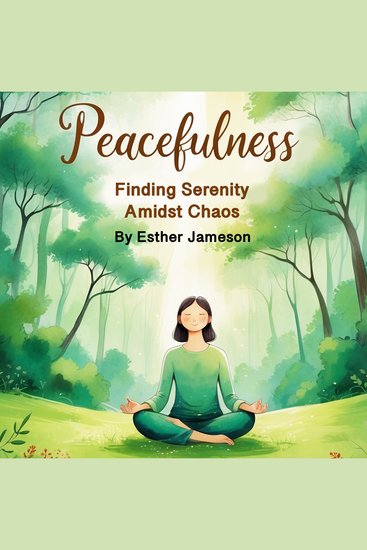
  • Peacefulness - Finding Serenity Amidst Chaos - cover

    Peacefulness - Finding Serenity...

    Esther Jameson

    • 0
    • 0
    • 0
    Peacefulness is often viewed as a state of being calm and free from disturbance, but its true nature goes much deeper. It is not just the absence of noise, chaos, or stress; it is a profound inner state that arises from balance and harmony within oneself. To understand peacefulness, it is essential to recognize that it is not a passive experience. It requires conscious effort, self-awareness, and intentional practice. 
    At its core, peacefulness is a state of mind. It is about finding tranquility within oneself, irrespective of external circumstances. While external factors such as a quiet environment or a peaceful community may contribute to our sense of peace, the ultimate source of serenity lies within. True peacefulness is not fleeting or dependent on situations. It is a lasting quality that can remain even in the face of challenges. 
    A peaceful person is someone who has cultivated the ability to remain centered in the midst of life’s inevitable ups and downs. This kind of peace is not about escaping from the world or disengaging from responsibilities. Instead, it is about responding to life’s demands with grace, clarity, and composure. A person at peace is able to accept the present moment, without clinging to the past or fearing the future.
    Show book
  • The Ukrainian Oligarchy After the Euromaidan - How Ukraine’s Political Economy Regime Survived the Crisis - cover

    The Ukrainian Oligarchy After...

    David Dalton

    • 0
    • 0
    • 0
    This book traces the conversion of wealth into political influence through vote-buying and of the transformation of political influence back into wealth.
    Show book