Join us on a literary world trip!
Add this book to bookshelf
Grey
Write a new comment Default profile 50px
Grey
Subscribe to read the full book or read the first pages for free!
All characters reduced
Journal to Heal - Write Your Way to Clarity and Closure - cover

Journal to Heal - Write Your Way to Clarity and Closure

T.S Avini

Publisher: T.S. AVINI

  • 1
  • 0
  • 0

Summary

In "Journal to Heal: Write Your Way to Clarity and Closure," discover the incredible power of journaling to transform your emotional landscape. Through insightful guidance and practical techniques, this book invites you on a journey of self-exploration and healing, illuminating the path to mental clarity and personal growth. - Learn how journaling can serve as a lifeline, helping you navigate anxiety, process grief, and foster forgiveness. - Discover practical strategies for establishing a consistent journaling routine, creating a sacred writing space, and setting powerful intentions that align with your healing journey.Whether you're new to journaling or a seasoned writer, this book is a treasure trove of inspiration and guidance. You'll gain insights into the therapeutic benefits of expressive writing, the role of creativity, and the art of vulnerability. Plus, explore how integrating meditation with journaling can deepen your practice, paving the way for clarity and closure.Start your journey to self-discovery and emotional freedom—embrace the power of your words and transform your life today.
Available since: 08/14/2025.
Print length: 199 pages.

Other books that might interest you

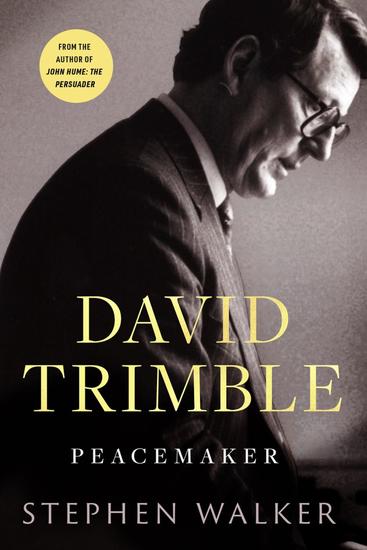
  • David Trimble: Peacemaker - cover

    David Trimble: Peacemaker

    Stephen Walker

    • 1
    • 0
    • 0
    Nobel laureate, party leader, peacemaker, first minister and statesman – David Trimble had many roles. But what is the real story behind the man who made headlines and changed lives?
    In this definitive biography of Trimble's life and death, award-winning journalist Stephen Walker vividly details how a shy Belfast academic changed the political landscape of Northern Ireland.
    Written with the cooperation of his widow, Lady Trimble, and their grown-up children, Peacemaker offers unparalleled insights into the life of the first person to be elected first minister of Northern Ireland and the most significant unionist leader since the creation of Northern Ireland in 1921. From the beginning of his political career in the dark days of the Troubles, to bringing unionism and nationalism together to end decades of division and violence and secure peace, Trimble's personal journey mirrors the story of Northern Ireland itself.
    Drawing on over 100 fresh interviews, this is a colourful and personal account of the life of a key figure in Irish history and an essential companion to Stephen Walker's bestselling biography of John Hume.
    Show book
  • The Elements of Style - cover

    The Elements of Style

    E.B. White, William Strunk Jr.

    • 0
    • 0
    • 0
    Make every word count. Say what you mean. Say it clearly.
    For generations, writers have turned to The Elements of Style for its simple, no-nonsense rules of good writing. With concise guidance on grammar, usage, composition, and style, Strunk and White show how clarity, brevity, and precision transform ordinary prose into confident communication.
    
    Regarded as "the most influential writing guide ever published," this timeless handbook is trusted by students, professionals, journalists, and authors alike. Its advice is direct, practical, and instantly applicable—whether you're crafting essays, emails, or stories.
    
    If you want to write with confidence, elegance, and impact, this essential classic belongs on your desk.
    
    Open the book—and start writing better today.
    Show book
  • The Battle of Lepanto - The Last Great Naval Clash - cover

    The Battle of Lepanto - The Last...

    Nova Ashford

    • 0
    • 0
    • 0
    The Battle of Lepanto, fought on October 7, 1571, stands as one of the most significant naval engagements in history. A defining moment in the struggle between Christian Europe and the expanding Ottoman Empire, it marked the climax of a centuries-long clash for dominance in the Mediterranean. Lepanto not only shaped the balance of power in the region but also signaled the beginning of the decline of the Ottoman naval supremacy. As one of the last great fleet engagements in history, the battle is remembered as a pivotal moment in the defense of Christendom and the resistance to Ottoman expansion. 
    At the heart of the conflict was the Ottoman Empire, a rising superpower that had established itself as a dominant force in the Mediterranean by the 16th century. Under the leadership of Suleiman the Magnificent, the Ottomans expanded their reach into North Africa and into Europe, pushing towards the gates of Vienna. By the time of the Battle of Lepanto, the Ottomans controlled much of the eastern Mediterranean, and their navy was one of the largest and most powerful in the world. However, the rapid expansion of the empire also stirred fears among Christian nations, who saw their way of life threatened by the growing Ottoman presence. 
    In response to this looming threat, Pope Pius V initiated the formation of the Holy League, an alliance of Catholic maritime states including Spain, Venice, and the Papal States. This coalition sought to halt the Ottoman advance and safeguard Christian territories in the Mediterranean. The Holy League’s formation was both a religious and political reaction to the Ottoman Empire's imperial ambitions.
    Show book
  • The World War That Changed the Story of Women - cover

    The World War That Changed the...

    Maximilian Natal

    • 0
    • 0
    • 0
    The World War That Changed the Story of Women explores the seismic shifts in women's roles brought on by the First World War. It delves into the pivotal moment in history when the seeds of modernity were planted and women stepped into the public sphere. It was the watershed event that inaugurated passports to travel, daylight-saving’s time, central banks in every country, and, alas, women in the workforce. From mothers and housewives, they became secretaries and factory workers, nurses and organizers. The reader is invited to witness a penetrating exploration of how a global conflict became a turning point in the story of women's rights and their transformation into an emerging economic powerhouse.
    Show book
  • The Master Key System - cover

    The Master Key System

    Charles Haanel

    • 0
    • 0
    • 0
    Every thing and institution we see around us, created by human agency, had first to exist as a thought in some human mind. Thought therefore is constructive. Human thought is the spiritual power of the cosmos operating through its creature, man. "The Master Key" instructs the reader how to use that power, and use it both constructively and creatively. The things and conditions we desire to become realities we must first create in thought."The Master Key" explains and guides the process.
    Show book
  • Playing through Pain - The Violent Consequences of Capitalist Sport - cover

    Playing through Pain - The...

    Daniel Sailofsky

    • 0
    • 0
    • 0
    For many fans and casual observers, professional sports and violence are deeply connected. Violence on the field has real consequences for players, notably in the form of life-altering injuries from concussions. Off the field, in the last several decades, scores of athletes have committed violent acts, from domestic abuse and sexual assault to animal abuse and murder. Beyond athletes, sport also serves as a site of political and structural violence, from the displacement and hyperpolicing of everyday people for mega-events to the "sportswashing" of environmentally harmful industries. 


    Daniel Sailofsky examines the endemic violence in professional sports and argues that—while related to masculinity, misogyny, and individual factors like alcohol consumption and gambling—it is most intimately tied to capitalism and to capitalist modes of consumption and profit. Sailofsky explains how capitalism creates the conditions for violence to thrive and uncovers how sports leaders—coaches, league officials, and team owners—obfuscate these relationships to avoid accountability. 


    From minor league baseball exploitation to spectator hooliganism, Sailofsky shows the connections between the business of sports and violence, but also, more importantly, he imagines new forms of sport that are not places of harm.
    Show book