Join us on a literary world trip!
Add this book to bookshelf
Grey
Write a new comment Default profile 50px
Grey
Subscribe to read the full book or read the first pages for free!
All characters reduced
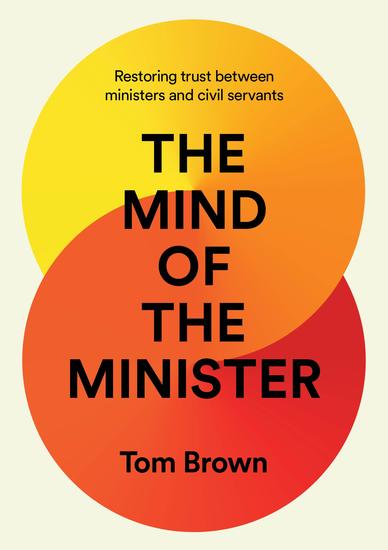
The Mind of the Minister - Restoring trust between ministers and civil servants - cover

The Mind of the Minister - Restoring trust between ministers and civil servants

Tom Browne

Publisher: Biteback Publishing

  • 0
  • 0
  • 0

Summary

Britain's most important relationship, between civil servants and ministers, has reached breaking point. Drawing on interviews with former government ministers and Permanent Secretaries – including Vince Cable, Caroline Flint, Rory Stewart, Philip Rutnam, Simon McDonald and Una O'Brien – The Mind of the Minister provides expert guidance and recommendations for how this vital relationship can improve.
Centuries of carefully built trust and mutual understanding have been undermined and strained in recent years, not least by mismanagement at the highest level, a scorched-earth approach to constitutional norms and the testing of civil service integrity. This relationship now needs urgent attention.
Ministers, famously, begin the job with an hour's notice and often know little about the department they've landed in. They bring energy, drive and optimism for change, but over time, these ambitions can be drowned by reality, accountability and crises, as well as the distractions of promotion, demotion or a changing political landscape.
Civil servants, on the other hand, serve the government of the day and remain in post while ministers come and go. They must be ready to adjust and impartially support a minister of any political persuasion or personality.
How does this partnership really work in practice? How do both sides adjust to the different chapters in a ministerial lifespan? What happens if rule makers become rule breakers without repercussions? This compelling book lifts the curtain on the minister–civil servant partnership, highlighting that this crucial relationship must improve – for the sake of our democracy.
Available since: 11/28/2024.
Print length: 320 pages.

Other books that might interest you

  • State looters Again and again - cover

    State looters Again and again

    Philippe Pascot

    • 0
    • 0
    • 0
    On September 15, 2017, in front of millions of television viewers, Emmanuel Macron, with François Bayrou, his Keeper of the Seals at the time, delivered his first lie: “It is now impossible to be elected when you have a B2 criminal record”. Nothing could be further from the truth: in 2025, it is still possible to stand for election and be elected after having been convicted by the courts, whereas there are 396 jobs requiring a clean criminal record. Ten years after the best-seller Pilleurs d'État (State Looters), which sold 120,000 copies, Philippe Pascot takes stock of the progress and setbacks in French politics, listing all the legal abuses still available to the political class: exorbitant salaries and associated expenses, tax exemptions, multiple pensions, fictitious employment, exceptional justice, show trials, bogus declarations of interest and activities, and so many other little arrangements between friends... For Philippe Pascot, the findings are indisputable: “Behind a declared desire for transparency and moralization in the political sphere, our elected representatives continue to nurture their own interests through laws that are less and less comprehensible, in order to escape criminal prosecution and drape themselves in a circumstantial innocence. ”
    Show book
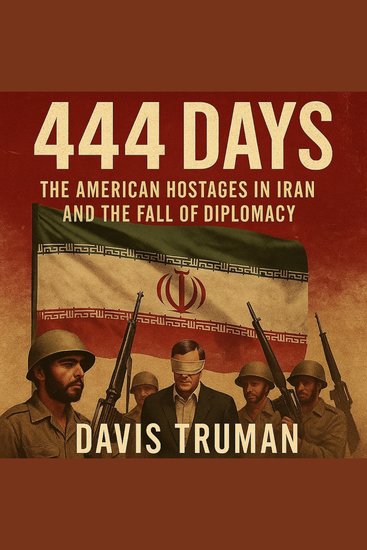
  • 444 Days - The American Hostages in Iran and the Fall of Diplomacy - cover

    444 Days - The American Hostages...

    Davis Truman

    • 0
    • 0
    • 0
    It is an explosive true story of survival, betrayal, and the moment America lost its grip on the Middle East. 
    On November 4, 1979, 52 Americans were taken hostage inside the U.S. Embassy in Tehran, an act that stunned the world and sparked a 444-day standoff that shattered U.S. diplomacy and changed global politics forever. 
    In this pulse-pounding narrative, acclaimed historian Davis Truman pulls back the curtain on the backroom deals, psychological torment, and international missteps that defined one of the longest hostage crises in modern history. Drawing from declassified documents, secret cables, and firsthand interviews, 444 Days brings to life the human drama at the heart of a geopolitical disaster. 
    When diplomacy fails, what remains: bluster, betrayal, or a better way forward?
    Show book
  • Relax Get Inspired: The Prince - cover

    Relax Get Inspired: The Prince

    Niccolo Machiavelli

    • 0
    • 0
    • 0
    Step into the ruthless and cunning world of Renaissance politics with Niccolò Machiavelli’s timeless masterpiece, "The Prince." Written in 1513 and still strikingly relevant today, this seminal work offers a pragmatic guide to power, leadership, and the art of governance. 
    Machiavelli, a diplomat and political theorist, draws from his vast experience and keen observations to craft a treatise that has shaped the minds of leaders for centuries. "The Prince" lays bare the often harsh realities of political rule, advocating for pragmatism over idealism and necessity over morality. Machiavelli’s unflinching advice on statecraft, diplomacy, and military strategy has earned the work both admiration and infamy. 
    Discover the enduring insights of a text that explores:The Acquisition and Maintenance of Power: Learn the essential strategies for gaining and retaining authority in a complex political landscape.Leadership and Human Nature: Delve into Machiavelli’s observations on human behavior and the qualities of effective rulers.Realpolitik: Understand the principles of practical politics where the ends justify the means. 
    "The Prince" remains an essential read for anyone interested in politics, history, and the dynamics of power. Its bold and provocative ideas challenge conventional wisdom and continue to spark debate and discussion. 
    Embrace the wisdom of Machiavelli and explore the depths of political strategy with "The Prince," a book that has withstood the test of time and remains a cornerstone of political literature.
    Show book
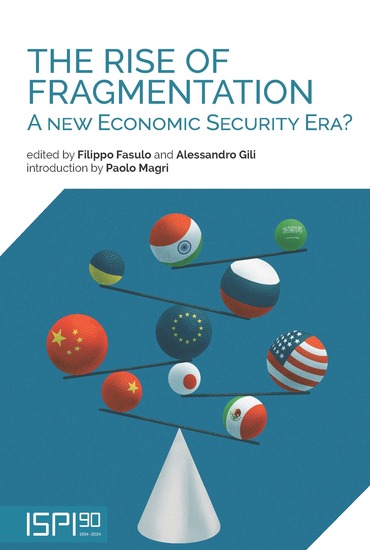
  • The Rise of Fragmentation - A New Economic Security Era? - cover

    The Rise of Fragmentation - A...

    Alessandro Gili, Filippo Fasulo

    • 0
    • 0
    • 0
    Multiple crises have shaken the foundations of the global economy, and the resulting instability has yet to recover. Instead, it has led to increasing fragmentation along political and ideological lines. The current geoeconomic order is increasingly defined by the use of advanced trade defense and economic security tools, such as tariffs, trade barriers, sanctions, and export restrictions, which have become more sophisticated. Major economies are adapting to this new reality by shaping their own definitions of economic security, particularly to safeguard critical and high-tech sectors. The EU, the US, and China are each calibrating their economic security strategies, seeking a balance between openness and protection that maximizes their respective advantages. However, in this shifting international landscape, new actors are emerging with the potential to influence the global balance of power.
    What type of "new globalization" is emerging? Could economic security tools become the new normal in the global economy? What are the key economic security strategies adopted by the world's leading economies?
    Show book
  • Second Inaugural Address - cover

    Second Inaugural Address

    Ronald Reagan

    • 0
    • 0
    • 0
    Because of extreme cold weather, Chief Justice Warren Burger administered the official oath of office in the White House on January 20, 1985. A public administration of the oath of office and the inaugural address were delayed until January 21, 1985, in the Capitol Rotunda.  
    On the 50th inauguration since George Washington’s, Reagan marvels at America’s growth and inventions, including journeying to the moon and back. “There are no limits to growth and human progress when men and women are free to follow their dreams.” Our values of faith, family, work, and neighborhood were restored “when our economy was finally freed from government’s grip”.  
    America supports "individual liberty, self-government, and free enterprise throughout the world…” We deal best with great challenges when we come “together not as Democrats or Republicans, but as Americans united in a common cause.”  
    “We must never again abuse the trust of working men and women by sending their earnings on a futile chase after the spiraling demands of a bloated Federal Establishment.” “Freedom and incentives unleash the drive and entrepreneurial genius that are the core of human progress.” 
    “We must act now to protect future generations from government's desire to spend its citizens' money and tax them into servitude when the bills come due.” Though “our heritage is one of blood lines from every corner of the Earth, we are all Americans, pledged to carry on this last, best hope of man on Earth.” 
    Rather than relying on mutual assured destruction, we need “a security shield that will destroy nuclear missiles before they reach their target” and “render nuclear weapons obsolete.”  
    We are “one people under God, dedicated to the dream of freedom that He has placed in the human heart, called upon now to pass that dream on to a waiting and hopeful world.” 
    Audio recording courtesy of the Ronald Reagan Presidential Library. 
    AspenLeafMedia.com
    Show book
  • Good Boys Bad Hombres - The Racial Politics of Mentoring Latino Boys in Schools - cover

    Good Boys Bad Hombres - The...

    Michael V. Singh

    • 0
    • 0
    • 0
    Educational research has long documented the politics of punishment for boys and young men of color in schools—but what about the politics of empowerment and inclusion? In Good Boys, Bad Hombres, Michael V. Singh focuses on this aspect of youth control in schools, asking on whose terms a positive Latino manhood gets to be envisioned. 


    Based on two years of ethnographic research in an urban school district in California, Good Boys, Bad Hombres examines Latino Male Success, a school-based mentorship program for Latino boys. Instead of attempting to shape these boys' lives through the threat of punishment, the program aims to provide an "invitation to a respectable and productive masculinity" framed as being rooted in traditional Latinx signifiers of manhood. Singh argues, however, that the promotion of this aspirational form of Latino masculinity is rooted in neoliberal multiculturalism, heteropatriarchy, and anti-Blackness. 


    Documenting the ways Latino men and boys resist the politics of neoliberal empowerment for new visions of justice, Singh works to deconstruct male empowerment, arguing that new narratives and practices—beyond patriarchal redemption—are necessary for a reimagining of Latino manhood in schools and beyond.
    Show book