Join us on a literary world trip!
Add this book to bookshelf
Grey
Write a new comment Default profile 50px
Grey
Subscribe to read the full book or read the first pages for free!
All characters reduced
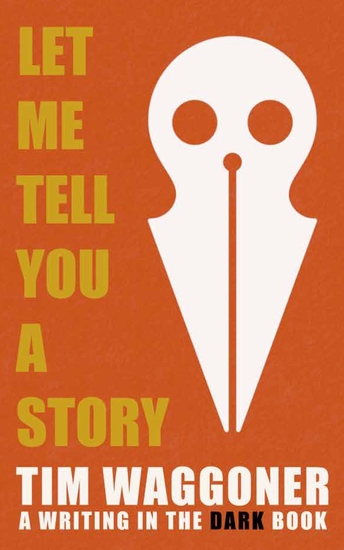
Let Me Tell You a Story - cover

Let Me Tell You a Story

Tim Waggoner

Publisher: Raw Dog Screaming Press

  • 0
  • 0
  • 0

Summary

In Let Me Tell You a Story, Tim Waggoner continues what he started in the Bram Stoker Award-winning Writing in the Dark (2020) and Writing in the Dark: The Workbook (2022), both of which focus on the art of composing successful horror fiction. This latest guidebook takes a different approach, foregrounding Waggoner’s prolific, decades-long career as a professional author. Partly autobiographical, partly tutorial and diagnostic, each chapter features one of Waggoner’s stories followed by reflection on the historical context of publication, insightful commentary, and exercises for writers who are just learning their craft as well as those who have already made a name for themselves. As always, Waggoner’s experience, wit, and know-how shine through as he discusses and re-evaluates material from 1990 to 2018. Let Me Tell You a Story is a vital contribution to his evolving nonfictional oeuvre.
Available since: 09/11/2024.
Print length: 228 pages.
Other books that might interest you

  • The US Army Combat Historian and Combat History Operations - World War I to the Vietnam War - cover

    The US Army Combat Historian and...

    Kathryn Roe Coker, Jason Wetzel

    • 0
    • 0
    • 0
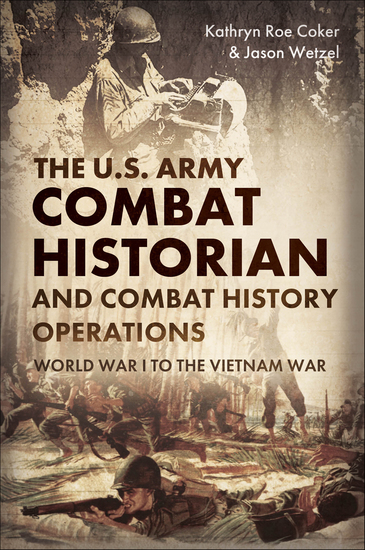
    "How is history useful for an operational commander or to soldiers in general? What role does history have for doctrine and training to the U.S. Army as an institution? These are questions this book answers as the authors narrate the development combat historian and the evolving role of combat historians as they develop history into a useful tool for informing training, operations, and doctrine development."—New York Journal of Books
    
    In World War I, Major General Pershing proposed the idea of establishing a historical office within the AEF headquarters. The War Department reorganized the General Staff to include a Historical Branch. Evidence shows that soldiers acting as historians went "down range," albeit not into combat. By World War II, the situation had changed—whether S.L.A. Marshall's popping out of a billet in Sibret as a shells exploded on the road; Forrest Pogue's typing "on a little camp desk under an apple tree;" Chester Starr's terrain reconnaissance in the Mediterranean theater, or Ken Hechler's command of a four-man historical team interviewing soldiers at the Remagen Bridge and searching through secret documents—the World War II combat historians were there behind and on the front lines with a notebook in one hand and their carbine in the other hand, ever ready to collect battlefield information.
    
    Eight historical service detachments were deployed to Korea. The youngest commander, 1st Lieutenant Bevin Alexander, noted "We were on the front lines the whole time . . . We would interview the people afterwards and create a battle study…." After the Korean War, the duties of the combat historian further evolved as what became the Center of Military History published doctrine about military history detachments (MHDs). As America’s immersion in Vietnam escalated, there was concern regarding historical coverage. Chief of Military History Brigadier General Hal Pattison established a network of historical teams to collect information on the U.S Army in the war. A major development in the history program and in deploying MHDs came with the establishment of Headquarters, U.S. Army Vietnam (USARV) under General William C. Westmoreland’s command. In 1965, the history office was organized at Headquarters, U.S. Army Vietnam (USARV). MHDs were deployed across Vietnam, conducting combat after action interviews, and collecting documents. This study focuses on U.S. Army historical programs during combat operations from World War I to the Vietnam War with particular attention on the combat historians, those individuals deployed to a theater of war with the mission of documenting the actions of that theater for current and future historical use.
    Show book
  • Parenting Children With ADHD - 10 Lessons That Medicine Cannot Teach - cover

    Parenting Children With ADHD -...

    PhD Vincent J. Monastra

    • 0
    • 0
    • 0
    Over the past thirty years, Dr. Monastra has treated more than 15,000 clients who have ADHD. In this indispensable book he shares the knowledge he has gained. 


    Children with ADHD struggle so much with inattention or hyperactivity and impulsivity that they have trouble succeeding at home, at school, with friends, or on the playing field. Arranged in a series of sequential lessons to be taken "one at a time," beginning with the causes of ADHD and the most common medical treatments. 


    Engaging and straightforward, the book is directed at parents of children who have, or might have, ADHD. Dr. Monastra discusses all the relevant issues for parents, including psychological treatment, diet, educational laws, and practical coping strategies for both parents and children. Parenting Children With ADHD, now in its second edition, shows how you can become your child's best advocate, helping to improve attention, behavioral control, and social skills. 


    Updates to this edition include information on new diagnostic tests, medications, and treatments; tips to help your school district create a safe for your child; and a new chapter on teaching life values, such as generosity and kindness.
    Show book
  • Project Mind Control - Sidney Gottlieb the CIA and the Tragedy of MKULTRA - cover

    Project Mind Control - Sidney...

    John Lisle

    • 0
    • 0
    • 0
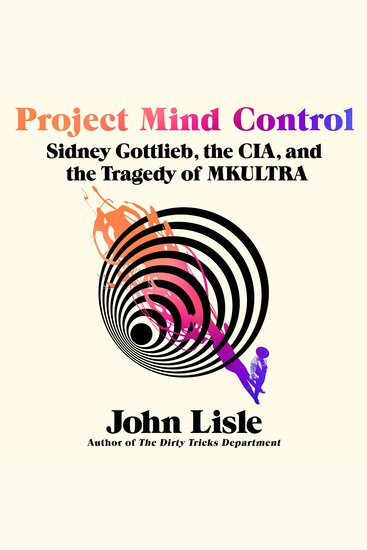
    The inside story of the CIA’s secret mind control project, MKULTRA, using never-before-seen testimony from the perpetrators themselves.Sidney Gottlieb was the CIA’s most cunning chemist. As head of the infamous MKULTRA project, he oversaw an assortment of dangerous—even deadly—experiments. Among them: dosing unwitting strangers with mind-bending drugs, torturing mental patients through sensory deprivation, and steering the movements of animals via electrodes implanted into their brains. His goal was to develop methods of mind control that could turn someone into a real-life “Manchurian candidate.” In conjunction with MKULTRA, Gottlieb also plotted the assassination of foreign leaders and created spy gear for undercover agents. The details of his career, however, have long been shrouded in mystery. Upon retiring from the CIA in 1973, he tossed his files into an incinerator. As a result, much of what happened under MKULTRA was thought to be lost—until now.Historian John Lisle has uncovered dozens of depositions containing new information about MKULTRA, straight from the mouths of its perpetrators. For the first time, Gottlieb and his underlings divulge what they did, why they did it, how they got away with it, and much more. Additionally, Lisle highlights the dramatic story of MKULTRA’s victims, from their terrible treatment to their dogged pursuit of justice.The consequences of MKULTRA still reverberate throughout American society. Project Mind Control is the definitive account of this most disturbing of chapters in CIA history."Listeners will be transfixed" —AudioFile on The Dirty Tricks DepartmentA Macmillan Audio production from St. Martin’s Press.
    Show book
  • Pershey The Rabbit - cover

    Pershey The Rabbit

    Brenda Martin Eldrid

    • 0
    • 0
    • 0
    Simple text and captivating illustrations are paired with beautiful music and fun sound-effects to help tell this charming story about “Pershey the Rabbit.” When Jeremy's father brings home a stuffed rabbit with red and blue polka dots on its ears, Jeremy is thrilled. Jeremy and Pershey go everywhere together. Find out what happens when Pershey is lost when the family goes to the beach on vacation. A happy ending adds interest to this special tale about a boy and his rabbit, and encourages a lifelong love for reading.
    Show book
  • Beverly Hills Spy - The Double-Agent War Hero Who Helped Japan Attack Pearl Harbor - cover

    Beverly Hills Spy - The...

    Ronald Drabkin

    • 0
    • 0
    • 0
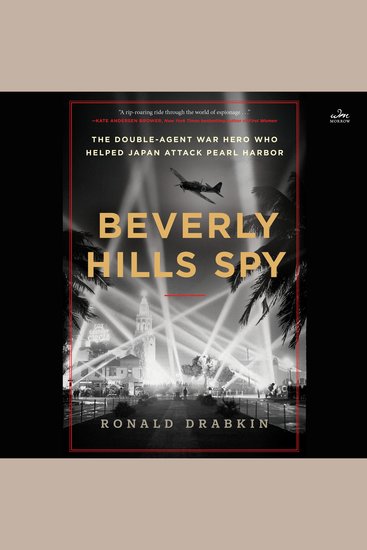
    In the spirit of Ben Macintyre’s greatest spy nonfiction, the truly unbelievable and untold story of Frederick Rutland—a debonair British WWI hero, flying ace, fixture of Los Angeles society, and friend of Golden Age Hollywood stars—who flipped to become a spy for Japan in the lead-up to the attack on Pearl Harbor. 
    Frederick Rutland was an accomplished aviator, British WWI war hero, and real-life James Bond. He was the first pilot to take off and land a plane on a ship, a decorated warrior for his feats of bravery and rescue, was trusted by the admirals of the Royal Navy, had a succession of aeronautical inventions, and designed the first modern aircraft carrier. He was perhaps the most famous early twentieth-century naval aviator. 
    Despite all of this, and due mostly to class politics, Rutland was not promoted in the new Royal Air Force in the wake of WWI. This ignominy led the disgruntled Rutland to become a spy for the Japanese navy. Plied with riches and given a salary ten times the highest-paid admiral, shuttled between Los Angeles and Tokyo where he lived in large mansions in both Beverly Hills and Yokohama, and insinuating himself into both LA high society and Japan’s high command, Rutland would go on to contribute to the Japanese navy with both strategic and technical intelligence. This included scouting trips to Pearl Harbor, investigations of military preparedness, and aircraft technology. All this while living a double life, frequenting private California clubs and hosting lavish affairs for Hollywood stars and military dignitaries in his mansion on the Los Angeles Bird Streets. 
    Supported by recently declassified FBI files and by incorporating unique and rare research through MI5 and Japanese Naval archives that few English speakers have access to, author Ronald Drabkin pieces together to completion, for the first time, this stranger-than-fiction story of one of the most fascinating and enigmatic characters of espionage history. 
    Supplemental enhancement PDF accompanies the audiobook.
    Show book
  • The Sociology of Urban Life - Interactions and Dynamics - cover

    The Sociology of Urban Life -...

    Lyric Vale

    • 0
    • 0
    • 0
    Urban sociology is the study of social life and human interaction in metropolitan environments. It is a field that explores the complex dynamics between individuals, communities, and institutions in urban settings. As cities continue to grow and transform, urban sociology provides invaluable insights into the structure and functioning of urban life, offering a lens through which we can understand how cities shape the behaviors, values, and relationships of their inhabitants. 
    The origins of urban sociology trace back to the rapid industrialization and urbanization of the 19th century. As people moved from rural areas to cities in search of better economic opportunities, new social challenges emerged, leading scholars to examine the effects of urban environments on social structures and individual behaviors. Urban sociologists have long been concerned with the ways in which cities influence issues like inequality, social mobility, family dynamics, crime, and community organization. 
    One of the central themes in urban sociology is the concept of social organization. Cities are intricate systems, with diverse populations, complex economies, and a wide range of institutions such as schools, businesses, governments, and religious organizations. Each of these institutions plays a vital role in shaping how people interact with one another and how they navigate their lives in an urban context. By studying these systems, urban sociologists seek to understand how cities function as both social entities and as arenas of competition, cooperation, and conflict.
    Show book