Join us on a literary world trip!
Add this book to bookshelf
Grey
Write a new comment Default profile 50px
Grey
Subscribe to read the full book or read the first pages for free!
All characters reduced
The Magic Mountain - cover

The Magic Mountain

Thomas Mann

Publisher: Seven Books

  • 0
  • 0
  • 0

Summary

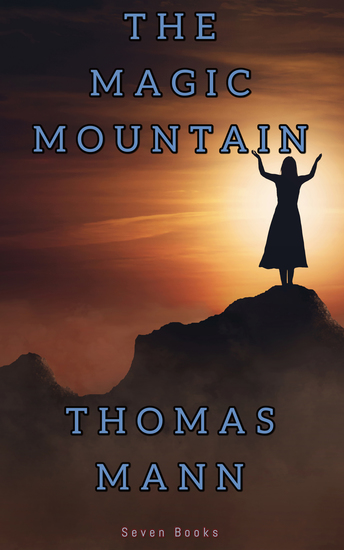
The Magic Mountain is a novel by Thomas Mann, first published in German in November 1924. It is widely considered to be one of the most influential works of twentieth-century German literature. Mann started writing The Magic Mountain in 1912. It began as a much shorter narrative that comically revisited aspects of Death in Venice, a novella that he was preparing for publication. The newer work reflected his experiences and impressions during a period when his wife, who was suffering from respiratory disease, resided at Dr. Friedrich Jessen's [de] Waldsanatorium in Davos, Switzerland, for several months. In May and June 1912, Mann visited her and became acquainted with the team of doctors and patients in this cosmopolitan institution. According to Mann, in the afterword that was later included in the English translation of his novel, this stay inspired his opening chapter ("Arrival").
Available since: 02/22/2025.
Print length: 250 pages.
Other books that might interest you

  • In the Quarter - cover

    In the Quarter

    Robert W. Chambers

    • 0
    • 0
    • 0
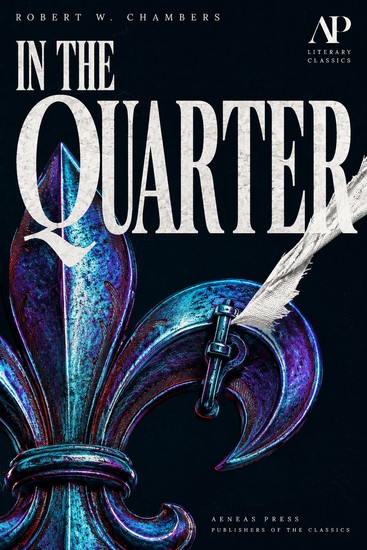
    The Latin Quarter in the 1890s: four art students, a studio, a model, absinthe, and a young American who takes it all more seriously than his friends do. Chambers trained as an artist in Paris himself before turning to fiction, and The King in Yellow made him a name Lovecraft would later borrow from; this 1894 first novel is the Quarter as he lived in it, with the poverty left in.
    Show book
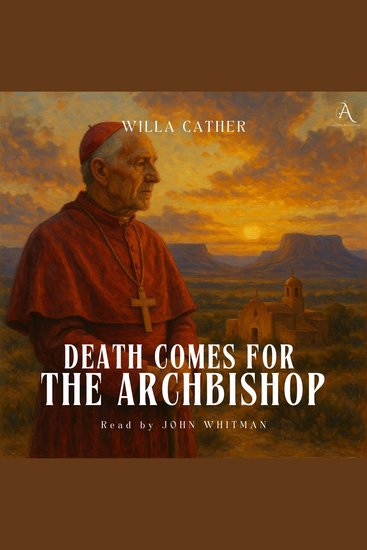
  • Death Comes for the Archbishop - Audiobook - cover

    Death Comes for the Archbishop -...

    Willa Cather, Classic...

    • 0
    • 0
    • 0
    Willa Cather's Death Comes for the Archbishop is a luminous novel set in the vast landscapes of the American Southwest during the mid-nineteenth century. It tells the story of Father Jean Marie Latour and his friend Father Joseph Vaillant, two French missionaries sent to establish the Catholic Church in the newly acquired territories of New Mexico. Through their journeys, Cather explores not only the challenges of faith but also the beauty and hardship of life on the frontier.Rather than relying on dramatic plot twists, the novel unfolds in a series of vignettes, painting a meditative portrait of endurance, friendship, and spiritual calling. The rugged deserts, mountains, and cultures of the region become living characters themselves, reflecting both the harshness and the majesty of the land.Deeply lyrical and contemplative, Death Comes for the Archbishop is both a spiritual narrative and a celebration of the human spirit's ability to persevere. It remains one of Cather's most acclaimed works, admired for its quiet power and its timeless evocation of faith and resilience.
    Show book
  • The Nightingale & the Rose - cover

    The Nightingale & the Rose

    Oscar Wilde

    • 0
    • 0
    • 0
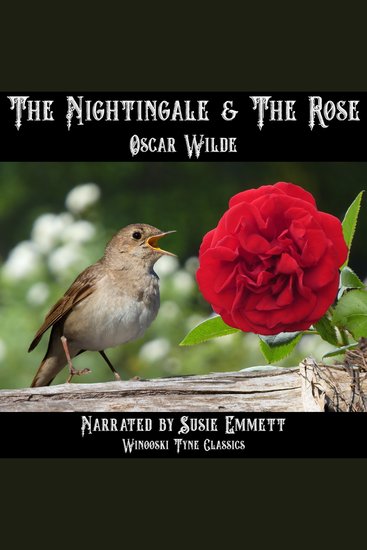
    The Nightingale & The Rose is one of Oscar Wilde's most poignant short stories. A nightingale overhears a student lamenting that he hasn't a red rose to give to his true love, so she sets out to find a rose, but must sacrifice a great deal to get it. The Nightingale & The Rose was first published in The Happy Prince and Other Tales in 1888.
    Show book
  • The Vicomte of Bragelonne - cover

    The Vicomte of Bragelonne

    Alexandre Dumas

    • 0
    • 0
    • 0
    A new king rises, old loyalties are tested, and the Musketeers face a world that is changing faster than their swords can follow.
    In this sweeping continuation of the D'Artagnan Romances, Raoul—the Vicomte of Bragelonne—steps into a France charged with political ambition, hidden rivalries, and dangerous passion. D'Artagnan, Athos, Porthos, and Aramis navigate shifting allegiances as Louis XIV begins his ascent, and the shadows of the court grow darker with every triumph.
    
    Celebrated as "one of Dumas's richest and most emotional works," this novel blends adventure, romance, and court intrigue with unforgettable depth. Readers love its grand historical scope, powerful character arcs, and the stirring bond between father and son.
    
    If you crave epic storytelling, complex politics, and the enduring spirit of the Musketeers, this masterwork will hold you spellbound to the final page.
    
    Step into the dawn of the Sun King's reign—start reading now and continue the legendary saga.
    Show book
  • Grandmother - cover

    Grandmother

    H.C. Andersen

    • 0
    • 0
    • 0
    Grandmother is old, kind, and she knows many stories. Between the pages of her psalter can be found a pressed withered rose that she often regards with a smile on her lips. Do you know why?Hans Christian Andersen (1805-1875) was a Danish author, poet and artist. Celebrated for children’s literature, his most cherished fairy tales include "The Emperor's New Clothes", "The Little Mermaid", "The Nightingale", "The Steadfast Tin Soldier", "The Snow Queen", "The Ugly Duckling" and "The Little Match Girl". His books have been translated into every living language, and today there is no child or adult that has not met Andersen's whimsical characters. His fairy tales have been adapted to stage and screen countless times, most notably by Disney with the animated films “The Little Mermaid” in 1989 and “Frozen”, which is loosely based on “The Snow Queen”, in 2013. Thanks to Andersen's contribution to children's literature, his birth date, April 2, is celebrated as International Children's Book Day.
    Show book
  • Animal Farm - cover

    Animal Farm

    George Orwell

    • 0
    • 0
    • 0
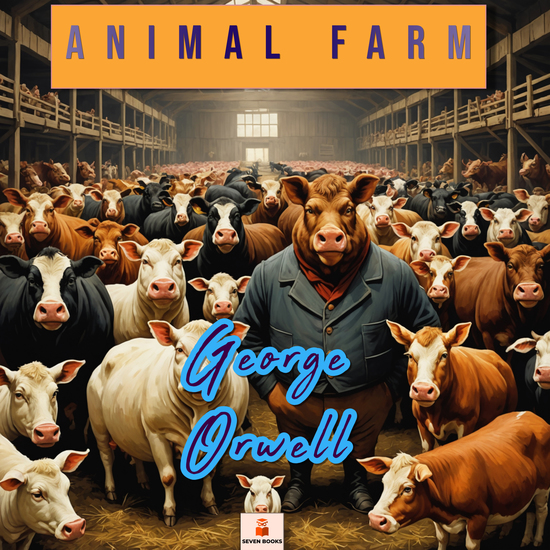
    Animal Farm is a satirical allegorical novella, in the form of a beast fable, by George Orwell, first published in England on 17 August 1945. It tells the story of a group of anthropomorphic farm animals who rebel against their human farmer, hoping to create a society where the animals can be equal, free, and happy. Ultimately, the rebellion is betrayed, and under the dictatorship of a pig named Napoleon, the farm ends up in a state far worse than before.According to Orwell, Animal Farm reflects events leading up to the Russian Revolution of 1917 and then on into the Stalinist era of the Soviet Union, a period when Russia lived under the communist ideology of Joseph Stalin. Orwell, a democratic socialist, was a critic of Stalin and hostile to Moscow-directed Stalinism, an attitude that was critically shaped by his experiences during the Barcelona May Days conflicts between the POUM and Stalinist forces, during the Spanish Civil War. In a letter to Yvonne Davet, Orwell described Animal Farm as a satirical tale against Stalin ("un conte satirique contre Staline"), and in his essay, "Why I Write" (1946), wrote: "Animal Farm was the first book in which I tried, with full consciousness of what I was doing, to fuse political purpose and artistic purpose into one whole".
    Show book