Join us on a literary world trip!
Add this book to bookshelf
Grey
Write a new comment Default profile 50px
Grey
Subscribe to read the full book or read the first pages for free!
All characters reduced
Brooks's Readers Third Year - A Comprehensive Collection for Developing Reading and Comprehension Skills - cover

Brooks's Readers Third Year - A Comprehensive Collection for Developing Reading and Comprehension Skills

Stratton D. Brooks

Publisher: Good Press

  • 0
  • 0
  • 0

Summary

In "Brooks's Readers, Third Year," Stratton D. Brooks presents a carefully curated collection of literary works designed to foster both reading proficiency and aesthetic appreciation among students in their third year of education. This anthology, characterized by its diverse selection spanning poetry, prose, and folklore, emphasizes clear and engaging narratives that not only enhance vocabulary but also cultivate critical thinking skills. Brooks adopts a didactic literary style, making each selection accessible while simultaneously challenging young readers to explore underlying themes and moral lessons relevant to their lives. Stratton D. Brooks, an influential figure in the realm of educational literature in the early 20th century, was committed to improving reading skills among children. His experiences as a teacher and educational reformer shaped the content and pedagogical approach of this reader, as he sought to create tools that would address the developmental stages of literacy. Brooks'Äôs understanding of the educational landscape during a time of significant change in teaching methodologies prompted him to advocate for a more interactive and engaging approach to reading. "Brooks's Readers, Third Year" is highly recommended for educators and parents alike who wish to enrich the literary experience for young readers. Its thoughtful arrangement of texts not only encourages enjoyment of literature but also paves the way for deeper comprehension and appreciation of language. By choosing this anthology, you are equipping students with essential reading skills while introducing them to a world of imagination and moral reflection.
Available since: 09/18/2023.
Print length: 116 pages.
Other books that might interest you

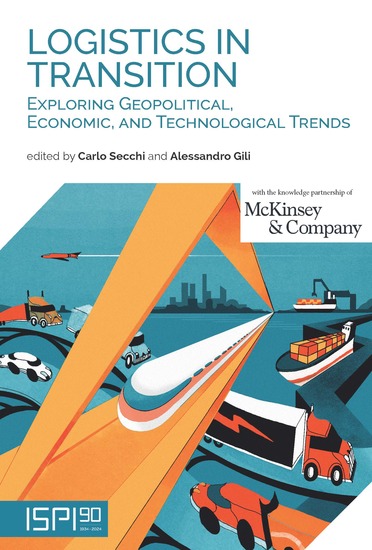
  • Logistics in Transition - Exploring Geopolitical Economic and Technological Trends - cover

    Logistics in Transition -...

    Carlo Secchi, Alessandro Gili

    • 0
    • 0
    • 0
    International cooperation is essential for fostering global connectivity and building resilient logistics systems. Geopolitical shifts and climate change present significant challenges that could disrupt the efficient operation of these systems. In the face of global instability, diversification and redundancy in transportation systems and modes are vital, with supply security forming the backbone of the global economy's smooth functioning.
    How can the resilience of value chains be bolstered amidst geopolitical pressures while navigating these dual transitions? How can logistics adapt to and capitalize on the new wave of potentially protectionist industrial policies? What strategies can be employed to mitigate risks, particularly for Europe, Italy, and the businesses involved?
    Show book
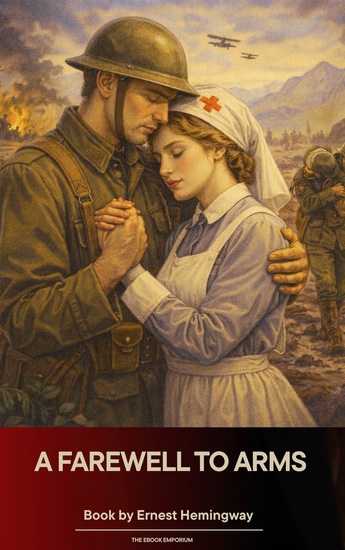
  • A Farewell to Arms - cover

    A Farewell to Arms

    Ernest Hemingway

    • 0
    • 0
    • 0
    Can love survive when the world is falling apart?
    
    First published in 1929, A Farewell to Arms is one of Ernest Hemingway's most powerful and enduring novels. Set against the brutal realities of World War I, the story follows Frederic Henry, an American ambulance driver serving in the Italian army, whose life is transformed by his love for Catherine Barkley.
    
    As war brings chaos, injury, and disillusionment, Hemingway explores the fragile hope of love in a world ruled by violence and chance. Written in his signature spare and direct style, the novel delivers deep emotional impact through restraint, honesty, and unforgettable moments of tenderness and loss.
    
    More than a war story, A Farewell to Arms is a meditation on courage, fate, and the human need for connection in the face of suffering.
    
    Inside this eBook, you'll experience:
    
    A classic World War I novel grounded in realism
    
    A tragic and deeply moving love story
    
    Hemingway's iconic minimalist prose style
    
    Themes of bravery, disillusionment, and endurance
    
    Widely studied and celebrated as a cornerstone of modern literature, A Farewell to Arms remains essential reading for anyone drawn to classic novels, war fiction, and timeless love stories.
    
    Say goodbye to illusions—and discover a novel that still speaks with quiet power. Buy now and experience one of Hemingway's greatest works.
    Show book
  • Campus Free Speech - A Pocket Guide - cover

    Campus Free Speech - A Pocket Guide

    Cass R. Sunstein

    • 0
    • 0
    • 0
    Free speech is indispensable on college campuses: allowing varied views and frank exchanges of opinion is a core component of the educational enterprise. But free speech does not mean a free-for-all. The First Amendment prohibits "abridging the freedom of speech," yet laws against perjury or bribery, for example, are still constitutional. In the same way, valuing freedom of speech does not stop a university from regulating speech when doing so is necessary for its educational mission. So where is the dividing line? How can we distinguish reasonable restrictions from impermissible infringement? 


    In this pragmatic, no-nonsense explainer, Cass Sunstein takes us through a wide range of scenarios involving students, professors, and administrators. He discusses why it's consistent with the First Amendment to punish students who shout down a speaker, but not those who chant offensive slogans; why a professor cannot be fired for writing a politically charged op-ed, yet a university might legitimately consider an applicant's political views when deciding whether to hire her. He explains why private universities are not legally bound by the First Amendment yet should, in most cases, look to follow it. And he addresses the thorny question of whether a university should officially take sides on public issues or deliberately keep the institution outside the fray.
    Show book
  • Timaeus - Plato’s Vision of the Cosmos – A Dialogue on Creation Nature and the Divine Mind - cover

    Timaeus - Plato’s Vision of the...

    Plato, Tim Zengerink

    • 0
    • 0
    • 0
    What if a single night’s conversation could reveal the secret anatomy of the cosmos? 
    Press play and join Socrates, Timaeus, Critias, and Hermocrates as they: 
    •	Unfold a Cosmic Origin Story – Hear the Demiurge mold the universe like a potter at the wheel. 
    •	Map the Four Elements – Vivid narration turns Plato’s geometric atoms into scenes you can picture and feel. 
    •	Bridge Myth and Reason – Follow arguments that glide from divine mythos to rigorous logos without missing a beat. 
    •	Spark Personal Reflection – Pauses and subtle tone shifts give you space to contemplate your place in a living, breathing universe. 
    Ideal for commutes, stargazing evenings, or late-night philosophizing, this immersive performance lets Plato’s grand design resonate in the theater of your mind.
    Show book
  • Literary Taste - How to Form It - cover

    Literary Taste - How to Form It

    Arnold Bennett

    • 0
    • 0
    • 0
    Discover the art of appreciating great literature with "Literary Taste: How to Form It" by Arnold Bennett. This insightful guide provides readers with advice on cultivating an enriched reading life, offering practical tips and curated reading lists spanning various genres and eras. Bennett's wisdom encourages readers to explore the vast landscape of literature, enhancing their understanding and enjoyment. Ideal for both novice and seasoned readers, this classic work remains a valuable resource for fostering a lifelong love of books.
    Show book
  • Dying Green - A Journey through End-of-Life Medicine in Search of Sustainable Health Care - cover

    Dying Green - A Journey through...

    Christine Vatovec

    • 0
    • 0
    • 0
    The slow violence being inflicted on our environment—through everything from carbon emissions to plastic pollution—also represents an impending public health catastrophe. Yet standard health care practices are more concerned with short-term outcomes than long-term sustainability. Every resource used to deliver medical care, from IV tubes to antibiotics to electricity, has a significant environmental impact. This raises an urgent ethical dilemma: in striving to improve the health outcomes of individual patients, are we damaging human health on a global scale? 


    In Dying Green, award-winning educator Christine Vatovec offers an engaging study that asks us to consider the broader environmental sustainability of health care. Through a comparative analysis of the care provided to terminally ill patients in a conventional cancer ward, a palliative care unit, and an acute-care hospice facility, she shows how decisions made at a patient's bedside govern the environmental footprint of the healthcare industry. Likewise, Dying Green offers insights on the many opportunities that exist for reducing the ecological impacts of medical practices in general, while also enhancing care for the dying in particular. By envisioning a more sustainable approach to care, this book offers a way forward that is better for both patients and the planet.
    Show book