

Join us on a literary world trip!
Add this book to bookshelf
Grey
Write a new comment Default profile 50px
Grey
Subscribe to read the full book or read the first pages for free!
All characters reduced
The Temptation of Saint Anthony - cover

The Temptation of Saint Anthony

شعبان منير

Publisher: Memorable Classics eBooks

  • 0
  • 0
  • 0

Summary

The Temptation of Saint Anthony by Gustave Flaubert  is a dramatic poem in prose (often referred as a novel) by the French author Gustave Flaubert published in 1874. Flaubert spent his whole adult life working fitfully on the book.

In 1845, at age 24, Flaubert visited the Balbi Palace in Genoa, and was inspired by a painting of the same title, then attributed to Bruegel the Elder (now thought to be by one of his followers). Flaubert worked at the subject in three versions, completed in 1849, 1856 (with extracts published at that time) and 1872, before publishing the final version in 1874.

It takes as its subject the famous temptation faced by Saint Anthony the Great, in the Egyptian desert, a theme often repeated in medieval and modern art. It is written in the form of a play script, detailing one night in the life of Anthony the Great, during which he is faced with great temptations.

	Saint Anthony: The protagonist. He is tempted by many characters and objects to stray from his belief that isolation is the truest form of worship.
	Ammonaria: One of his sister's friends, Anthony is drawn into a battle between his desire for her and his desire to remain holy before God in his isolation. He is distraught that he cannot control his body.
Available since: 06/03/2022.

Other books that might interest you

  • August Heat - From their pens to your ears genius in every story - cover

    August Heat - From their pens to...

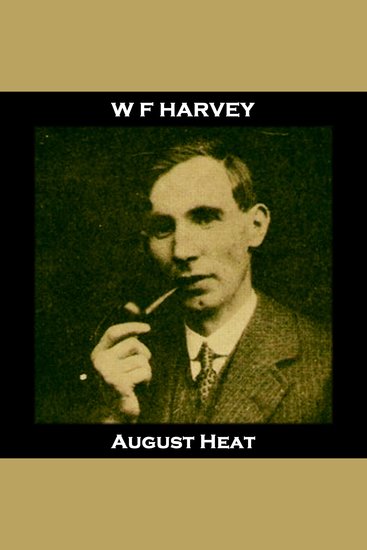
    W F Harvey

    • 0
    • 0
    • 0
    William Fryer Harvey AM was born on 14th April 1885 into a wealthy Quaker family in Leeds, West Yorkshire. 
    He was educated at the Quaker Bootham School in Yorkshire and Leighton Park School in Reading before university at Balliol College, Oxford.  
    His health was fragile and he poured his energies into writing short stories and in 1910 published his first collection ‘Midnight House’. 
    In the Great War he was with the Friends' Ambulance Unit and then served as a surgeon-lieutenant in the Royal Navy.  There he received the Albert Medal for Lifesaving but lung damage received at that time troubled him for the rest of his life. 
    He continued to write short stories, and even a memoir, but by 1925 ill health had forced his retirement to any outside work.  Three years later he published his second collection which contained his macabre classic ‘The Beast with Five fingers’, only one more collection would come from his pen in his lifetime. 
    For many years of his life he now lived in Switzerland with his wife but a yearning to be home saw them come back to England in 1935. 
    W F Harvey died in Letchworth on the 4th June 1937. He was 52.
    Show book
  • Twelve Stories and a Dream (Unabridged) - cover

    Twelve Stories and a Dream...

    H. G. Wells

    • 0
    • 0
    • 0
    Twelve Stories and a Dream -- "A Dream of Armageddon": "That book," he repeated, pointing a lean finger, "is about dreams. Dreams tell you nothing." I did not catch his meaning for a second. "They don't know," he added. I looked a little more attentively at his face. "There are dreams," he said, "and dreams." Also includes "Filmer," "The Magic Shop," "The Valley of Spiders," "The Truth about Pyecraft," "Mr. Skelmersdale in Fairyland," "The Story of the Inexperienced Ghost," "Jimmy Goggles the God," "The New Accelerator," "Mr. Ledbetter's Vacation," "The Stolen Body," "Mr. Brisher's Treasure," and "Miss Winchelsea's Heart."
    Show book
  • The Alchemist - The Original Manuscript - cover

    The Alchemist - The Original...

    Ben Jonson

    • 0
    • 0
    • 0
    An outbreak of plague in London forces a gentleman, Lovewit, to flee temporarily to the country, leaving his house under the sole charge of his butler, Jeremy. Jeremy uses the opportunity given to him to use the house as the headquarters for fraudulent acts. He transforms himself into 'Captain Face', and enlists the aid of Subtle, a fellow conman and Dol Common, a prostitute. In The Alchemist, Jonson unashamedly satirizes the follies, vanities and vices of mankind, most notably greed-induced credulity. People of all social classes are subject to Jonson's ruthless, satirical wit. He mocks human weakness and gullibility to advertising and to "miracle cures" with the character of Sir Epicure Mammon, who dreams of drinking the elixir of youth and enjoying fantastic sexual conquests. The Alchemist focuses on what happens when one human being seeks advantage over another. In a big city like London, this process of advantage-seeking is rife. The trio of con-artists - Subtle, Face and Dol - are self-deluding small-timers, ultimately undone by the same human weaknesses they exploit in their victims. 
     
    Benjamin Jonson was an English playwright and poet. Jonson's artistry exerted a lasting influence upon English poetry and stage comedy.
    Show book
  • Mysterious Portrait The (Unabridged) - cover

    Mysterious Portrait The...

    Nikolai Gogol

    • 0
    • 0
    • 0
    Nikolai Gogol was one of the first to use the technique of the grotesque. According to Viktor Shklovsky, Gogol's strange style of writing resembles the "ostranenie" technique of defamiliarization. His early works, such as Evenings on a Farm Near Dikanka, were influenced by his Ukrainian upbringing, Ukrainian culture and folklore.
    THE MYSTERIOUS PORTRAIT: Nowhere did so many people pause as before the little picture-shop in the Shtchukinui Dvor. This little shop contained, indeed, the most varied collection of curiosities. The pictures were chiefly oil-paintings covered with dark varnish, in frames of dingy yellow.
    Show book
  • Gulliver’s Travels (Legend Classics) - cover

    Gulliver’s Travels (Legend...

    Jonathan Swift

    • 0
    • 0
    • 0
    “Every man desires to live long, but no man wishes to be old.” 
    As a survivor of a shipwreck, Lemuel Gulliver encounters some entirely absurd things – at first, he is in the land of Lilliputians, the tiny men; but later he ventures to the land of the giants. The tale continues to oscillate between the extremes as he meets immensely wise and scientifically aware people before being faced with excessive self-preoccupation and ignorance. Whatever that societal order, Gulliver consistently is a witness to the abuse of power. The satire often overemphasises the contraries in order to accentuate our individual and societal flaws and proneness to being corrupt and biased. In such a distinct way it rebukes human narrow-mindedness and accentuates our subjectivity. 
    The novel’s multivalence has made it a celebrated children’s bedtime read – in particular, the first book – as well as a treasury of satirical metaphors and allusions that expose human and societal flaws in general and those of the English nobility in particular. The novel is an answer to Robinson Crusoe – it mocks Defoe’s protagonist’s too-good-to-be-true human aptness and reason. While some might find Swift’s modus operandi misanthropic, others will see him as a pragmatist who exemplifies how the excesses and polarities are detrimental and yet inescapable. Silly and bizarre, thought-provoking and alarming, this work is meant to be read and re-read as equally a jolly story and a philosophical or political collage of insights. 
    The Legend Classics series:Around the World in Eighty DaysThe Adventures of Huckleberry FinnThe Importance of Being EarnestAlice's Adventures in WonderlandThe MetamorphosisThe Railway ChildrenThe Hound of the BaskervillesFrankensteinWuthering HeightsThree Men in a BoatThe Time MachineLittle WomenAnne of Green GablesThe Jungle BookThe Yellow Wallpaper and Other StoriesDraculaA Study in ScarletLeaves of GrassThe Secret GardenThe War of the WorldsA Christmas CarolStrange Case of Dr Jekyll and Mr HydeHeart of DarknessThe Scarlet LetterThis Side of ParadiseOliver TwistThe Picture of Dorian GrayTreasure IslandThe Turn of the ScrewThe Adventures of Tom SawyerEmmaThe TrialA Selection of Short Stories by Edgar Allan PoeGrimm Fairy TalesThe AwakeningMrs DallowayGulliver’s TravelsThe Castle of OtrantoSilas MarnerHard Times
    Show book
  • The Yellow God - An Idol of Africa - cover

    The Yellow God - An Idol of Africa

    H. Rider Haggard

    • 0
    • 2
    • 0
    A former British Army major voyages to West Africa to discover a lost city of gold in this adventure novel by the author of King Solomon’s Mines.Since a bout of blackwater fever robbed Maj. Alan Vernon of his military post, he has cast about for a new vocation. A business scheme in the Sahara seems like the perfect fit for his engineering skills, until revelations about his partners give him pause. To save his family estate, Vernon decides to undertake his African venture on his own.Years ago, Vernon’s uncle brought a small golden idol back from Western Africa. The idol itself is worth little, but its strange powers will lead Vernon on a perilous journey to a world of riches. And there he will meet a beautiful but fearsome tribal ruler who is determined to make him her next husband.
    Show book
