Join us on a literary world trip!
Add this book to bookshelf
Grey
Write a new comment Default profile 50px
Grey
Subscribe to read the full book or read the first pages for free!
All characters reduced
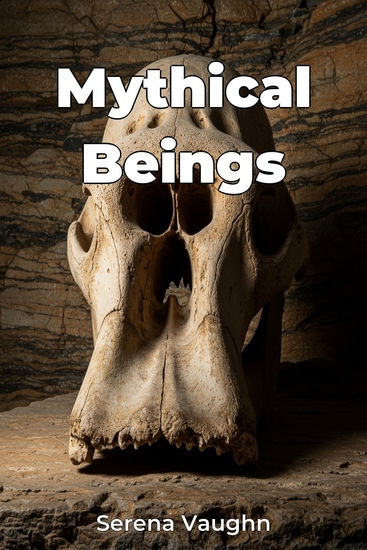
Mythical Beings - cover

Mythical Beings

Serena Vaughn

Translator A AI

Publisher: Publifye

  • 0
  • 0
  • 0

Summary

Mythical Beings explores the fascinating intersection of history and science, examining how real-world observations and cultural needs may have inspired the creation of mythological creatures. The book posits that many of these beings aren't pure fantasy but rather stem from misidentified fossils, misunderstood animal anatomy, and the human need to personify abstract concepts. For example, the Cyclops myth may originate from misinterpreted elephant skulls, while other creatures embody cultural anxieties and early scientific limitations.

 
The book delves into ancient texts, artwork, and archaeological findings from civilizations like Greece, Rome, and Egypt, alongside insights from paleontology and anthropology. It investigates how a lack of accurate information often fueled speculative interpretations of the natural world, leading to the creation of creatures like the Griffin and Minotaur. By examining these potential real-world origins, the book offers a deeper understanding of the societies that created these myths, revealing their beliefs, fears, and understanding of the world.

 
The book progresses by first establishing a theoretical framework based on misidentification and symbolic representation. Then, it examines specific case studies, such as the Cyclops, exploring potential origins in fossil discoveries and cultural narratives. Finally, it broadens the scope to analyze how widespread environmental phenomena and cultural archetypes contributed to similar mythical creatures across different cultures, before reflecting on the lasting influence of these creatures on contemporary culture.
Available since: 05/06/2025.
Print length: 64 pages.

Other books that might interest you

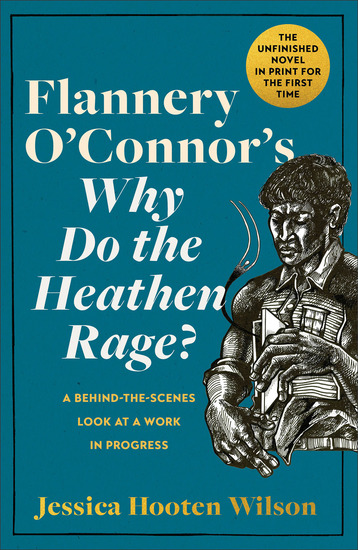
  • Flannery O'Connor's Why Do the Heathen Rage? - A Behind-the-Scenes Look at a Work in Progress - cover

    Flannery O'Connor's Why Do the...

    Jessica Hooten Wilson

    • 0
    • 0
    • 0
    Christianity Today 2025 Award of Merit (Culture, Poetry, and the Arts) 
     
    "Wilson does a great service in resurrecting one of O'Connor's lesser-known works."--Publishers Weekly 
     
    When celebrated American novelist and short story writer Flannery O'Connor died at the age of thirty-nine in 1964, she left behind an unfinished third novel titled Why Do the Heathen Rage? Scholarly experts uncovered and studied the material, deeming it unpublishable. It stayed that way for more than fifty years. 
     
    Until now. 
     
    For the past ten-plus years, award-winning author Jessica Hooten Wilson has explored the 378 pages of typed and handwritten material of the novel--transcribing pages, organizing them into scenes, and compiling everything to provide a glimpse into what O'Connor might have planned to publish. 
     
    This book is the result of Hooten Wilson's work. In it, she introduces O'Connor's novel to the public for the first time and imagines themes and directions O'Connor's work might have taken. Including illustrations and an afterword from noted artist Steve Prince (One Fish Studio), the book unveils scenes that are both funny and thought-provoking, ultimately revealing that we have much to learn from what O'Connor left behind.
    Show book
  • Napoleon's Europe - Empire and Conflict - cover

    Napoleon's Europe - Empire and...

    Nova Ashford

    • 0
    • 0
    • 0
    Napoleon Bonaparte, one of the most influential figures in world history, rose from modest beginnings to become the emperor of France and the master of much of Europe. Born on August 15, 1769, on the island of Corsica, Napoleon came from a relatively modest family. His father, a lawyer, was part of the minor nobility, but the family’s wealth was limited. Despite these humble origins, Napoleon's extraordinary ambition, sharp intellect, and relentless drive would propel him into the center of European politics, shaping the future of the continent. 
    Napoleon’s early life was marked by education at military academies, where his talent for strategy and leadership quickly became apparent. At the age of 16, he was commissioned as a second lieutenant in the French army. His rise through the ranks coincided with the turmoil of the French Revolution, which fundamentally altered France and its political landscape. In 1789, the French Revolution erupted, dismantling the monarchy and challenging traditional structures of power. It was in this chaotic period that Napoleon saw his opportunity. 
    During the Revolution, Napoleon initially made his name through his military prowess, especially during the Italian Campaign in the late 1790s. His innovative tactics and leadership were crucial in securing French victories against Austria and its allies. These victories not only increased Napoleon’s reputation but also solidified his status as one of France’s most brilliant generals. By 1799, France was embroiled in political instability, and the government—the Directory—was weakened by corruption and poor leadership. Amid this instability, Napoleon seized the moment to take control.
    Show book
  • The Life of Ancient Romans - cover

    The Life of Ancient Romans

    Francis Caputo

    • 0
    • 0
    • 0
    In 27 BC, when Augustus turned into the first sovereign of the Roman Empire, introducing the supreme period, the country he governed was more than 700 years of age. Rome's rulers had controlled an immense region that stretched out into northern Europe, parts of Africa, and Asia for quite a long time. The city of Rome was the most delightful and refined on the planet. It was filled with parks and gardens, marble curves and sculptures, lavish royal residences, immense amphitheaters, and rambling colleges. All were connected by an unpredictable organization of streets furthermore water-bearing reservoir conduits. Rome was a focal point of world culture as the capital of the most impressive country on Earth. By AD 98, majestic Rome arrived at its most extreme size, becoming the most significant realm ever. The vast domain contained around 60 million individuals, or around one-fourth of Earth's populace. Romans, who spoke Latin, alluded to their properties as the imperium sine fine, or "domain without end." The realm extended through the advanced countries of Spain, France, England, Netherlands, and Germany. It incorporated quite a bit of eastern Europe, including Slovenia, Romania, Armenia, and what's more, Croatia. The domain without end spread across North Africa from Morocco to Egypt and east into Turkey, Syria, and Iraq. Every one of the regions was joined under the Roman principle, wherever the official language was Latin. All over the place, installments were made in sestertii (Roman brass coins). All over, there was just a single law: Roman law.Most Roman subjects lived in separated ancestral networks where life had changed minimally in millennia. Provincial Romans chased, fished, developed small harvests, and tended domesticated animals. During the royal period, London and Paris were minimal more than a few military stations with less than 8,000 individuals. A considerable lot of the inhabitants were Roman officers called legionnaires. In any case, the realm a
    Show book
  • Rebuilding Democracy - Strategies for Countering Political Extremism - cover

    Rebuilding Democracy -...

    Thomas T. Taylor

    • 0
    • 0
    • 0
    Unravel the Extremes: A Journey Towards a More Balanced Democracy 
     
    In an era where political discourse is increasingly polarized, Thomas T. Taylor provides a beacon of hope. This book is a must-read for anyone concerned about rising extreme elements in American politics and yearning for a more balanced, inclusive democracy. 
     
    Taylor, known as "Mr. Friendly" in his hometown, has been a stalwart in local politics since his early twenties. He brings a unique perspective with a rich academic background in social psychology and political science. This book culminates his years of experience, theoretical knowledge, and personal insights. 
     
    "Rebuilding Democracy: Strategies for Countering Political Extremism" is more than just a book; it's a call to action. It offers hundreds of actionable items readers can implement to make a difference. It encourages readers to adopt multiple viewpoints, challenge their biases, and engage with ideologies that may diverge from their own. The book is a practical guide to understanding and combating political extremism, fostering a more balanced and equitable political discourse. 
     
    Don't just stand by as a spectator. Join Taylor on this journey towards a more balanced democracy. Learn how to critique even your in-groups, resist the traps of "both side-isms," and navigate the complexities of our political landscape. Together, we can save and rebuild our democracy. Take the first step today.
    Show book
  • Power Play - Boss Please Don’t Steal My Heart - cover

    Power Play - Boss Please Don’t...

    Nanaruk

    • 0
    • 0
    • 0
    She returned home carrying the weight of guilt, only to inherit everything. 
    After the death of her beloved mentor, a young woman finds herself unexpectedly named the heir to a powerful family business. But the inheritance comes with a catch: a high-stakes challenge that could either secure her future or destroy it. 
    Caught in the middle of ruthless family politics, hidden agendas, and fragile trust, she must navigate a dangerous game of power while protecting the legacy she never asked for. As if that weren't enough, a slow-burning attraction begins to grow between her and the enigmatic new female secretary, threatening to upend everything she thought she knew about loyalty, love, and herself. 
    Can she hold on to the empire, the people she cares about, and her own heart, or will it all slip through her fingers?
    Show book
  • I Came to Cast Fire - An Introduction to René Girard - cover

    I Came to Cast Fire - An...

    Fr. Elias Carr

    • 0
    • 0
    • 0
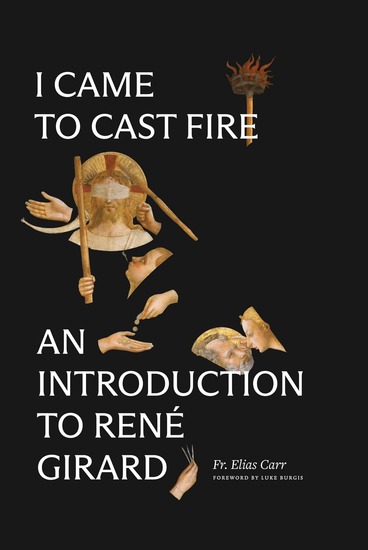
    The Catholic anthropologist René Girard (1923–2015) has emerged as one of the most important thinkers of the past century. His sweeping mimetic theory changed the landscape of both the social sciences and Christian theology. And with the rise of social media, political polarization, and globalized conflict, Girard’s ideas have only proven increasingly prophetic with every passing year. But where to begin with this “new Darwin of the human sciences”? His massive body of work remains daunting and disorienting, and secondary literature either academic in tone or limited in scope. General readers—if Girard shows up on their radar at all—face a high barrier of entry to understanding his theory and applying it to daily life.I Came to Cast Fire offers a timely solution: a comprehensive but accessible introduction to the thought of René Girard. In short and digestible chapters, Fr. Elias Carr takes readers through the basics of mimetic theory and how it plays out through history—from the violent origins of religion and culture to the radical revelation that unfolds in Christ—weaving in compelling personal anecdotes along the way. The perfect first step for those new to Girard, I Came to Cast Fire will not only inspire readers to see the world in a new light—the fire of the Paraclete proclaiming the innocence of the victim—but more importantly, to enter into it. 
    Show book