Join us on a literary world trip!
Add this book to bookshelf
Grey
Write a new comment Default profile 50px
Grey
Subscribe to read the full book or read the first pages for free!
All characters reduced
Subterranean Military Bases - cover

Subterranean Military Bases

Sebastian Farnham

Translator A AI

Publisher: Publifye

  • 0
  • 0
  • 0

Summary

Subterranean Military Bases unearths the hidden world of underground defense installations, exploring their historical context rooted in the Cold War, technological advancements, and strategic importance in ensuring national security. These concealed fortresses represent a crucial component of national defense strategies, providing redundancy and resilience, particularly in an era marked by increasing global instability. The book highlights how these bases evolved from simple shelters to complex operational centers, adapting to threats ranging from nuclear warfare to cyber attacks.

 
The book delves into the engineering challenges and innovations required to construct these underground facilities, often in geologically complex environments. It examines how the design and purpose of subterranean bases have shifted over time, emphasizing their role in command and control, intelligence gathering, and strategic communication.

 
Drawing from declassified documents and expert interviews, the book offers a multidisciplinary approach, integrating insights from engineering, geology, military science, and political science. Beginning with the historical precedents for underground fortifications, the book progresses through the design and construction phases, using examples like Cheyenne Mountain to illustrate engineering innovations and logistical hurdles. It then analyzes operational aspects and assesses the future relevance of these installations in the face of emerging threats, connecting to broader fields like civil engineering and architectural innovation. This approach provides a comprehensive understanding of these hidden dimensions of modern warfare.
Available since: 02/26/2025.
Print length: 70 pages.

Other books that might interest you

  • Fight for North America The: The History of the European Rivalries and Conflicts Before the American Revolution - cover

    Fight for North America The: The...

    Charles River Editors

    • 0
    • 0
    • 0
    Jamestown is remembered today because the settlement did survive through the hardships and go on to serve as the capital of the English colony for much of the 17th century. Likewise, the English would forge a settlement in Massachusetts Bay that also maintained tenuous relations with nearby natives. But while conflicts between settlers and natives remain well known, some of the European conflicts in North America have been overlooked, including England’s competitions with Spain and the Netherlands. When the West India Company, which presided over Dutch trade in the Americas, was created in 1621, a little settlement at the tip of Manhattan began to both grow and falter. When Willem Kieft arrived as director in 1638, it was already a sort of den of iniquity, full of “mischief and perversity,” where residents were given over to smoking and drinking grog and beer. Under Kieft’s reign, more land was acquired mostly through bloody, all-but-exterminating wars with the Native American population, whose numbers also dwindled at the hands of European-borne diseases.  
    	On September 13, 1759, a battle was fought on the Plains of Abraham outside the old city of Quebec that was one of the turning point battles in world history. Thanks to the British victory and the events that followed, Canada went from being a colony of France (New France) to being a colony of Great Britain, which permanently changed Canadian history. In many ways, the outcome of the battle brought about several American attempts to seize Canada during the Revolutionary War and War of 1812, and ultimately it ensured that when Canada became an independent country, it was part of the British Commonwealth with an Anglophone majority and a Francophone minority. Frictions over cultural and political issues between the English Canadians and the Québécois, dating back to the battle, continue to impact the state of affairs in Canada today.  
    Show book
  • The Ward - The Life and Loss of Toronto’s First Immigrant Neighbourhood - cover

    The Ward - The Life and Loss of...

    John Lorinc, Michael McClelland,...

    • 0
    • 0
    • 0
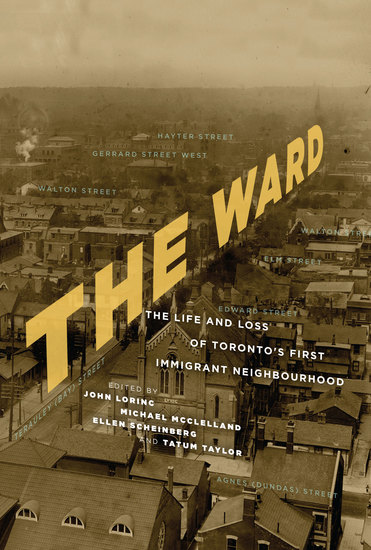
    The story of the growth and destruction of Toronto's first 'priority neighbourhood.'
       
    From the 1840s until the Second World War, waves of newcomers who migrated to Toronto – Irish, Jewish, Italian, African American and Chinese, among others – landed in 'The Ward.' Crammed with rundown housing and immigrant-owned businesses, this area, bordered by College and Queen, University and Yonge streets, was home to bootleggers, Chinese bachelors, workers from the nearby Eaton';s garment factories and hard-working peddlers. But the City considered it a slum, and bulldozed the area in the late 1950s to make way for a new civic square.
       
    The Ward finally tells the diverse stories of this extraordinary and resilient neighbourhood through archival photos and contributions from a wide array of voices, including historians, politicians, architects, story-tellers, journalists and descendants of Ward residents. Their perspectives on playgrounds, tuberculosis, sex workers, newsies and even bathing bring The Ward to life and, in the process, raise important questions about how contemporary cities handle immigration, poverty and the geography of difference.
       
    ‘The Ward shines a light on one of Toronto's most historically significant and most forgotten neighbourhoods. Instead of a straight history, the book's editors opted to present the Ward through multiple short essays, each with its own unique point of view. The result is a fascinating and varied look at an area that once concurrently defined the city and acted as its biggest shame. As a result of the Ward's eventual razing, there are few artifacts left to teach newer generations about this important part of Toronto's history. This book helps correct that.’
       
    – 2016 Toronto Book Awards Jury Citation
       
    '[The Ward] should be of interest to Canadians anywhere, reminding us that we all came from some place else.'
       
    – Michael Enright, CBC Sunday Edition
       
    Contents & Contributors
       
    Introduction – John Lorinc
       
    Searching for the Old Ward – Shawn Micallef
       
    No Place Like Home – Howard Akler
       
    Beforethe Ward: Macauleytown – Stephen A. Otto
       
    My Grandmother the Bootlegger – Howard Moscoe
       
    Against All Odds: The Chinese Laundry – Arlene Chan
       
    VJ Day – Arlene Chan
       
    Merle Foster's Studio: 'A Spot Of Enchantment' – Terry Murray
       
    Missionary Work: The Fight for Jewish Souls – Ellen Scheinberg
       
    King of the Ward – Myer Siemiatycki
       
    Where the Rich Went for Vice – Michael Redhill
       
    A Fresh Start: Black Toronto in the 19th Century – Karolyn Smardz Frost
       
    Policing the Lord’s Day – Mariana Valverde
       
    'The Maniac Chinaman' – Edward Keenan
       
    Elsie's Story – Patte Roseban
       
    Lawren Harris's Ward Period – Jim Burant
       
    'Fool's Paradise': Hastings' Anti-Slum Crusade – John Lorinc
       
    Strange Brew: The Underground Economy of Blind Pigs – Ellen Scheinberg
       
    The Consulate, the Padroni and the Labourers – Andrea Addario
       
    Excerpt: The Italians in Toronto – Emily P. Weaver
       
    Arthur Goss: Documenting Hardship– Stephen Bulger
       
    Fresh Air: The Fight Against TB – Cathy Crowe
       
    The Stone Yard – Gaetan Heroux
       
    William James: Toronto's First Photojournalist – Vincenzo Pietropaolo
       
    The Avenue Not Taken – Michael McClelland
       
    Timothy Eaton’s Stern Fortifications – Michael Valpy
       
    Settling In: Central Neighbourhood House – Ratna Omidvar & Ranjit Bhaskar
       
    Toronto’s Girl with the Curls – Ellen Scheinberg
       
    Chinese Cafés: Survival and Danger – Ellen Scheinberg & Paul Yee
       
    Defiance and Divisions: The Great Eaton's Strike – Ruth A. Frager
       
    Elizabeth Street: What the City Directories Reveal – Denise Balkissoon
       
    Growing Up on Walton Street – Cynthia MacDougall
       
    Revitalizing George Street: The Ward's Lessons – Alina Chatterjee & Derek Ballantyne
       
    Taking Care of Business in the Ward &ndash Ellen Scheinberg
       
    'A Magnificent Dome': The Great University Avenue Synagogue – Jack Lipinsky
       
    Reading the Ward: The Inevitability of Loss – Kim Storey & James Brown
       
    Toronto’s First Little Italy – John Lorinc
       
    The Elizabeth Street Playground, Revisited – Bruce Kidd
       
    Divided Loyalties – Sandra Shaul
       
    Crowded by Any Measure – John Lorinc
       
    A Peddler and His Cart: TheWard’s Rag Trade – Deena Nathanson
       
    Toronto's Original Tenement: Wineberg Apartments – Richard Dennis
       
    Excerpt: Tom Thomson's Diary – Tom Thomson
       
    An Untimely Death – Brian Banks
       
    Paper Pushers – Ellen Scheinberg 
       
    The BMR's Wake-Up Call – Laurie Monsebraaten
       
    Excerpt: Report of the Medical Health Officer … – Charles J. Hastings
       
    Dr. Clarke's Clinic – Thelma Wheatley
       
    Slum-Free: The Suburban Ideal – Richard Harris
       
    The Glionna Clan and Toronto's First Little Italy – John E. Zucchi
       
    'The Hipp' – Michael Posner
       
    Before Yorkville– John Lorinc
       
    Sex Work and the Ward’s Bachelor Society – Elise Chenier
       
    Public Baths: Schvitzing on Centre Avenue – Ellen Scheinberg
       
    The Health Advocates: McKeown on Hastings – John Lorinc
       
    Remembering Toronto's First Chinatown – Kristyn Wong-Tam
       
    Tabula Rasa – Mark Kingwell
       
    Unrealized Renewal  – J. David Hulchanski
       
    A Short History of the 'Civic Square' Expropriation – John Lorinc
       
    Storytelling is Part of the Story – Tatum Taylor
       
    How We Think About What (Little) Survives – Patrick Cummins
       
    Institutional Memory – Scott James & Victor Russell
       
    Alternative Histories – MichaelMcClelland
    Show book
  • What Happened When I Was Asleep - cover

    What Happened When I Was Asleep

    WILLIAM DINGWALL

    • 0
    • 0
    • 0
    This book expresses the truth of the world that is being hidden and concealed by those in positions of power. It highlights how we have been denied our basic right of freedom through optimized control from those we see as our leaders. There are truths about the world and the universe as a whole that we are not told or that are hidden from us. Due to this, we are exposed to things that we may not understand or that may manipulate us in a way we cannot control. If we were to uncover the truth and learn about the real workings of the universe, we may get a chance to save ourselves and expose those who are the manipulators.
    Show book
  • Goodbye Christopher Robin - A A Milne and the Making of Winnie-the-Pooh - cover

    Goodbye Christopher Robin - A A...

    Ann Thwaite, Frank Cottrell-Boyce

    • 0
    • 0
    • 0
    Goodbye Christopher Robin: A.A. Milne and the Making of Winnie-the-Pooh is drawn from Ann Thwaite's Whitbread Award-winning biography of A. A. Milne, one of England's most successful writers. 


    After serving in the First World War, Milne wrote a number of well-received plays, but his greatest triumph came when he created Winnie-the-Pooh, Piglet, Tigger, Eeyore, and, of course, Christopher Robin, the adventurous little boy based on his own son. Goodbye Christopher Robin inspired the film directed by Simon Curtis and starring Domhnall Gleeson, Margot Robbie, and Kelly Macdonald. It offers the listener a glimpse into the relationship between Milne and the real-life Christopher Robin, whose toys inspired the magical world of the Hundred Acre Wood. 


    Goodbye Christopher Robin is a story of celebrity, a story of both the joys and pains of success, and, ultimately, the story of how one man created a series of enchanting tales that brought hope and comfort to an England ravaged by the First World War.
    Show book
  • The Rise of Rage - Harnessing the Most Misunderstood Emotion - cover

    The Rise of Rage - Harnessing...

    Julie A. Christiansen

    • 0
    • 0
    • 0
    Rage through the centuries has shown that anger can be a catalyst for change; it can also be a tool employed in fear by those resisting reform or trying to quell protests or advancements by other people. Perhaps you too have experienced the rise of rage within yourself. You might be fed up with feeling angry and not having any way to express it. But counselor and psychotherapist Julie Christiansen says that if we take time to examine the belief systems that fuel our anger, we can free ourselves from the bondage that anger puts us in, learning how to make it work for us. 


    When we map out our anger, we can learn to manage it. With a ten-step program full of practical exercises such as defining your anger style, understanding your belief systems, releasing residual anger, and more, The Rise of Rage will help you: identify the ten anger styles; develop tools for resolving anger at work; give effective feedback and criticism; listen more effectively with a view to deepening connection; enhance communication in all manner of relationships; harness the power of forgiveness and acceptance; communicate effectively with angry people. 


    Embrace this journey of self-discovery with The Rise of Rage to learn what real anger is, what real forgiveness looks like, and which safe, effective, and successful anger resolution tools work best for you.
    Show book
  • The Vatican - A Look Behind the Scenes of the Catholic Church - cover

    The Vatican - A Look Behind the...

    Kelly Mass

    • 0
    • 0
    • 0
    What comes to mind when you say the words “Vatican City?” The Pope? Big cathedrals or underground catacombs with the corpses of buried saints from the past? Crowds of people with candles? Or a choir of young men in a certain attire? 
    The Vatican is a landlocked, independent city state and enclave in Rome, Italy. The Vatican City State, also called the Vatican, acquired independence from Italy in the year 1929 with the Lateran Treaty, and it is a different terrain under the Holy See's "full ownership, special rule, and sovereign authority and jurisdiction," which makes sure the city state's temporal, diplomatic, and spiritual independence. 
    This is one of the world’s most unique states/countries, something that is definitely worth understanding. With about 1.4 billion Catholics, in the world, it can be worth your while to study this guide to understand where their leadership and headquarters are situated, and what they do.
    Show book