Join us on a literary world trip!
Add this book to bookshelf
Grey
Write a new comment Default profile 50px
Grey
Subscribe to read the full book or read the first pages for free!
All characters reduced
Elite Secret Societies - cover

Elite Secret Societies

Sebastian Farnham

Translator A AI

Publisher: Publifye

  • 0
  • 0
  • 0

Summary

Elite Secret Societies explores the intriguing question of whether clandestine organizations have shaped politics, wars, and economics, or if it's merely conspiracy. By examining the historical evolution of secret societies, from ancient cults to modern groups like the Freemasons and Illuminati, the book investigates their documented influence on global events. It argues that while sensationalism often surrounds these groups, their impact on major historical events is undeniable and deserves serious consideration. 

 
The book highlights how these societies operate within power structures, influencing political and economic decisions. A key insight involves understanding how secrecy functions within these influential groups and how it impacts historical events. Through case studies of groups like the Skull and Bones and the Bilderberg Group, the book analyzes their origins, membership, and documented involvement in significant political and economic events.

 
The book progresses chronologically, beginning with defining secret societies and establishing an analytical framework. It culminates with a discussion of the implications of these societies' activities on modern democracy and international relations. By drawing evidence from historical archives, personal papers, and investigative journalism, Elite Secret Societies provides a fact-based examination, moving beyond speculation to offer a balanced, well-researched perspective on these hidden forces.
Available since: 03/21/2025.
Print length: 61 pages.
Other books that might interest you

  • Facing Narcissistic Personalities - Empowerment Techniques for Difficult Dynamics - cover

    Facing Narcissistic...

    Fiona Chen

    • 0
    • 0
    • 0
    In a world where interpersonal relationships play a pivotal role in our personal and professional lives, understanding and navigating the complexities of human behavior is crucial. "Facing Narcissistic Personalities: Empowerment Techniques for Difficult Dynamics" is an insightful and empowering book designed to shed light on the challenging dynamics associated with narcissistic personalities. Delving into the intricacies of interactions with individuals who exhibit narcissistic traits, this comprehensive guide aims to equip readers with the knowledge and practical tools needed to navigate such relationships effectively.  
    The book begins by unraveling the enigma of narcissistic personalities, exploring the psychological underpinnings that define their behavior and the impact it can have on those around them. By offering a nuanced perspective on the various facets of narcissism, readers gain a deeper understanding of the motivations, patterns, and challenges associated with these complex individuals.  
    Empowerment takes center stage in this book as it provides a range of practical techniques and strategies to help readers not only cope with but thrive in the face of narcissistic dynamics. From setting boundaries and maintaining self-care to cultivating resilience and fostering healthy communication, the book serves as a guide to reclaiming personal power and maintaining one's emotional well-being in challenging relationships.
    Show book
  • Greek Mythology for Kids: Captivating Tales and Myths of Greek Gods Goddesses Mythological Creatures Heroes Kings and Villains - cover

    Greek Mythology for Kids:...

    Matt Clayton

    • 0
    • 0
    • 0
    If you're looking for captivating Greek myths for kids, then pay attention... 
    In this audiobook, you will discover the fantastical myths, gods, and heroes that the ancient Greeks believed in. While these stories may not have taken place exactly as told, they provide an insight into the people of ancient Greece, their religion, and their values. 
    Who says history has to be boring? Greek mythology has it all! Almighty gods, brave heroes, epic battles, and terrifying monsters all make this audiobook less of a history lesson and more of a history adventure! 
    You’ll be amazed to find out just how much Greek mythology has inspired and shaped the world we live in today, especially modern-day cinema! These legendary myths will come to life with exciting images, helpful pronunciation tips for those tricky new words, fun facts, and activities to test your knowledge! 
    Just a small selection of the awesome things you’ll discover in this audiobook:Which of your favorite Disney characters and DC and Marvel superheroes were based on Greek gods and heroes?The twelve labors of HerculesWhere the sayings “Pandora’s box” and “Achilles’ heel” come fromFearsome Greek monsters like giants, Cyclopes, Sirens, the Minotaur, dragons, centaurs, and more!The smart, strong, and brave women and goddesses that helped and fought alongside the heroesHow long did the Trojan War last? And it only ended because of a wooden horse?Odysseus and the witch who kept him prisoner (you’ll recognize her name from the popular movie the Pirates of the Caribbean: Dead Man’s Chest)The origins of the Olympic Games opening ceremony and a popular Olympic sport! 
    So, what are you waiting for? Dive into this audiobook, and feel like you are an epic Greek hero battling monsters and saving the day. History has never been this much fun before!
    Show book
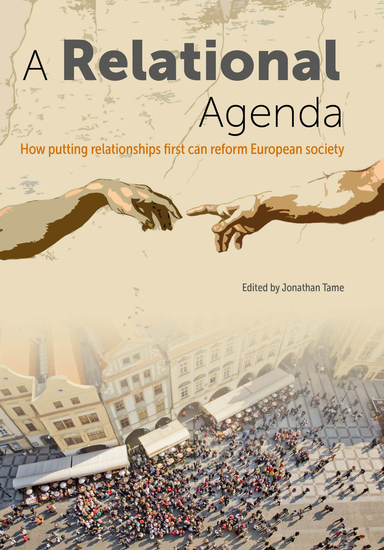
  • A Relational Agenda - How putting relationships first can reform European society - cover

    A Relational Agenda - How...

    Guy Brandon, Michel Schlüter,...

    • 0
    • 0
    • 0
    What framework can guide Christian engagement with major economic, social and political issues in public life in 21st century Europe?
    What other schools of thought exist apart from Catholic Social Teaching and Christian Democracy?
    
    Sallux has collaborated with the Jubilee Centre in Cambridge over several years to apply a new framework, agenda and strategy for Christian social reform, called Relational Thinking. It starts with the Christian belief that human beings are created by a relational God to form relational societies – the contemporary application of the ancient adage to 'love our neighbour as ourselves'.
    
    This book is a compilation of fi ve reports, two of which discuss the overall concept of Relational Thinking, while the others demonstrate how it can be applied to three contemporary issues: the need for monetary reform, the challenges of artifi cial intelligence and the ethics of remuneration. You can fi nd other examples of issues being analysed from a relational perspective, from business to city transformation.
    
    Deeply biblical, Relational Thinking builds bridges through the language of relationships to connect Christians with people of other faiths or none, and o er a fresh approach to Europe's greatest public policy challenges today.
    Show book
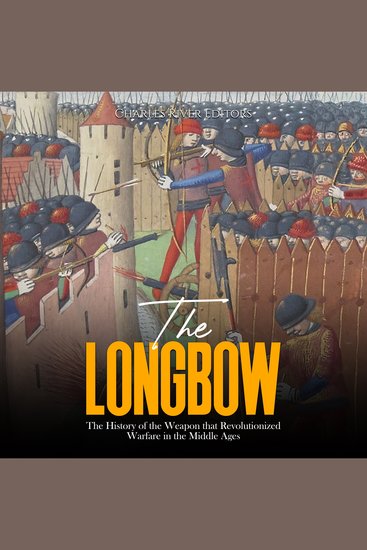
  • Longbow The: The History of the Weapon that Revolutionized Warfare in the Middle Ages - cover

    Longbow The: The History of the...

    Editors Charles River

    • 0
    • 0
    • 0
    While the bow was used throughout ancient times and the Middle Ages, on mainland Europe it was mostly replaced by the crossbow in the early 13th century, but that would change with the introduction of the longbow, a more powerful weapon than the traditional hunting bows. The original longbowmen were Welshmen recruited by King Edward I of England after he conquered Wales, and the weapon got its name from the fact that it was almost as tall as the man using it. This gave it a longer draw and therefore more force, as longbows were generally made of yew, a strong and pliable wood. The longbow was cheap and easy to make, but they required extensive training to be used well, so in England, commoners were encouraged and at times required to practice archery. A statute of Richard II dating from 1388 reads, “Servants and Laborers shall have Bows and Arrows, and use the same the Sundays and Holydays, and leave all playing at tennis or foot-ball, and other games called coits, dice, casting of the stone, kaikles [skittles], and other such importune games.” 
    	The longbow’s greatest day was at Agincourt in 1415, but the fact that this did not end the age of heavy plate cavalry indicated the longbow did have some limitations. For example, modern tests show that longbow arrows had trouble piercing plate armor, likely the main reason they were used as a massed weapon. With arrows raining down, it increased the chances of hitting a joint in the armor or an imperfection. Also, horse armor couldn’t protect the entire animal and the knights would soon find themselves dismounted. At some battles like Agincourt, the knights foundered in soft earth, and as their horses fell and the men became confused and hampered by the arrows clanking off their armor, they got mired in the mud and the English infantry could move in and finish them off. 
    Show book
  • HYPNOSIS for Confidence and Unshakable Self-Esteem - 3 X Powerful Hypnotherapy Meditations for Courage & Unstoppable Success Increase Your Self belief Take little Steps to Big Achievements - cover

    HYPNOSIS for Confidence and...

    Jennifer McPherson

    • 0
    • 0
    • 0
    Are you ready to transform your self-doubt into unstoppable confidence? In Hypnosis for Confidence and Unshakable Self-Esteem, I share my journey from insecurity to empowerment and offer you the tools to unlock your inner strength. 
    Through three powerful hypnotherapy meditations, you’ll learn to silence negative self-talk by focusing in on the positive thoughts, build unshakable self-belief, and take courageous steps toward your goals. My heartfelt guide will help you in overcoming limiting beliefs, whether rooted in childhood challenges, societal pressures, or life’s many hurdles. 
    Drawing on personal experience and years of research, I gently guide you on the path to rewiring your mindset for success and self-acceptance. 
    • Cultivate lasting self-esteem. 
    • Navigate life’s obstacles with courage. 
    • Create a foundation for meaningful achievements. 
    Confidence isn’t just for the select few, it’s for everyone. Whether you’re 18 or 80, this book offers a practical, supportive path to becoming the best version of yourself. 
    Embark on a journey towards unstoppable confidence and a life you truly deserve. Take the first step today and click “Buy” now.
    Show book
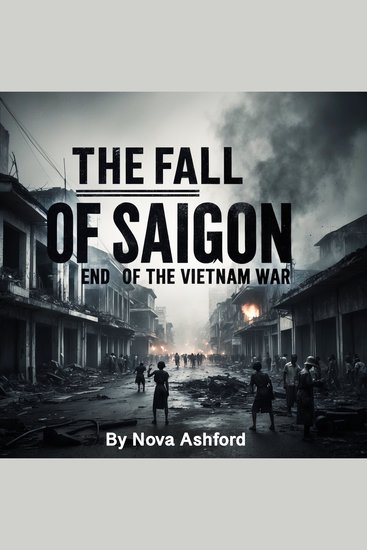
  • The Fall of Saigon - End of the Vietnam War - cover

    The Fall of Saigon - End of the...

    Nova Ashford

    • 0
    • 0
    • 0
    In the final phase of the Vietnam War, North Vietnam’s military strategy shifted into high gear. Following the 1973 Paris Peace Accords, which led to the withdrawal of U.S. troops, the North Vietnamese leadership viewed the South as vulnerable and unprotected. They seized this opportunity to begin a calculated and aggressive push toward Saigon. With the People's Army of Vietnam (PAVN) leading the offensive, key cities and regions across South Vietnam began to fall in rapid succession. Unlike earlier phases of the war, which were marked by a slow grind of guerrilla warfare and jungle battles, this stage saw well-coordinated, large-scale military campaigns. The North's confidence was bolstered by the perception that American military support would not return in a meaningful way. 
    This advance was not just a military endeavor—it was psychological. Each victory in the North’s campaign chipped away at the morale of South Vietnamese forces. Soldiers deserted in droves, supplies were stretched thin, and leadership at the local and national levels began to falter under pressure. In places like Ban Me Thuot and Pleiku, the speed of the North's takeover stunned both local populations and the South Vietnamese military, who had grown reliant on U.S. support during prior conflicts. Fear and confusion spread among civilians, many of whom began fleeing their homes in anticipation of the advancing northern troops. 
    The North Vietnamese did not rely on brute force alone. They combined strategic military planning with psychological operations to deepen the sense of inevitable defeat among South Vietnamese soldiers and citizens. Leaflets and radio broadcasts promised fair treatment to those who surrendered and warned of dire consequences for those who resisted. The result was an erosion of will more powerful than any bombing campaign. Defenses crumbled not only because of lack of resources, but because of fear and fatigue.
    Show book