Join us on a literary world trip!
Add this book to bookshelf
Grey
Write a new comment Default profile 50px
Grey
Subscribe to read the full book or read the first pages for free!
All characters reduced
Flame and Shadow - Enriched edition - cover

Flame and Shadow - Enriched edition

Sara Teasdale

Publisher: DigiCat

  • 0
  • 0
  • 0

Summary

In "Flame and Shadow," Sara Teasdale crafts a poignant exploration of love, loss, and the human spirit, delving into themes of emotional intensity and existential reflection. Written in a lyrical style, her poetry intertwines vivid imagery with delicate sound patterns, fostering a sensuous experience that resonates with the reader. This collection, published in the early 20th century during the height of the modernist movement, serves as a bridge between romantic idealism and the stark truths of contemporary life, capturing the duality of joy and sorrow inherent in the human experience. Sara Teasdale, an influential poet of the early 1900s, embodied the struggles and triumphs of a woman in a predominantly male literary landscape. Her personal experiences with love, heartbreak, and mental health profoundly informed her work, as evidenced in this collection. Teasdale's dedication to expressing her innermost feelings reveals her quest for authenticity, and the societal challenges she faced as a female poet elevated her voice in literature. "Flame and Shadow" is a must-read for those who appreciate profoundly emotional and beautifully crafted poetry. Teasdale's rich explorations of the complexities of love and identity will captivate readers and invite them to reflect on their own experiences of passion and vulnerability.

In this enriched edition, we have carefully created added value for your reading experience:
- A comprehensive Introduction outlines these selected works' unifying features, themes, or stylistic evolutions.
- A Historical Context section situates the works in their broader era—social currents, cultural trends, and key events that underpin their creation.
- A concise Synopsis (Selection) offers an accessible overview of the included texts, helping readers navigate plotlines and main ideas without revealing critical twists.
- A unified Analysis examines recurring motifs and stylistic hallmarks across the collection, tying the stories together while spotlighting the different work's strengths.
- Reflection questions inspire deeper contemplation of the author's overarching message, inviting readers to draw connections among different texts and relate them to modern contexts.
- Lastly, our hand‐picked Memorable Quotes distill pivotal lines and turning points, serving as touchstones for the collection's central themes.
Available since: 08/15/2022.
Print length: 20 pages.
Other books that might interest you

  • Wynken Blynken and Nod - cover

    Wynken Blynken and Nod

    Eugene Field

    • 0
    • 0
    • 0
    Librivox volunteers bring you 11 recordings of Wynken, Blynken, and Nod by Eugene Field. This was the Fortnightly Poetry project for September 14-28, 2014."Wynken, Blynken, and Nod" is a popular poem for children written by American writer and poet Eugene Field and published on March 9, 1889. The original title was Dutch Lullaby.The poem is a fantasy bed-time story of three children sailing and fishing in the stars. Their boat is a wooden shoe. The little fishermen symbolize a sleepy child's blinking eyes and nodding head.  Summary from Wikipedia.
    Show book
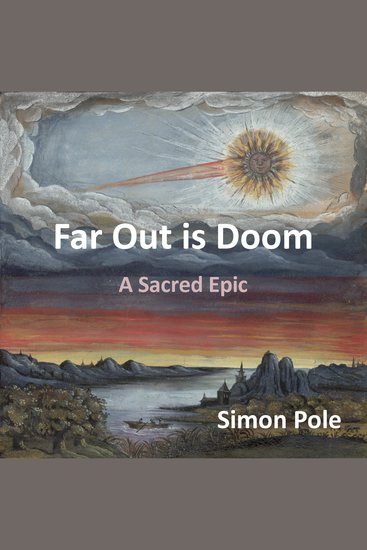
  • Far Out is Doom: A Sacred Epic - cover

    Far Out is Doom: A Sacred Epic

    Simon Pole

    • 0
    • 0
    • 0
    Reaching higher than the Tower of Babel, shining brighter than the Golden Calf, such is the idol of the future man will raise to worship. A rocketship of immense size and power, the culmination of the best efforts earth has to offer. By compulsion or chicanery, all have been forced to build it. And all will be changed by the Apocalypse its fiery crash from orbit ushers in... 
    In the Wasteland, where ignorant armies continue to fight, a small community is spared, eking out a meagre existence amidst the peril and threat. Always on the edge of disaster, they persevere in hope, with skills honed in the old world. After all, had not terrifying angels, visiting out of the dust, promised all would soon change again in the blink of eye? But, the young cannot wait, and a daughter of the tribe takes matters into her own hands... 
    The journey of man is the journey of earth, for all was made for us, and for us to destroy. And it is not just some men, but all who must choose, what is to be their highest value, the Ultimate. Will it be the rocket, in orbit high above, or what all men can share in equally: the love which uplifts every hand, every heart, and every soul it touches. Man's enemy might tempt us to lies and idols, but in the end we learn he who endures will be saved. 
    Bio 
    His mind corrupted by childhood exposure to horror movie matinees, but equally enthralled by the atmosphere of old churches, Simon Pole writes cosmic poetry from the location of Kingsville, Ontario. A graduate of Harvard University, Simon has continued his studies of what is hidden in the dark. Writing is also in his blood, being the great-great-grandson of early Canadian poet Susie Drury.
    Show book
  • A Young Boy Named David Book 23 - Welcome to Special Ed! - cover

    A Young Boy Named David Book 23...

    David M. Smith

    • 0
    • 0
    • 0
    The "Young Boy Named David" series is designed to help young ones deal with difficult situations that are hard to talk about. In Book 23, David goes to a new school and gets put into a special class designed to help him do better in class. Not only does he meet a teacher from his past, but David also makes a new best friend.
    Show book
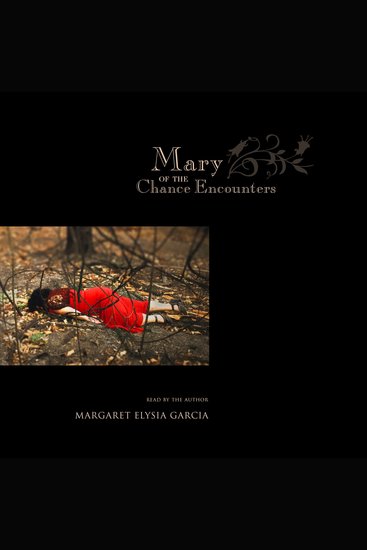
  • Mary of the Chance Encounters - cover

    Mary of the Chance Encounters

    Margaret Elysia Garcia

    • 0
    • 0
    • 0
    Mary of the Chance Encounters is a collection of stories set in southeastern Los Angeles, chronicling the Mexican-American and Anglo population stucco’d there between family, ghosts, strip malls and too wide boulevards. But their hopes and desires run magical, and sometimes weirdly perverse and erotic. The encounters break open the flat-lining air of consumer life.
    Show book
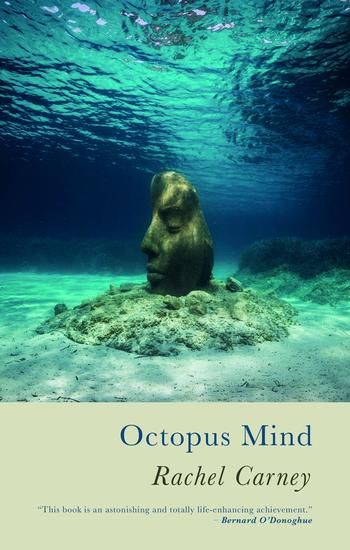
  • Octopus Mind - cover

    Octopus Mind

    Rachel Carney

    • 0
    • 0
    • 0
    Octopus Mind plays with an array of rich and original metaphors to explore the intricacies of neurodiversity, perception and the human mind. These poems articulate the desire to understand and be understood by oneself and others in a complex world. They observe the nuances of creativity, art, relationships, and self-expression through the lens of neurodiversity, reflecting on the poet's experience of being diagnosed with dyspraxia as an adult. They delve into the challenges of neurodiversity, but also reveal its gifts.
    Poems respond to visual artists like Gwen John, whose paintings break new ground for women representing their own visions of themselves. Other poems suggest that this can be a struggle however, as Pablo Picasso paints not a woman but his own despair in 'Blue Nude', while Elizabeth Siddal reflects on her own image, fetishized by the Pre-Raphaelite painters, and Henri Rousseau's painting becomes an outlet for self-deception and frustration. 
    Some of the most stunning poems in this collection perform a kind of magic or sleight of hand, as dyspraxia is explored through unique and remarkable metaphors, including a series of artefacts in a museum, a walk along the seashore, and a swaying tree. The 'Octopus Mind' evokes the possibilities of what it means to be human, through obsession, self-deception, realisation, and acceptance.
    The speaker in Octopus Mind is endearingly humble and we journey with them beyond self-criticism to reclaiming the self. In 'Growing', the narrator declares 'I will grow // into myself, climbing, steady, / grip by grip, leaf by leaf'. In 'Understood' the narrator describes the complex process of re-imagining one's place in the world, armed with new knowledge: 'Slowly, we adjust / our own soft ignorance / unroll our prejudice / in gentle waves.' 
    "A poet of multiple uncanny self-portraits, of the 'octopus mind', who explores the gaps between mind and body, and body and world, with deft, diverse diagnoses."Damian Walford Davies
    "Extraordinary poems of self-encounter, of divergence, of bruised bodies out of balance with themselves, laid bare – and of new-found identities, and joyous release." Richard Marggraf Turley 
    "Rachel Carney's debut collection delights in its curiosity and surrealism. This is a collection that 'swims out into deep ocean currents' to explore the workings of the mind and the impacts of this on the self." Katherine Stansfield
    Show book
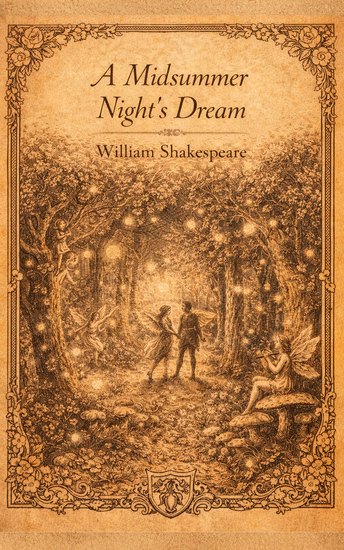
  • A Midsummer Night's Dream - cover

    A Midsummer Night's Dream

    William Shakespeare

    • 0
    • 0
    • 0
    A Midsummer Night's Dream is one of William Shakespeare's most enchanting and beloved comedies—a magical tale where love, illusion, and mischief collide under the moonlit sky. Set in ancient Athens and an enchanted forest nearby, the play weaves together multiple storylines filled with romance, mistaken identities, playful deception, and whimsical fantasy.
    
    At the heart of the story are four young lovers—Hermia, Lysander, Demetrius, and Helena—who find themselves entangled in a complicated web of affection and jealousy. When Hermia refuses to marry Demetrius, as commanded by her father, she flees into the forest with Lysander, the man she truly loves. Demetrius follows in pursuit, with Helena chasing after him in desperate devotion. What unfolds is a night of chaos and comedy when fairy magic interferes with human emotions.
    
    Hovering over the forest is the quarrel between Oberon, the King of the Fairies, and Titania, his Queen. Their dispute disrupts both the natural world and the lives of the mortals who wander into their realm. Determined to teach Titania a lesson, Oberon enlists the mischievous sprite Puck to use a magical flower whose nectar causes the victim to fall in love with the first creature they see upon waking. However, Puck's playful mistakes lead to hilarious consequences, causing lovers to switch affections and turning order into delightful confusion.
    
    Adding another layer of humor is a group of amateur craftsmen rehearsing a play for the Duke's wedding. Their clumsy performance preparations provide comic relief, especially when one of them, Nick Bottom, becomes the unwitting target of fairy enchantment.
    
    Through poetic language, witty dialogue, and imaginative storytelling, Shakespeare explores themes of love's irrationality, the thin line between dream and reality, the transformative power of imagination, and the unpredictability of desire. The forest becomes a symbolic space where societal rules loosen, identities shift, and characters confront their true feelings.
    
    Both lighthearted and profound, A Midsummer Night's Dream remains a timeless celebration of romance, magic, and the human heart. Its blend of fantasy and humor continues to captivate readers and audiences, reminding us that love—like a dream—can be beautiful, bewildering, and wonderfully unpredictable.
    Show book