Unisciti a noi in un viaggio nel mondo dei libri!
Aggiungi questo libro allo scaffale
Grey
Scrivi un nuovo commento Default profile 50px
Grey
Iscriviti per leggere l'intero libro o leggi le prime pagine gratuitamente!
All characters reduced
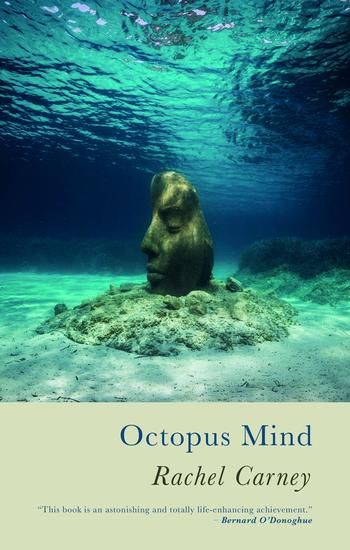
Octopus Mind - cover

Octopus Mind

Rachel Carney

Casa editrice: Seren

  • 0
  • 0
  • 0

Sinossi

Octopus Mind plays with an array of rich and original metaphors to explore the intricacies of neurodiversity, perception and the human mind. These poems articulate the desire to understand and be understood by oneself and others in a complex world. They observe the nuances of creativity, art, relationships, and self-expression through the lens of neurodiversity, reflecting on the poet's experience of being diagnosed with dyspraxia as an adult. They delve into the challenges of neurodiversity, but also reveal its gifts.
Poems respond to visual artists like Gwen John, whose paintings break new ground for women representing their own visions of themselves. Other poems suggest that this can be a struggle however, as Pablo Picasso paints not a woman but his own despair in 'Blue Nude', while Elizabeth Siddal reflects on her own image, fetishized by the Pre-Raphaelite painters, and Henri Rousseau's painting becomes an outlet for self-deception and frustration. 
Some of the most stunning poems in this collection perform a kind of magic or sleight of hand, as dyspraxia is explored through unique and remarkable metaphors, including a series of artefacts in a museum, a walk along the seashore, and a swaying tree. The 'Octopus Mind' evokes the possibilities of what it means to be human, through obsession, self-deception, realisation, and acceptance.
The speaker in Octopus Mind is endearingly humble and we journey with them beyond self-criticism to reclaiming the self. In 'Growing', the narrator declares 'I will grow // into myself, climbing, steady, / grip by grip, leaf by leaf'. In 'Understood' the narrator describes the complex process of re-imagining one's place in the world, armed with new knowledge: 'Slowly, we adjust / our own soft ignorance / unroll our prejudice / in gentle waves.' 
"A poet of multiple uncanny self-portraits, of the 'octopus mind', who explores the gaps between mind and body, and body and world, with deft, diverse diagnoses."Damian Walford Davies
"Extraordinary poems of self-encounter, of divergence, of bruised bodies out of balance with themselves, laid bare – and of new-found identities, and joyous release." Richard Marggraf Turley 
"Rachel Carney's debut collection delights in its curiosity and surrealism. This is a collection that 'swims out into deep ocean currents' to explore the workings of the mind and the impacts of this on the self." Katherine Stansfield
Disponibile da: 01/07/2023.
Lunghezza di stampa: 72 pagine.

Altri libri che potrebbero interessarti

  • Porn Play - cover

    Porn Play

    Sophia Chetin-Leuner

    • 0
    • 0
    • 0
    'I'm actually thinking about giving into temptation. The original sin.'
    Ani is a dazzling young academic with a secret addiction to violent pornography. As her career and relationships unravel in between lectures on Paradise Lost, can she confront her uncontrollable desires? 
    Funny, unsettling and honest, Sophia Chetin-Leuner's Porn Play was shortlisted for the Verity Bargate Award in 2022, and premiered at the Royal Court Theatre, London, in 2025, directed by Josie Rourke and starring Ambika Mod.
    Mostra libro
  • Rosmersholm - cover

    Rosmersholm

    Henrik Ibsen

    • 0
    • 0
    • 0
    Rosmersholm is a play written in 1886 by Norwegian playwright Henrik Ibsen. In the estimation of many critics the piece is Ibsen's masterwork, only equalled by The Wild Duck of 1884. As expressed by the protagonist, Rosmer, the theme of the play is social and political change, in which the traditional ruling classes relinquish their right to impose their ideals on the rest of society, but the action is entirely personal, resting on the conduct of the immoral, or amoral, "free thinking" heroine, Rebecca, who sets herself to undermine Rosmer's religious and political beliefs because of his influential position in the community. Rebecca has abandoned not only Christianity but, unlike Rosmer, she has abandoned the whole ethical system of Christianity as well. Possibly she may be taken as Ibsen's answer to the question of whether or not Christian ethics can be expected to survive the death of the Christian religion. (Summary by Wikipedia)CastJohn Rosmer: Bruce PirieRebecca West: Elizabeth KlettKroll: Algy PugUlrik Brendel: David LawrencePeter Mortensgaard: Delmar H. DolbierMrs. Helseth: Carol BoxNarrator: SkylarkAudio edited by: Elizabeth Klett
    Mostra libro
  • A Rhyme A Dozen ― Spring - 12 Poets 12 Poems 1 Topic - cover

    A Rhyme A Dozen ― Spring - 12...

    Claude McKay, William Morris,...

    • 0
    • 0
    • 0
    ‘A dime a dozen’ as known in America, is perhaps equal to the English ‘cheap as chips’ but whatever the lingua franca of your choice in this series we hereby submit ‘A Rhyme a Dozen’ as 12 poems on many given subjects that are a well-rounded gathering, maybe even an essential guide, from the knowing pens of classic poets and their beautifully spoken verse to the comfort of your ears. 
    1 - A Rhyme A Dozen - 12 Poems, 12 Poets, 1 Topic - Spring - An Introduction 
    2 - Ode on the Spring by Thomas Gray 
    3 - Sonnet VIII - To Spring by Charlotte Smith 
    4 - Spring by Gerard Manley Hopkins 
    5 - I Have a Bird in Spring by Emily Dickinson 
    6 - Spring by Alfred Lord Tennyson 
    7 - Prairie Spring by Willa Cather 
    8 - In Springtime by Rudyard Kipling 
    9 - Spring in New Hampshire by Claude McKay 
    10 - Spring's Bedfellow by William Morris 
    11 - Spring Showers by James Thomson 
    12 - Spring Rain by Sara Teasdale 
    13 - These, I, Singing in Spring by Walt Whitman
    Mostra libro
  • You Can Leave - a novel - cover

    You Can Leave - a novel

    Laurie Calhoun

    • 0
    • 0
    • 0
    When is a suicide not a suicide? You Can Leave, a novel by Laurie Calhoun, portrays a dark, disturbing, dystopic world where dissenters are permanently silenced whenever perceived of as threats by ruthless sociopaths occupying the highest corridors of power. The narrator relays her experiences at the hands of "the new mob", a coordinated network of operatives enlisted from all walks of life on a "need to know" basis to carry out what appear to be trivial tasks for enticing sums of money. Lost in the labyrinth of an insane bureaucracy run amok, the heroine charts her path to survival using the only available means: her capacity to think. But will that be taken away from her as well? 
    Where Franz Kafka meets George Orwell meets Jorge Luis Borges, the world of You Can Leave is fraught with paranoia and fear but illuminated by the light of pure reason. As the targeted protagonist uses logic alone to surmount hurdle after hurdle, she leaps in and out of the frame created for her by the author, thereby forcing the reader to confront an unsettling possibility: Could this be the world in which we currently live? 
    Set in 1993-1994, before the ubiquity of GPS technology and cell phones, You Can Leave presages what would become the century of mass surveillance in the age of the internet. 
    Table of Contents 
    Prologue 
    Part I: The Town 
    Part II: The Summer of Love 
    Part III: The Bunker 
    (Double Effect) 
    (The Aberrants) 
    (The Man Who Knew Too Much) 
    (Never Heard, Never Read) 
    Epilogue 
    Postscript
    Mostra libro
  • No Sweet Without Brine - Poems - cover

    No Sweet Without Brine - Poems

    Cynthia Manick

    • 0
    • 0
    • 0
    Cynthia Manick’s poetry collection personifies love of self and culture through fresh observations and bitter truths voiced with breathtaking lyricism. 
    No Sweet Without Brine is both a soulful and celebratory collection that summons sticky sweet memories with an acrid aftertaste of deep thought. Satisfying moments are captured in odes to Idris Elba’s dulcet tones on a meditation app and the satisfaction of half-priced Entenmann’s poundcake; in childlike observations of parental Black love, the coveted female form on Jet Magazine covers, and the desire for Zamunda to be a real place full of Black joy. The sour taps into an analysis of reclusiveness, silencing catcalls from men on the street, and detailed recipes and advice to the Black girls forced to endow themselves with armor against the world. 
    Cynthia Manick’s latest is a playlist of everyday life, introverted thoughts, familial bonds, and social commentary. In piercing language, she traces the circle of life for a narrator who dares to exist between youthful remembrances and adulthood realities. Each poem in No Sweet Without Brine is a reminder that a hint of sorrow makes the celebration and recognition of the glory of Blackness in all ways, and through all people, that much sweeter. 
    Supplemental enhancement PDF accompanies the audiobook.
    Mostra libro
  • The Bright Afters - cover

    The Bright Afters

    Sadie McCarney

    • 0
    • 0
    • 0
    When a gay teenager is mercilessly stabbed in a high school bathroom in West Nowhere, Nova Scotia, the surrounding community is sent into a tailspin. While Colton fights for his life in a hospital room at West Nowhere General, everyone from a school janitor to the boy’s abusive stepfather overflows with emotion in the form of verse monologues, unburdening themselves of their feelings. 
    		 
    The Bright Afters is a poetic container for the pain endured by the town and surrounding area — and sometimes, their confessions. The voices we hear from include the sympathetic (a favorite teacher) and the arresting (the kid who stabbed Colton). As Colton recovers, his powder keg sister Christine and his escapist best friend, Annie, have the most to lose from the act that almost killed him — and the most to gain from coming to a new understanding about the senseless violence. 
    		 
    Told from a variety of perspectives, The Bright Afters seeks to interrogate collective and individual trauma, queer belonging, and the ways in which a place sculpts the people it produces. Its individual poems take their names from Broadway shows, containing all of the community’s fraught hope for a positive “big finish” to the story.
    Mostra libro