Join us on a literary world trip!
Add this book to bookshelf
Grey
Write a new comment Default profile 50px
Grey
Subscribe to read the full book or read the first pages for free!
All characters reduced
Camouflage Techniques - cover

Camouflage Techniques

Sabine Lorca

Translator A AI

Publisher: Publifye

  • 0
  • 0
  • 0

Summary

Camouflage Techniques explores the evolution, science, and application of military camouflage, revealing its crucial role in warfare throughout history. The book highlights how the ability to blend into the environment has consistently provided a significant tactical advantage. Early forms of camouflage, such as face paint and foliage, evolved into sophisticated techniques driven by advancements like aerial reconnaissance. One intriguing fact is the development of dazzle painting during World War I, designed to confuse enemy submarines rather than conceal ships entirely.

 
The book progresses through a structured examination of camouflage, starting with its historical roots and fundamental principles. It then explores the evolution of camouflage patterns, from early disruptive designs to modern digital patterns optimized for specific environments. Readers gain insights into the scientific principles of visual perception, color theory, and infrared reflectance, understanding how these factors influence camouflage effectiveness.

 
Examining diverse operational contexts, the book analyzes the practical application of camouflage techniques in environments like woodland, desert, and urban settings, ultimately discussing future trends in camouflage technology.

 
This book offers a comprehensive understanding of military camouflage, integrating historical analysis, scientific explanation, and practical application for military historians, defense professionals, and students of military strategy.
Available since: 03/29/2025.
Print length: 65 pages.

Other books that might interest you

  • Sociopathy - Psychos Sickos Geniuses and Apathic Sadists in Society - cover

    Sociopathy - Psychos Sickos...

    Christian Lopez

    • 0
    • 0
    • 0
    This audiobook will open your eyes to what craziness lives among us. Some lawbreakers are psychopaths, and some psychopaths break the law, but for the most part, the psychopaths among us are ordinary people with distinct traits and qualities. Sociopaths have a distinct disorder that makes them unlike all the other ones. You may even know some yourself, or maybe you have been influenced by one in the past. In this book, you will learn:•	Some dissimilarities between sociopaths and psychopaths.•	What role a conscience plays in the psychopath’s mind.•	How to see symptoms and signs in both children and adults, and how to prevent children from being disturbed by it entirely.•	Manipulation tactics psychopaths use to get their way.•	Instances of some of the most infamous, extreme criminals who showed no regrets.•	Numerous ways to spot psychopaths and identify their conduct as being possibly dangerous.•	Several root causes of psychopathy.•	Possible causes for sociopathy.•	The main differences between narcissists, borderliners, schizophrenics, and others with precise disorders.•	Which treacherous sociopaths made the world burn and ruined the lives of those around them.•	How to handle sociopaths more successfully by defending yourself from their ominous tactics.•	A diversity of ways to treat sociopaths or decrease the symptoms.Interested? Then buy this audiobook now!
    Show book
  • Atomic Days - The Untold Story of the Most Toxic Place in America - cover

    Atomic Days - The Untold Story...

    Joshua Frank

    • 0
    • 0
    • 0
    Once home to the United States's largest plutonium production site, the Hanford Nuclear Reservation in Washington State is laced with 56 million gallons of radioactive waste. The threat of an explosive accident at Hanford is all too real—an event that could be more catastrophic than Chernobyl. 


    The EPA designated Hanford the most toxic place in America; it is also the most expensive environmental clean-up job the world has ever seen, with a $677 billion price tag that keeps growing. Huge underground tanks, well past their life expectancy and full of boiling radioactive gunk, are leaking, infecting groundwater supplies and threatening the Columbia River. 


    Whistleblowers are now speaking out, hoping their pleas can help bring attention to the dire situation at Hanford. Aside from a few feisty community groups and handful of Indigenous activists, there is very little public scrutiny of the clean-up process, which is managed by the Department of Energy and carried out by contractors with shoddy track records, like Bechtel. In the context of renewed support for atomic power as a means of combating climate change, Atomic Days provides a much-needed refutation of the myths of nuclear technology—from weapons to electricity—and shines a spotlight on the ravages of Hanford and its threat to communities, workers, and the global environment.
    Show book
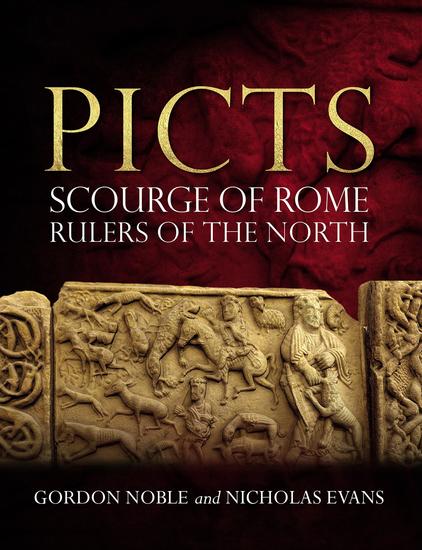
  • Picts - Scourge of Rome Rulers of the North - cover

    Picts - Scourge of Rome Rulers...

    Nicholas Evans, Gordon Noble

    • 0
    • 0
    • 0
    Shortlisted for the EAA Book Prize and the Current Archaeology Book of the Year Award
    The Picts have fascinated for centuries. They emerged c. ad 300 to defy the might of the Roman empire only to disappear at the end of the first millennium ad, yet they left major legacies. They laid the foundations for the medieval Scottish kingdom and their captivating carved stones are some of the most eye-catching yet enigmatic monuments in Europe. Until recently the Picts have been difficult to trace due to limited archaeological investigation and documentary sources, but innovative new research has produced critical new insights into the culture of a highly sophisticated society which defied the might of the Roman Empire and forged a powerful realm dominating much of northern Britain.
    This is the first dedicated book on the Picts that covers in detail both their archaeology and their history. It examines their kingdoms, culture, beliefs and everyday lives from their origins to their end, not only incorporating current thinking on the subject, but also offering innovative perspectives that transform our understanding of the early history of Scotland.
    Show book
  • The Battle of Salamis - The Naval Encounter that Saved Greece -- and Western Civilization - cover

    The Battle of Salamis - The...

    Barry Strauss

    • 0
    • 0
    • 0
    On a late September day in 480 BC, Greek warships faced an invading Persian armada in the narrow Salamis Straits in the most important naval battle of the ancient world. Overwhelmingly outnumbered by the enemy, the Greeks triumphed through a combination of strategy and deception. More than two millennia after it occurred, the clash between the Greeks and Persians at Salamis remains one of the most tactically brilliant battles ever fought. The Greek victory changed the course of western history—halting the advance of the Persian Empire and setting the stage for the Golden Age of Athens. 


    In this dramatic new narrative account, historian and classicist Barry Strauss brings this landmark battle to life. He introduces us to the unforgettable characters whose decisions altered history: Themistocles, Athens' great leader (and admiral of its fleet), who devised the ingenious strategy that effectively destroyed the Persian navy in one day; Xerxes, the Persian king who fought bravely but who ultimately did not understand the sea; Aeschylus, the playwright who served in the battle and later wrote about it; and Artemisia, the only woman commander known from antiquity, who turned defeat into personal triumph. Filled with the sights, sounds, and scent of battle, The Battle of Salamis is a stirring work of history.
    Show book
  • The English Governess at the Siamese Court - cover

    The English Governess at the...

    Anna Harriette Leonowens

    • 0
    • 0
    • 0
    In 1862 Anna Leonowens accepted an offer made by the Siamese consul in Singapore, Tan Kim Ching, to teach the wives and children of Mongkut, king of Siam. The king wished to give his 39 wives and concubines and 82 children a modern Western education on scientific secular lines, which earlier missionaries’ wives had not provided. Leonowens sent her daughter Avis to school in England, and took her son Louis with her to Bangkok. She succeeded Dan Beach Bradley, an American missionary, as teacher to the Siamese court. Leonowens served at court until 1867, a period of nearly six years, first as a teacher and later as language secretary for the king. Although her position carried great respect and even a degree of political influence, she did not find the terms and conditions of her employment to her satisfaction, and came to be regarded by the king himself as a rather difficult woman.  In 1868 Leonowens was on leave for her health in England and had been negotiating a return to the court on better terms when Mongkut fell ill and died. The king mentioned Leonowens and her son in his will, though they did not receive the legacy. The new monarch, fifteen-year-old Chulalongkorn, who succeeded his father, wrote Leonowens a warm letter of thanks for her services.  By 1869 Leonowens was in New York, and began contributing travel articles to a Boston journal, Atlantic Monthly, including ‘The Favorite of the Harem’, reviewed by the New York Times as ‘an Eastern love story, having apparently a strong basis of truth’. She expanded her articles into two volumes of memoirs, beginning with The English Governess at the Siamese Court (1870), which earned her immediate fame but also brought charges of sensationalism. In her writing she casts a critical eye over court life; the account is not always a flattering one, and has become the subject of controversy in Thailand; she has also been accused of exaggerating her influence with the king. (Summary from Wikipedia)
    Show book
  • Homo Sapiens 20 - Introduction to a Natural History of Hyperinformation - cover

    Homo Sapiens 20 - Introduction...

    Gérard Ayache

    • 0
    • 0
    • 0
    How can we use information rather than be subjected to it? Does life have a digital logic? Is the internal structure of the universe made up of information? Is the Internet generating a collective brain?
    Ever since Homo sapiens, armed with his electronic machines, learned to unlock the secret of information and its alchemy by digitizing it, he has unleashed hyperinformation. This force is a subtle blend of matter and thought, animate and inanimate, virtual and real. For the first time in human history, technology seems to be generating a collective intelligence. Does this mean that reason is becoming truly alien to itself, potentially hostile and dangerous? Or are we witnessing the happy dawn of a new era?
    Homo sapiens 2.0 offers a journey into the mysteries of the human brain, the mysteries of genes and memes (their mental equivalent), and the secrets of language, religion and new technologies. From René Girard to Richard Dawkins, from Teilhard de Chardin to Joël de Rosnay, the author recounts the saga of thought in the age of the virtual. In-between each chapter, “Interludes” take us on a journey through literary works or enlightening scientific experiments.
    Show book