Rejoignez-nous pour un voyage dans le monde des livres!
Ajouter ce livre à l'électronique
Grey
Ecrivez un nouveau commentaire Default profile 50px
Grey
Abonnez-vous pour lire le livre complet ou lisez les premières pages gratuitement!
All characters reduced
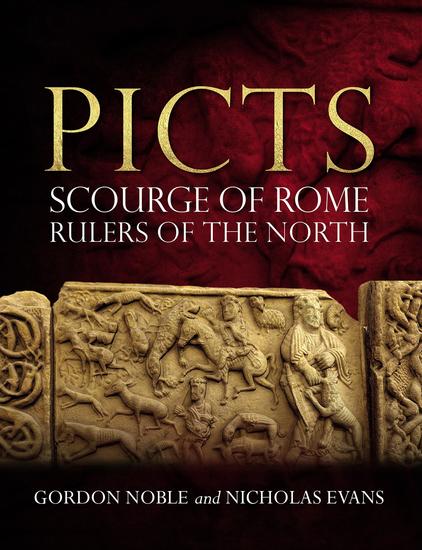
Picts - Scourge of Rome Rulers of the North - cover

Picts - Scourge of Rome Rulers of the North

Nicholas Evans, Gordon Noble

Maison d'édition: Birlinn

  • 0
  • 0
  • 0

Synopsis

Shortlisted for the EAA Book Prize and the Current Archaeology Book of the Year Award
The Picts have fascinated for centuries. They emerged c. ad 300 to defy the might of the Roman empire only to disappear at the end of the first millennium ad, yet they left major legacies. They laid the foundations for the medieval Scottish kingdom and their captivating carved stones are some of the most eye-catching yet enigmatic monuments in Europe. Until recently the Picts have been difficult to trace due to limited archaeological investigation and documentary sources, but innovative new research has produced critical new insights into the culture of a highly sophisticated society which defied the might of the Roman Empire and forged a powerful realm dominating much of northern Britain.
This is the first dedicated book on the Picts that covers in detail both their archaeology and their history. It examines their kingdoms, culture, beliefs and everyday lives from their origins to their end, not only incorporating current thinking on the subject, but also offering innovative perspectives that transform our understanding of the early history of Scotland.
Disponible depuis: 03/11/2022.
Longueur d'impression: 336 pages.
D'autres livres qui pourraient vous intéresser

  • The Book of Forgiving - The Fourfold Path for Healing Ourselves and Our World - cover

    The Book of Forgiving - The...

    Anonyme

    • 0
    • 0
    • 0
    Archbishop Desmond Tutu, Nobel Peace Prize winner, Chair of The Elders, and Chair of South Africa’s Truth and Reconciliation Commission, along with his daughter, the Reverend Mpho Tutu, offer a manual on the art of forgiveness—helping us to realize that we are all capable of healing and transformation. 
    Tutu's role as the Chair of the Truth and Reconciliation Commission taught him much about forgiveness. If you asked anyone what they thought was going to happen to South Africa after apartheid, almost universally it was predicted that the country would be devastated by a comprehensive bloodbath. Yet, instead of revenge and retribution, this new nation chose to tread the difficult path of confession, forgiveness, and reconciliation. 
    Each of us has a deep need to forgive and to be forgiven. After much reflection on the process of forgiveness, Tutu has seen that there are four important steps to healing: Admitting the wrong and acknowledging the harm; Telling one's story and witnessing the anguish; Asking for forgiveness and granting forgiveness; and renewing or releasing the relationship. Forgiveness is hard work. Sometimes it even feels like an impossible task. But it is only through walking this fourfold path that Tutu says we can free ourselves of the endless and unyielding cycle of pain and retribution. The Book of Forgiving is both a touchstone and a tool, offering Tutu's wise advice and showing the way to experience forgiveness. Ultimately, forgiving is the only means we have to heal ourselves and our aching world.
    Voir livre
  • The Cuban Missile Crisis - Brink of Nuclear War - cover

    The Cuban Missile Crisis - Brink...

    Nova Ashford

    • 0
    • 0
    • 0
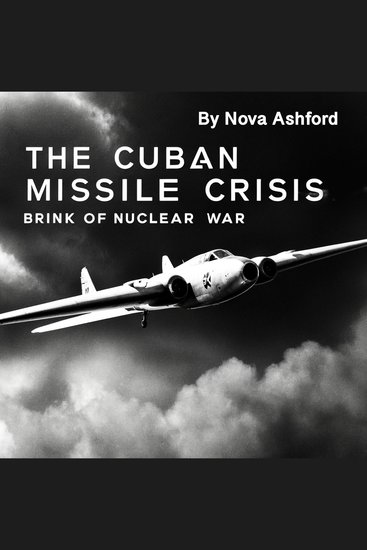
    The Cuban Missile Crisis, one of the most critical moments in the Cold War, did not emerge in isolation but was the culmination of a decades-long geopolitical struggle between the United States and the Soviet Union. The context of this crisis lies deeply within the broader Cold War, which began shortly after the end of World War II. This period was marked by intense ideological rivalry, military standoffs, and a nuclear arms race that would define much of the second half of the 20th century. 
    The origins of the Cold War can be traced back to the conflicting political and economic ideologies of the two superpowers. The United States, championing capitalism and democracy, viewed the spread of communism, led by the Soviet Union, as a direct threat to global stability and democratic values. On the other hand, the Soviet Union, under the leadership of Joseph Stalin, sought to expand the reach of communism and solidify its control over Eastern Europe, which had been acquired as a result of the war. This division between the capitalist West and the communist East created a tense geopolitical environment that shaped every diplomatic interaction between the two powers. 
    In the early stages of the Cold War, several key events served to heighten the distrust between the U.S. and the Soviet Union. The Berlin Blockade in 1948, the Korean War in the early 1950s, and the formation of opposing military alliances like NATO (North Atlantic Treaty Organization) and the Warsaw Pact solidified the division of the world into two hostile camps. As both nations escalated their military capabilities, the nuclear arms race emerged as a central aspect of Cold War tensions. The development and stockpiling of nuclear weapons made the Cold War not just an ideological battle but also a dangerous game of survival, with the constant threat of global annihilation hanging over every political and military maneuver.
    Voir livre
  • History of West Africa: A Captivating Guide to West African History Starting from Ancient Civilizations through the Medieval Period to the Present - cover

    History of West Africa: A...

    Captivating History

    • 0
    • 0
    • 0
    If you want to discover the captivating history of West Africa, then pay attention... 
    Beginning in prehistoric times, West Africa has always been an incredible region. Early nomadic tribes settled into some of the earliest communities on Earth and learned how to work with metal. Various West African tribes then became adept at working with metal and were some of the most skilled artisans in the world. 
    As civilizations developed in West Africa, nomadic tribes turned into urban societies that built kingdoms. Eventually, some of the greatest leaders in the world created mighty West African empires. Men like Sundiata Keita, Muhammad I Askia, Mansa Musa I, and others were brilliant leaders who built some of the richest empires in the world. 
    As the empires collapsed, the age of the transatlantic slave trade began. Over hundreds of years, West Africa was destabilized by slavery and colonialization. However, after World War II, a surge of independence began. 
    This audiobook covers some of the most important events in West Africa’s history and takes you on several unmissable journeys through time. 
    Journey through West Africa’s dynamic history and learn about the following:What evidence exists of prehistoric West African communities?The settlements at Dhar Tichitt and its surroundsWhat made the city of Ile-Ife significant?The tumultuous rise and fall of the great West African empiresWas Mansa Musa I the richest king in the world?The impactful legacy of the Songhai EmpireWhat impact did the transatlantic slave trade have on West Africa?The effect of European colonialization on West Africa and how the region still feels it todayThe influential West African leaders who led their countries to freedom 
    Don’t miss out on learning about the exciting history of West Africa. Get your copy today!
    Voir livre
  • Buddha Socrates and Us - Ethical Living in Uncertain Times - cover

    Buddha Socrates and Us - Ethical...

    Stephen Batchelor

    • 0
    • 0
    • 0
    A renowned Buddhist teacher turns to two of the most influential figures in history for guidance on how to face the ethical challenges of our time The Buddha’s revolutionary teachings transformed Asia, and his contemporary Socrates laid the foundations of Western philosophy. Although they never met, Socrates and the Buddha each addressed in a radically new and surprisingly similar way the core questions of how to lead a good, just, and dignified life amid turbulence and violence. Common to their teachings was an ethics of uncertainty: both refused to make truth claims about the ultimate nature of reality, insisting on the primacy of critical self‑evaluation as the basis of an ethical life. In this illuminating book, best-selling author Stephen Batchelor explores the philosophical, social, and political worlds of the Buddha and Socrates, showing how their teachings continue to provide lessons in how to lead a flourishing and engaged life. Keenly aware of the fickle and conflicted nature of the human mind, Gotama and Socrates inspired their followers to act with humility and courage, risk and resolve, doubt and confidence. Drawing on their insights, and those of their followers, Batchelor uncovers a middle way between Buddhist dharma and Greek philosophy that can serve as a starting point for a “secular faith” that addresses the most pressing spiritual and planetary issues of our age.
    Voir livre
  • The Psychic Lives of Statues - Reckoning with the Rubble of Empire - cover

    The Psychic Lives of Statues -...

    Rahul Rao

    • 0
    • 0
    • 0
    Statues around the world have become lightning rods for public debates over the meaning of our imperial past and postcolonial present. The Psychic Lives of Statues is an insightful exploration of these global controversies, demonstrating that beneath their surface lie deeper struggles over race, caste, and the politics of decolonization. 


    Rahul Rao takes listeners on an international journey, revealing how these controversies have dramatically rearranged anticolonial political thought through the multifaceted lenses of justice, cultural memory, and belonging. 


    The Psychic Lives of Statues explores both the toppling of colonial statues and the erection of postcolonial ones, illuminating how statues remain powerful and compelling forms of memorialization. Engaging with artists, scholars, and activists, Rao offers a fresh and exciting perspective on how we understand our past and present through iconography.
    Voir livre
  • 20 First Legislative Acts of the Russian Bolshevik Revolution - cover

    20 First Legislative Acts of the...

    Vladimir Lenin

    • 0
    • 0
    • 0
    Decrees were legislative acts of the highest Soviet institutions, primarily of the Council of People's Commissars (the highest executive body — Sovnarkom) and of VTsIK (the highest legislative body between sessions of the Congress of Soviets).
    The Bolshevik Initial Decrees were announced as soon as the Bolsheviks declared their success in the October Revolution (October 26, 1917). The Decrees seemed to conform to the popular Bolshevik slogan "Peace, Land and Bread". The slogan succinctly articulated the grievances of the Russian peasantry, armed forces and proletariat.
    The Bolsheviks were not opportunists but benevolent idealists; the point of the Decrees was to bring about a better quality of life for the Russian people. Regardless of which view is the more accurate account, it is clear from these opposing perspectives that the history of the Initial Decrees is a politically charged issue. This is perhaps because historians use the Decrees to try to discern whether the implementation of Marxist thought has totalitarian tendencies.
    Voir livre