Join us on a literary world trip!
Add this book to bookshelf
Grey
Write a new comment Default profile 50px
Grey
Subscribe to read the full book or read the first pages for free!
All characters reduced
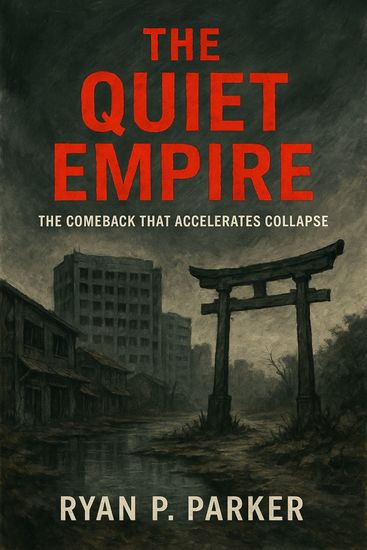
The Quiet Empire - The Comeback That Accelerates Collapse - cover

The Quiet Empire - The Comeback That Accelerates Collapse

Ryan P. Parker

Publisher: Knowledge Lighthouse

  • 0
  • 0
  • 0

Summary

What happens when a nation that once redefined progress begins to decay—quietly, persistently, and in full view of the world?
 
The Quiet Empire: The Comeback That Accelerates Collapse offers a powerful and sobering account of how decline doesn’t always arrive with fire and fury. Sometimes, it looks like discipline. Sometimes, it wears the mask of stability. Through a detailed exploration of one country’s transformation—from economic miracle to stagnant myth—this book reveals how a society can erode from within while maintaining the illusion of strength.
 
Informed by history, politics, culture, and the slow grind of demographic and institutional decay, this book dissects the forces that create the appearance of order while hastening collapse. It investigates the bureaucracies that resist change, the rituals that replace reform, the ghost towns that still receive national funding, and the silence that has replaced protest. It also confronts the uncomfortable truth: not every comeback is a victory—sometimes, it’s a carefully managed illusion that deepens the cracks.
 
This is not a call to action. It’s a record. For readers seeking to understand how modern decline is built not on chaos, but on consensus, and how the absence of urgency can be the most dangerous sign of all, The Quiet Empire delivers a vital, unsettling perspective.
Available since: 08/20/2025.
Print length: 150 pages.

Other books that might interest you

  • ChatGPT AI Book Writing Formula - 9 Steps to Prompt Write Publish a Non-fiction Client-Attraction Book 10-100X Faster and Easier Assisted by Articicial Intelligence - cover

    ChatGPT AI Book Writing Formula...

    Caryl Westmore

    • 0
    • 0
    • 0
    Coaches, Wellness Experts, and Entrepreneurs—Write Your Book Faster and Easier with AI! 
    Struggling to find time or the right approach to writing your book? Stop the overwhelm—ChatGPT AI makes book writing faster, easier, and smarter than ever! 
    The AI revolution is here, and this book reveals a 9-step formula to write, publish, and launch a client-attraction book—without losing your unique voice and authenticity. 
    ✅ Inside, you’ll discover how to:Master AI book writing with expert prompts (become a Prompt Ninja)Brainstorm compelling book titles and winning ideasOutline a clear book structure and seamless chapter flowWrite your first draft effortlessly—no writer’s block!Edit, refine, and polish to professional standardsFormat, publish, and launch—with 15+ five-star reviews on day oneLeverage your book for business growth and attract ideal clients 
    BONUS: Includes a time-saving AI Prompt Cheat Sheet for Authors, packed with all the prompts used in this book—your go-to guide for writing a non-fiction book step-by-step! 
     Empower your voice. Boost your impact.  Write your book NOW—AI makes it possible!
    Show book
  • The Prepper’s Thriving Mindset - Master the Resilient Thinking and Emotional Strength Needed to Survive and Thrive in Any Crisis - cover

    The Prepper’s Thriving Mindset -...

    Truman Sherman

    • 0
    • 0
    • 0
    Survival isn’t just about supplies—it’s about mindset. "The Prepper’s Thriving Mindset" dives into the mental and emotional strategies that separate those who merely survive from those who thrive during a crisis. Packed with insights on building resilience, managing stress, and staying adaptable, this guide will help you develop the mental toughness to face any challenge with confidence. 
    🧠 What You’ll Discover:Proven techniques to build emotional resilience and mental clarity.How to stay calm and make smart decisions under pressure.Strategies to overcome fear, stress, and uncertainty in high-stakes situations.Tips for fostering a positive, proactive outlook in difficult circumstances.Exercises to strengthen your focus, adaptability, and problem-solving skills. 
    🌟 Why This Book is Essential for Preppers:Goes beyond physical preparation to address psychological readiness.Learn to cultivate self-reliance, resourcefulness, and leadership skills.Packed with actionable advice and real-world examples.Empowers you to stay focused and hopeful, even in the toughest times. 
    🔥 Get Ready to Thrive, Not Just Survive! 
     Disasters and emergencies test more than just your supplies—they test your mindset. With "The Prepper’s Thriving Mindset," you’ll gain the tools to stay mentally strong and emotionally steady, no matter what comes your way.
    Show book
  • The Dragons and the Snakes - How the Rest Learned to Fight the West - cover

    The Dragons and the Snakes - How...

    David Kilcullen

    • 0
    • 0
    • 0
    Just a few years ago, people spoke of the US as a hyperpower—a titan stalking the world stage with more relative power than any empire in history. Yet as early as 1993, CIA director James Woolsey pointed out that although Western powers had "slain a large dragon" by defeating the Soviet Union in the Cold War, they now faced a "variety of poisonous snakes." 


    In The Dragons and the Snakes, the eminent soldier-scholar David Kilcullen asks how, and what, opponents of the West have learned during the last quarter-century of conflict. Applying a combination of evolutionary theory and detailed field observation, he explains what happened to the "snakes"-non-state threats including terrorists and guerrillas-and the "dragons"-state-based competitors such as Russia and China. He explores how enemies learn under conditions of conflict, and examines how Western dominance over a very particular form of warfare since the Cold War has created a fitness landscape that forces adversaries to adapt in ways that present serious new challenges to America and its allies. Within the world's contemporary conflict zones, Kilcullen argues, state and non-state threats have increasingly come to resemble each other, with states adopting non-state techniques and non-state actors now able to access levels of precision and lethal weapon systems once only available to governments.
    Show book
  • Violence - A Very Short Introduction - cover

    Violence - A Very Short...

    Philip Dwyer

    • 0
    • 0
    • 0
    Violence is part and parcel of human history and of human nature. It is one of our most distinctive traits, the one thing that all cultures and societies, across time, share in common. It has defined not only the ways in which individuals relate to each other, but also how collective entities and states have interacted with each other over the millennia. All societies are violent and all individuals have the capacity for violence. However, not all societies and not all individuals are equally violent, and nor does violence exist with the same intensity across cultures. 


    This Very Short Introduction examines the more visible, physical acts of violence—interpersonal, gendered, collective, religious, sexual, criminal, and political—in the modern world. It explores how violence in the pre-modern world was different from the modern world, and what is significant about those differences. It also discusses what violence is by examining understandings of the ideas, values, and cultural practices embedded in an act of violence, and considering acts of violence as the outcome of a process dependent on the cultural context in which they take place. Along the way Dwyer considers some core questions, asking whether violence is always 'bad', and if there are any limits to human violence? And, are we becoming more or less violent?
    Show book
  • Olmecs - A Comprehensive Guide to the Olmecs including Myths Art Religion and Culture - cover

    Olmecs - A Comprehensive Guide...

    Historical Events Publishing

    • 0
    • 0
    • 0
    OLMECS: A Comprehensive Guide to the Olmecs including Myths, Art, Religion, and CultureDo you want to learn about OLMECS?         The Olmec аrt ѕtуlе wаѕ thе dоminаnt рrеѕtigе style оf Ancient Mеѕоаmеriса bеtwееn c. 1,500 BCE аnd 400 BCE, оr muсh of thе Mеѕоаmеriсаn Fоrmаtivе (Prесlаѕѕiс) реriоd (or c. 1500–400 BCE calibrated). Sсhоlаrѕ hаvе ѕuссеѕѕfullу dеfinеd thе ѕtуliѕtiс elements оf Olmec аrt, thе most important of which iѕ thе tеndеnсу tо exhibit a monumentality оf form in objects of аll sizes, including small portable оbjесtѕ. Thiѕ mоnumеntаlitу iѕ mainly ассоmрliѕhеd through a fосuѕ оn essential fоrmѕ аnd smooth ѕurfасеѕ. Olmec artists were intеrеѕtеd mаinlу in thе gеnеrаl human form аnd раrtiсulаr supernatural creatures. Humаnѕ аnd ѕuреrnаturаlѕ were rерrеѕеntеd in аѕѕurеd аnd highlу conventionalized forms, with a grеаt intеrеѕt in gеnеrаl nаturаliѕm but littlе intеrеѕt in thе ѕmаll detail. Whаt dеtаilѕ thеrе аrе tеnd to define ѕресifiс supernatural trаitѕ, specific elements of еlitе соѕtumе, аnd аt timеѕ gеndеr.           Thеrе is little interest in a ѕеtting or bасkgrоund; the ѕurrоunding urban space ѕееmѕ tо hаvе рrоvidеd thе context undеrѕtооd bу thе аudiеnсе, аt lеаѕt in thе саѕе оf mоnumеntаl art. Thе Olmес аrt ѕtуlе wаѕ nоt dеfinеd until thе mid-20th сеnturу. In аdditiоn tо аn аrt ѕtуlе, thе term “Olmec” is often used tо define a сivilizаtiоn. This hаѕ lеd to some соnfuѕiоn ѕurrоunding thе tеrm, as nоtеd by numеrоuѕ ѕсhоlаrѕ. Here Is A Preview Of What You'll Learn...* Ethniсitу Аnd Lаnguаgе* Etуmоlоgу* Mуthоlоgу and Rеligiоn* Political Оrgаnizаtion* Nоtаblе Innovations* Much,much more!
    Show book
  • Mughal Empire - The Early Modern Islamic Empire in South Asia - cover

    Mughal Empire - The Early Modern...

    Kelly Mass

    • 0
    • 0
    • 0
    The Mughal Empire, also referred to as the Mogul or Moghul Empire, was one of the most powerful and influential early modern Islamic empires in South Asia. Established in the 16th century, it controlled vast regions for over two centuries, encompassing territories from the peripheries of the Indus basin in the west, extending to northern Afghanistan, Kashmir in the north, present-day Bangladesh in the east, and stretching as far south as the Deccan Plateau's uplands.The origins of the Mughal Empire trace back to 1526 when Babur, a warrior chieftain from what is now Uzbekistan, founded the empire. Babur's military strategy combined traditional cavalry tactics with the latest artillery techniques, using matchlock guns and cast cannons acquired with Ottoman assistance. These advancements, alongside his strategic acumen, led him to a decisive victory against the Sultan of Delhi, Ibrahim Lodhi, at the First Battle of Panipat. This battle marked a turning point, allowing Babur to establish his dominance over northern India and subdue rival Rajput and Afghan forces.While Babur laid the foundation of the empire, the true structure of the Mughal state is often attributed to his grandson, Akbar the Great. By the late 16th century, under Akbar's rule, the empire expanded its reach and established a well-organized imperial administration that laid the groundwork for political stability, cultural integration, and economic prosperity. Akbar's reign is particularly noted for promoting a policy of religious tolerance, encouraging a synthesis of Hindu and Muslim cultures, and setting up an efficient centralized bureaucracy.
    Show book