Join us on a literary world trip!
Add this book to bookshelf
Grey
Write a new comment Default profile 50px
Grey
Subscribe to read the full book or read the first pages for free!
All characters reduced
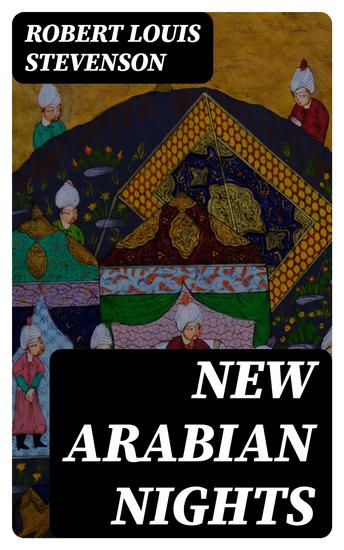
New Arabian Nights - cover

New Arabian Nights

Robert Louis Stevenson

Publisher: DigiCat

  • 0
  • 0
  • 0

Summary

In "New Arabian Nights," Robert Louis Stevenson masterfully intertwines fantasy and reality, offering readers a captivating collection of stories that draw inspiration from the enchanting world of the original Arabian Nights. These fantastical tales, infused with Stevenson's signature flair for adventure and exploration, evoke a rich tapestry of exotic locales, daring quests, and moral quandaries. The literary style is characterized by elegant prose and vivid imagery, as Stevenson navigates the boundaries between the mundane and the extraordinary, crafting narratives that resonate with both whimsy and gravitas. The text is situated within the broader context of Victorian literature, where the fascination for the East and storytelling traditions flourished, reflecting a period of cultural exchange and narrative experimentation. Stevenson, a Scottish novelist, poet, and essayist, was deeply influenced by his childhood experiences and the literary currents of his time. His travels across the world, including time spent in the Pacific islands, imbued him with a vivid imagination and a longing for adventure. These personal journeys and his love for the oral storytelling tradition profoundly shaped his writing, as seen in the intricate plots and diverse characters in "New Arabian Nights." This book is highly recommended for readers seeking to immerse themselves in a world where the line between reality and fantasy blurs. The delightful blend of humor, intrigue, and moral lessons makes it an essential reading for fans of classic literature and those drawn to the timeless allure of adventure. Engage with Stevenson's imagination, and let the tales within inspire your own adventurous spirit.
Available since: 09/16/2022.
Print length: 302 pages.
Other books that might interest you

  • To The Lighthouse - The Original Manuscript - cover

    To The Lighthouse - The Original...

    Virginia Woolf

    • 0
    • 0
    • 0
    The Ramsey family, with house guests, visit the Isle of Skye at least twice. The plot is not at all the point though, as this is a book about how people think and feel and relate. There’s insight into the world of childhood thought and emotion, and a variety of views of adult care and perceptions. I hope this doesn’t make it sound ‘difficult’, it doesn’t need to be – just let the sentences flow and make your own sense of the words. It’s perhaps as close as a novel can come to the highly individual experience of looking at a painting. 
     
    Virginia Woolf was an English writer, considered one of the most important modernist 20th-century authors and a pioneer in using stream of consciousness as a narrative device. 
    Woolf was born into an affluent household in South Kensington, London, the seventh child of Julia Prinsep Jackson and Leslie Stephen in a blended family of eight which included the modernist painter Vanessa Bell. She was home-schooled in English classics and Victorian literature from a young age. From 1897 to 1901, she attended the Ladies' Department of King's College London, where she studied classics and history and came into contact with early reformers of women's higher education and the women's rights movement. 
    Encouraged by her father, Woolf began writing professionally in 1900. After her father's death in 1904, the Stephen family moved from Kensington to the more bohemian Bloomsbury, where, in conjunction with the brothers' intellectual friends, they formed the artistic and literary Bloomsbury Group. In 1912, she married Leonard Woolf, and in 1917, the couple founded the Hogarth Press, which published much of her work.
    Show book
  • The Valley of Vision - cover

    The Valley of Vision

    Henry van Dyke

    • 0
    • 0
    • 0
    ”Why do you choose such a title as The Valley of Vision for your book” said my friend; “do you mean that one can see farther from the valley than from the mountain-top?” This question set me thinking, as every honest question ought to do. Here is the result of my thoughts, which you will take for what it is worth, if you care to read the book. The mountain-top is the place of outlook over the earth and the sea. But it is in the valley of suffering, endurance, and self-sacrifice that the deepest visions of the meaning of life come to us.I take the outcome of this Twentieth Century War as a victory over the mad illusion of world-domination which the Germans saw from the peak of their military power in 1914. The united force of the Allies has grown, through valley-visions of right and justice and human kindness, into an irresistible might before which the German “will to power” has gone down in ruin. (From the Preface)
    Show book
  • Into the Comet - cover

    Into the Comet

    Arthur C. Clarke

    • 0
    • 0
    • 0
    "Into the Comet" is a science fiction short story by British writer Arthur C. Clarke. It was originally published in Fantasy & Science Fiction in October 1960. It is one of several stories by many science fiction authors in which problems are solved by reverting to 'primitive' technology. The story was also published as "Inside the Comet".
    Show book
  • To the Lighthouse - cover

    To the Lighthouse

    Virginia Woolf

    • 0
    • 0
    • 0
    The Ramsay family is on holiday on the Isle of Sky in Scotland. As the family and their guests decide on whether or not to visit a nearby lighthouse, Virginia Woolf spins a tale that focuses on the intricate web of family life and the conflict that occurs between genders.
    Show book
  • The Complete Short Stories of Guy de Maupassant - cover

    The Complete Short Stories of...

    Guy de Maupassant

    • 0
    • 0
    • 0
    What can a single moment reveal about a lifetime?
    
    The Complete Short Stories of Guy de Maupassant brings together the full range of one of literature's greatest masters of the short story. With sharp observation and elegant precision, Maupassant captures love and betrayal, ambition and despair, vanity and compassion—often within just a few unforgettable pages.
    
    Set in nineteenth-century France, these stories explore everyday lives shaped by class, desire, war, and chance. Maupassant's style is clear, economical, and devastatingly effective, revealing human weakness and truth with irony, humor, and psychological insight.
    
    From tales of rural life and Parisian society to haunting stories of madness and the supernatural, this complete collection showcases the versatility and enduring power of Maupassant's art.
    
    Inside this eBook, you'll explore:
    
    All of Maupassant's short stories in one definitive collection
    
    Brilliant examples of realism, irony, and psychological depth
    
    Themes of love, greed, war, morality, and human folly
    
    A cornerstone of world literature and short fiction
    
    Studied worldwide and admired by writers such as Chekhov and Hemingway, Guy de Maupassant's stories remain essential reading for anyone who values clarity, insight, and emotional truth.
    
    Discover how much life can fit into a single story. Buy now and experience the complete short stories of Guy de Maupassant.
    Show book
  • The Daughter of Lilith - From their pens to your ears genius in every story - cover

    The Daughter of Lilith - From...

    Anatole France

    • 0
    • 0
    • 0
    François-Anatole Thibault was born on the 16th April 1844 in Paris, France, the son of a bookseller and bibliophile. 
    He studied at the Collège Stanislas, a private Catholic school, and after graduating joined his father in the bookstore, which specialised in works on the French Revolution.  Several years later he secured a position as cataloguer at Bacheline-Deflorenne and at Lemerre before being appointed librarian for the French Senate in 1876. 
    His literary career had begun as a journalist and as a poet before publishing his novel ‘Le Crime de Sylvestre Bonnard’ in 1881.  Praised for its elegant prose, it won him a prestigious prize from the Académie Française, which later elected him to its storied ranks. 
    His works were profound and thoughtful and often couched in surreal and outlandish expressions; whether penguins baptized by a near-blind Abbott transformed themselves into humans or of a guardian angel who becomes an atheist, his stories turned established thought into startling literature. 
    His short stories run in the same vein.  The premise may seem plausible but his distinctive style turns them into an individual viewpoint which invokes both discussion and admiration. 
    In his private life his relationships with women were often turbulent.  A Socialist, he was a fervent supporter of the Russian Revolution and the early years of the French Communist party. 
    He was awarded the Nobel Prize in 1921 but the following year his entire canon of works was placed on the prohibited list of the Catholic Church, which he thought of as a credit to his name. 
    Anatole France died on the 12th October 1924 in Tours.  He was 80.
    Show book