Join us on a literary world trip!
Add this book to bookshelf
Grey
Write a new comment Default profile 50px
Grey
Subscribe to read the full book or read the first pages for free!
All characters reduced
Oil! - cover

Oil!

Upton Sinclair

Publisher: Open Road Media

  • 0
  • 0
  • 0

Summary

“Passionate. . . . [The] lively satirical account of capitalist greed . . . and socialist struggle,” that inspired the film There Will Be Blood (The Guardian). From the Pulitzer Prize–winning author of The Jungle, a novel set against the backdrop of the political corruption fueling the California oil industry during the Harding administration. Oil! is a tale of the capitalist insatiability that comes between an oil baron and his son, whose growing sympathies with the labor movement and socialist ideals fuels the riff between them. Peopled with politicians, financial investors, oil magnates, a Hollywood star, and a crusading evangelist, Oil! is also a spirited social commentary on the class struggle at the heart of the divide in post–World War I America. Written by an author heralded for his compelling narratives exploring themes of social justice, Oil! is as relevant today as it was when it was first published in 1927. “A marvelous panorama of Southern California life. It is storytelling with an edge on it.” —The New Republic   “A tremendous piece of work.” —The Nation  
Available since: 01/01/2023.
Print length: 527 pages.
Other books that might interest you

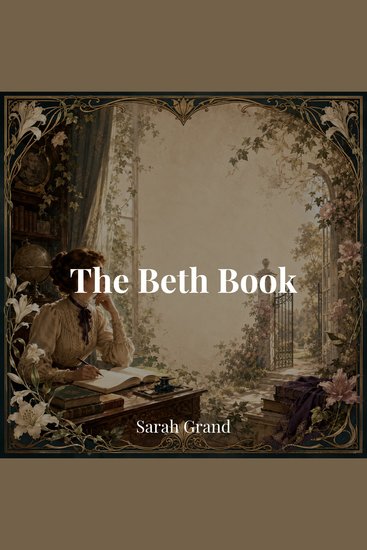
  • The Beth Book - cover

    The Beth Book

    Sarah Grand

    • 0
    • 0
    • 0
    This audiobook is narrated by an AI Voice. What if a woman’s mind were the most dangerous book a society tried to keep closed? 
     
    In *The Beth Book*, Sarah Grand gives voice to one of the most powerful literary figures of the fin de siècle: the New Woman. A major feminist writer of the late Victorian period, Grand helped shape the debates around women’s independence, education, marriage, sexuality, and selfhood. Her fiction challenged the polite silence expected of women and turned private experience into social critique. 
     
    The novel follows Beth from childhood into womanhood, tracing the making of an artistic, intelligent, restless female consciousness. Through family pressures, education, emotional confinement, marriage, and the hunger for intellectual freedom, Beth’s life becomes more than a personal story: it becomes an indictment of the world that trains women to obey, then fears them when they begin to think. 
     
    First published in 1897, *The Beth Book* stands as one of Grand’s important New Woman novels, blending autobiographical intensity, feminist argument, and Victorian realism. Its concerns remain strikingly modern: how a woman discovers her voice, how society restricts genius, and how self-knowledge can become an act of rebellion. 
     
    This AI-narrated audiobook offers a clear, polished, and immersive listening experience, allowing Grand’s social criticism, emotional detail, intellectual force, and period atmosphere to unfold with precision and depth. 
     
    Enter Beth’s awakening, and listen to a rediscovered classic of women’s independence, artistic ambition, and Victorian feminist thought. Begin *The Beth Book* today.
    Show book
  • A Dark Brown Dog - cover

    A Dark Brown Dog

    Stephen Crane

    • 0
    • 0
    • 0
    A dog. A child. A rope that drags, and a bond that tightens.
    In this brief, haunting tale, Stephen Crane casts a quiet, unflinching gaze at innocence, cruelty, and the strange bargains we make in the name of love.
    Told in spare, evocative prose, A Dark Brown Dog is more than it appears — a fable with no moral, a friendship with no promise, a home with no safety.
    You may not be sure where the pain ends and the loyalty begins.
    But you will know you've seen something true.
    Show book
  • The New Utopia - cover

    The New Utopia

    Jerome K.

    • 0
    • 0
    • 0
    'The human race must press onward to its destiny… an ordered army, marching side by side over the level plain of equity and equality.'
    
    One of Jerome's more accomplished essays, The New Utopia unveils a fascinating insight into contemporary opinion on socialism.
    
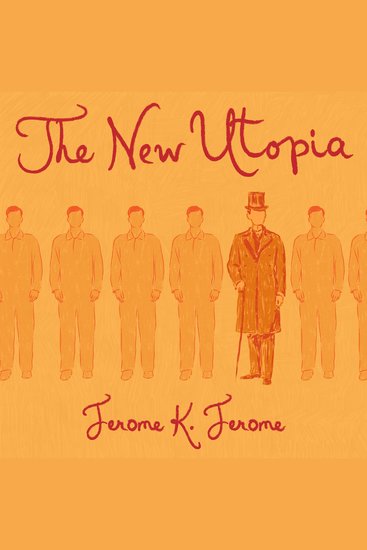
    Published at the height of the second industrial revolution, and the consequent backlash surrounding labourer's wages and poor working conditions, The New Utopia recounts a dream of the author's in which the world is transformed into a socialist wonderland. But what begins as a utopia soon descends into a warped vision of collective good, as egalitarianism is taken to extreme lengths: men and women are clothed in identical grey uniforms, donning the same short, black hair, wiped clean of individuality and merit. Gripping, pacey and a clever political commentary, Jerome creates a nightmarish landscape of distorted equality and unravels its consequences.
    Jerome K. Jerome (1859 – 1927) was an English author and actor. Renowned for his comic works, he is best known for the hilarious travelogue, Three Men in a Boat. A prolific writer and admirer of the theatre, he penned several novels, essays and plays throughout his life.
    Show book
  • The Man Who Was Plucked - cover

    The Man Who Was Plucked

    Edgar Wallace

    • 0
    • 0
    • 0
    The Man Who Was Plucked by Edgar Wallace is offered here in a clean English digital edition prepared for fluent ebook reading. The work stands within classics and gives modern readers direct access to a public-domain classic with navigable structure and a restrained typographic presentation. The opening pages establish the book's atmosphere with this first movement: On Sunday night Martaus Club is always crowded with the smartest of the smart people who remain in Town over the week-end. Martaus Club is a place of shaded lights, of white napery, of glittering silver and glass, of exotic flowers, the tables set about the walls framing a parallelogram of shining f This edition is suited to readers who want a reliable, uncluttered version of the text for study, rediscovery, and sustained reading.
    Show book
  • The Princess and Curdie - cover

    The Princess and Curdie

    Ernest Rhys

    • 0
    • 0
    • 0
    George MacDonald’s The Princess and Curdie is a tale that lingers in the imagination long after its final page, filled with mystery, adventure, and a profound moral vision. First published in 1883 as a sequel to The Princess and the Goblin, this novel continues the journey of the humble miner’s son, Curdie, as he is called upon to aid a kingdom teetering on the brink of ruin. Guided by the enigmatic and benevolent Princess Irene’s great-great-grandmother, Curdie embarks on a quest that is both outwardly heroic and deeply spiritual, confronting corruption, deception, and his own capacity for courage. 
    MacDonald was more than a storyteller; he was a visionary whose works shaped some of the greatest literary minds of the 20th century. C.S. Lewis, author of The Chronicles of Narnia, credited MacDonald as his spiritual mentor, saying, "I have never concealed the fact that I regarded him as my master." J.R.R. Tolkien, creator of The Lord of the Rings, also drew inspiration from MacDonald's mythic sensibility, seeing in his tales the power of Faërie—a realm that reveals deeper truths about our own world. Their admiration speaks to the enduring power of MacDonald’s storytelling, which blends the childlike wonder of fairy tales with the weighty themes of faith, virtue, and redemption. 
    The Princess and Curdie is more than a children’s book; it is a meditation on trust, transformation, and the unseen forces at work in the world. Readers who venture into its pages will find not only a compelling story but also an invitation to consider the nature of goodness, the reality of unseen guidance, and the calling to stand against corruption. As with all great fairy tales, MacDonald's world is both magical and profoundly real, whispering truths that resonate across generations.
    Show book
  • Gullivers Travels - cover

    Gullivers Travels

    Jonathan Swift

    • 0
    • 0
    • 0
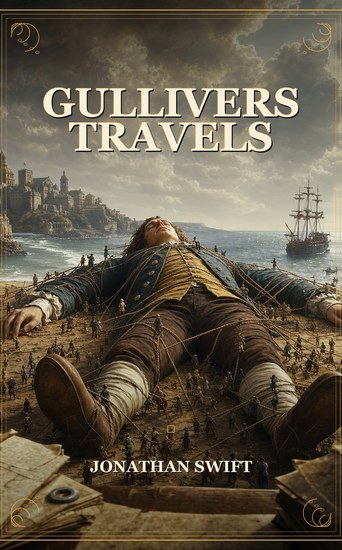
    Gulliver's Travels was published in 1726 and is probably the most famous work by Jonathan Swift . It was an instant hit—selling out within a week—and has never been out of print, as well as having been adapted many times. Lemuel Gulliver, an English surgeon on the Antelope , is shipwrecked and washed up on the island of Lilliput, where the inhabitants are less than six inches tall. This part of the book is a thinly veiled attack on the political classes of the time, as the Lilliputians focus on the minutiae of life, most notably the rift which has developed according to which end of a boiled egg gets opened at breakfast—the big end or the little end. On his second recorded journey he is abandoned on an island of giants where he is paraded as a curiosity at local markets and fairs. On his third journey he is marooned by pirates and is rescued by the inhabitants of a floating island devoted to music, mathematics and astronomy. On his final journey he meets the Houyhnhnms, a race of talking horses who have subdued the Yahoos, creatures who resemble humans. On his return to England, Gulliver has a very different outlook on life and views the human race in a very different way. Jonathan Swift (died 1745) was one of the foundational figures of Western literary tradition. Their work has endured across generations and continues to be read and studied worldwide. As a work of classic literary fiction, Gullivers Travels exemplifies the narrative craft and social insight that defined great storytelling of its era. Literary fiction of this period was characterized by careful attention to character psychology, social milieu, and the moral questions that animated public discourse.
    Show book