Join us on a literary world trip!
Add this book to bookshelf
Grey
Write a new comment Default profile 50px
Grey
Subscribe to read the full book or read the first pages for free!
All characters reduced
Lectures of Col R G Ingersoll - Latest - cover

Lectures of Col R G Ingersoll - Latest

Robert Green Ingersoll

Publisher: DigiCat

  • 0
  • 0
  • 0

Summary

In "Lectures of Col. R. G. Ingersoll - Latest," prominent agnostic and political orator Robert Green Ingersoll presents a series of compelling lectures that delve into subjects ranging from religion and science to social justice and human rights. Ingersoll's literary style—marked by eloquence and vigorous rhetoric—places a strong emphasis on logic and reasoned argumentation, making complex ideas accessible to a wide audience. Set against the backdrop of the late 19th century, a time marked by rapid scientific advancement and shifting societal norms, these lectures challenge established religious doctrines while advocating for a society grounded in ethical secularism. Robert Green Ingersoll (1833-1899), often referred to as the 'Great Agnostic,' emerged from a background steeped in both law and politics, serving as a Union colonel during the Civil War. His progressive views were cultivated through personal experiences of intolerance and his relentless pursuit of truth, which compelled him to question the dogmas of organized religion. Ingersoll was a passionate advocate for human rights, women's suffrage, and the separation of church and state, making these lectures not only a reflection of his beliefs but also a rallying cry for transformative social change. This book is highly recommended for those seeking a deeper understanding of the interplay between religion and rational thought, and for anyone interested in the evolution of social and political discourse. Ingersoll's incisive wit and passionate arguments will inspire readers to critically engage with the foundational issues of belief and ethics that remain relevant today.
Available since: 05/29/2022.
Print length: 348 pages.
Other books that might interest you

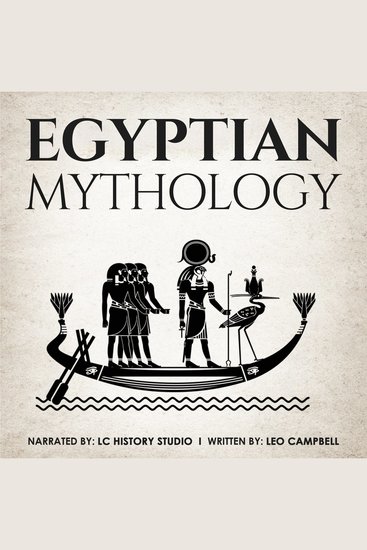
  • Egyptian Mythology - Fascinating Myths and Legends of Ancient Egypt - cover

    Egyptian Mythology - Fascinating...

    Leo Campbell

    • 0
    • 0
    • 0
    Delve into the captivating world of ancient Egyptian mythology with this audiobook, where legends and tales come to life, revealing the intricate beliefs and stories of the ancient Egyptians. 
    Key highlights include: 
    Exploration of Egyptian cosmogony and the creation of gods and life. 
    The epic myth of Osiris, Seth, and Isis, portraying betrayal, love, and resurrection. 
    The saga of Horus, depicting a son's quest to reclaim his rightful place. 
    Adventures aboard the Sun Boat, symbolizing the eternal journey of the sun. 
    Fascinating narratives like the tale of the Goddess of Cats, a story of protection and justice. 
    Inspirational stories such as "The Girl with the Red-Rose Slippers" and "The Shipwrecked Sailor" that capture themes of transformation and resilience. 
    Entertaining accounts like "The Treasure Thief" and "Se-Osiris and the Sealed Letter," brimming with adventure and magic. 
    Unravel the mysteries of ancient Egypt and immerse yourself in its rich mythology through this audiobook.
    Show book
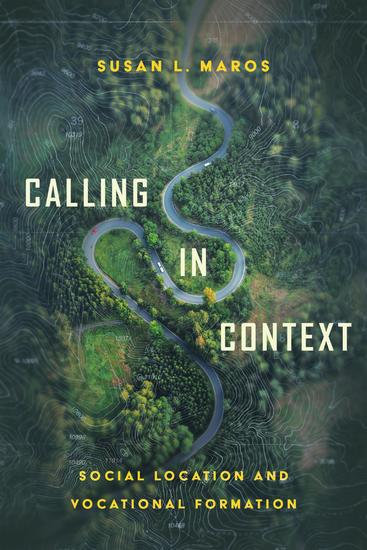
  • Calling in Context - Social Location and Vocational Formation - cover

    Calling in Context - Social...

    Susan L. Maros

    • 0
    • 0
    • 0
    "I don't care for vocational books written in the United States; they're too American." When Susan Maros heard this comment from a Malaysian colleague, she was initially taken aback. Isn't the concept of calling universal? Why wouldn't resources with a biblical perspective on vocation apply to everyone?The reality is that each of us encounters our questions of calling from within a particular context. In this paradigm-shifting book, Maros explores how various dimensions of social location—including race, ethnicity, culture, socioeconomic status, and gender—shape our assumptions and experiences with vocation. Maros helps Christians in the United States in particular see how ideas about calling that emphasize certainty, career paths, and personal achievement arise from cultural priorities that shouldn't go unexamined, such as individualism, productivity, and meritocracy. She explains how unexamined "mental maps" can distort our perspective and refocuses our attention on biblical insights about calling as a lifelong journey. In the process, she helps us find both clarity and encouragement to explore the paths before us.God calls all people, yes—but calling is not a monolithic concept. Filled with numerous stories from Christians in diverse communities, Calling in Context invites anyone exploring questions of calling to find fresh possibilities in their own identity and engagement with God's mission. Reflection questions and Bible study prompts are included throughout.
    Show book
  • The Queens Who Fought Rome - cover

    The Queens Who Fought Rome

    Editors Charles River

    • 0
    • 0
    • 0
    During one of the most turbulent periods in the history of Rome, men like Julius Caesar, Mark Antony, and Octavian participated in two civil wars that would spell the end of the Roman Republic and determine who would become the Roman emperor. In the middle of it all was history’s most famous woman, the Egyptian pharaoh Cleopatra (69-30 B.C.), who famously seduced both Caesar and Antony and thereby positioned herself as one of the most influential people in a world of powerful men. Cleopatra was a legendary figure even to contemporary Romans and the ancient world, as Plutarch’s quote suggests, and she was a controversial figure who was equally reviled and praised through the years, depicted as a benevolent ruler and an evil seductress, sometimes at the same time.  
    One of the reasons Hadrian's Wall existed was to protect against enemies, and given what happened in the mid-1st century CE, the Romans’ fears was understandable. Indeed, Londinium had become the largest city in Britannia shortly before being burned down in a native revolt led by an infamous Celtic Iceni queen named Boudica. With a name meaning “Victory,” Boudica was a charismatic woman who commanded nearly 100,000 Celts and led them on a campaign to expel the Roman overlords from Britain around the year 61 CE. Often called the “Celtic Queen,” she wore a warrior’s necklace around her delicate neck and rode upon a sturdy steed.  
    One of the most significant women in late antiquity was Zenobia, who for just a few short years in the late 3rd century CE ruled the wealthy merchant city of Palmyra. During her time as ruler, Zenobia extended Palmyra’s boundaries from its very circumscribed location in the Syrian desert to that of a full-fledged empire that included most of the Levant, Egypt, and part of Anatolia. Despite living in a man’s world, Zenobia was able to come to power and eventually challenge the Roman Emperor Aurelian (r. 270-275).
    Show book
  • Faith - A Very Short Introduction - cover

    Faith - A Very Short Introduction

    Roger Trigg

    • 0
    • 0
    • 0
    What is faith? It usually means religious belief, and sometimes diverse religions are grouped together as "faiths," with reference to "faith leaders" or "faith schools." What we have faith in matters, and that involves our reason, involving claims to truths that affect everyone. Faith is not just a personal attribute, like tastes, but should be open to public examination and debate. 


    In this Very Short Introduction, Roger Trigg argues that all faith needs reason. He puts contemporary discussions into historical perspective, particularly in the context of Christianity. The author argues that faith also involves a commitment to action and that matters for all social life. Because religion is typically directed at what is seen as of crucial importance for human life, faith should not be marginalized or privatized. It will permeate every idea of how people should behave, and has a role in the public square, however respectful it should be to competing views within a democracy.
    Show book
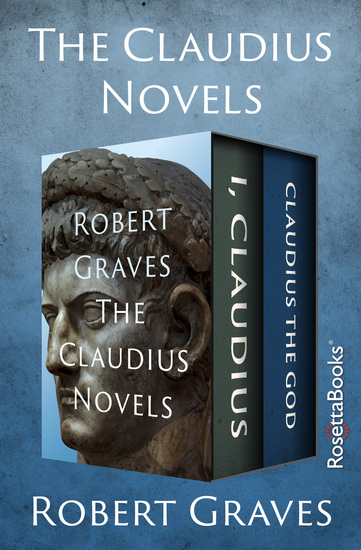
  • The Claudius Novels - I Claudius and Claudius the God - cover

    The Claudius Novels - I Claudius...

    Robert Graves

    • 1
    • 0
    • 0
    The Claudius Novels includes Robert Graves’ best known historical novels, I, Claudius and Claudius the God. 
    In I, Claudius, Robert Graves begins the story of the limping, stammering young man who is suddenly thrust onto the throne after the death of Caligula.
    Once a rather bookish young man with a limp and a stammer, a man who spent most of his time trying to stay away from the danger and risk of the line of ascension, Claudius seemed an unlikely candidate for Emperor. Yet, on the death of Caligula, Claudius finds himself next in line for the throne, and must stay alive as well as keep control.
    
    Drawing on the histories of Plutarch, Suetonius, and Gaius Cornelius Tacitus, noted historian and classicist Robert Graves tells the story of the much-maligned Emperor Claudius with both skill and compassion. Weaving important themes throughout about the nature of freedom and safety possible in a safety and a monarchy, Graves’ Claudius is both more effective and more tragic than history typically remembers him. A best-selling novel and one of Graves’ most successful, I, Claudius has been adapted to television, film, theatre, and audio.
    
    In Claudius the God, Graves continues the story, detailing Claudius’ 13-year reign and his ultimate downfall. Painting the vivid, tumultuous, and decadent society of ancient Rome with spectacular detail, Robert Graves provides a tale that is both instructive and compelling, and difficult to put down for both casual readers and students of Roman history.
    Show book
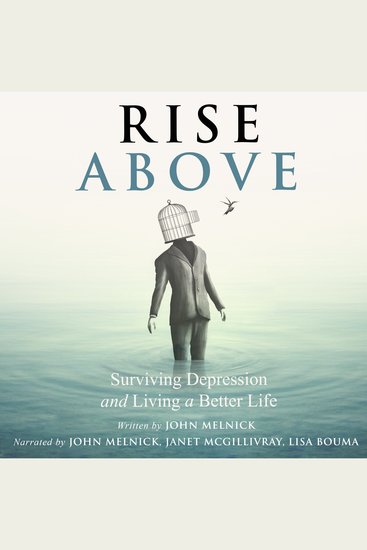
  • Rise Above - Surviving Depression and Living a Better Life - cover

    Rise Above - Surviving...

    John Melnick

    • 0
    • 0
    • 0
    This book is about an award-winning entrepreneur who suffered from bouts of depression. One day, he attempted to suicide by walking into a river — fully dressed in a business suit. At the last minute, he decided to save himself and swam back to shore. "Rise Above" details John Melnick’s difficult childhood with a controlling mother, his business rise, his bouts with depression, his attempted suicide, his recovery in hospital, and his ongoing strategies to stay mentally healthy. Here is what professionals in the field are saying about this book: 
    "Rise Above" is courageous, inspiring, and heartwarming. John boldly takes readers through the experience of his downward trajectory, attempting suicide, and then finding the supports, tools and insights for recovering. This book is highly recommended for people experiencing depression and for those who love them. (Kathleen Thompson, PhD, MSW, RSW)
    Show book