Join us on a literary world trip!
Add this book to bookshelf
Grey
Write a new comment Default profile 50px
Grey
Subscribe to read the full book or read the first pages for free!
All characters reduced
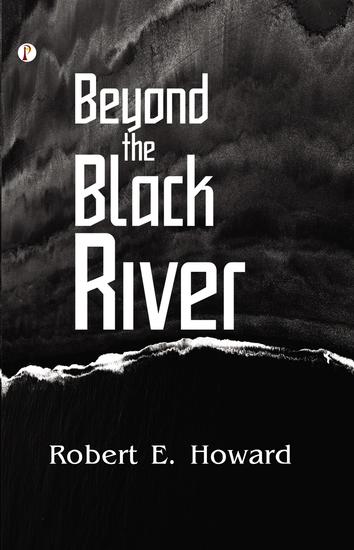
Beyond the Black River - cover

Beyond the Black River

Robert E. Howard

Publisher: Pharos Books

  • 0
  • 0
  • 0

Summary

Beyond the Black River is one of Robert E. Howard's classic Conan the Barbarian tales, set on the turbulent frontier of the Hyborian Age. In this action-packed novella, Conan finds himself in the wilds beyond the Black River, where savage Pictish tribes threaten the borders of civilization. With his unmatched strength and cunning, Conan must fight to protect the settlers and repel the invading forces. As danger lurks in every shadow, the wilderness tests Conan's skills in survival and battle. Filled with Howard's signature fast-paced action, vivid world-building, and unforgettable characters, Beyond the Black River is a thrilling tale of courage, survival, and the primal forces that shape the world. This is Conan at his finest, showcasing the raw intensity that has made him a legend in the realm of sword-and-sorcery fiction.
Available since: 11/01/2026.
Print length: 78 pages.

Other books that might interest you

  • The Wendigo - cover

    The Wendigo

    Algernon Blackwood

    • 0
    • 0
    • 0
    The Wendigo by Algernon Blackwood is a classic horror tale that explores the depths of human fear and the supernatural. The story follows a group of hunters on a trip in the Canadian wilderness, where they encounter a mysterious and terrifying creature known as the Wendigo. As the creature preys upon them, the hunters are forced to confront their own inner demons and struggle to survive in a world beyond their understanding. With vivid descriptions and eerie atmosphere, Blackwood creates a haunting tale that lingers long after the final page is turned.
    Show book
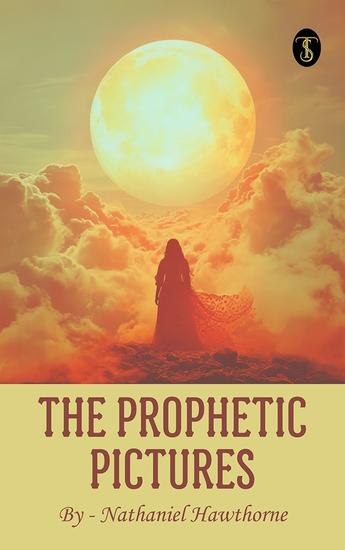
  • The Prophetic Pictures - cover

    The Prophetic Pictures

    Nathaniel Hawthorne

    • 0
    • 0
    • 0
    The Prophetic Pictures is a short story written by Nathaniel Hawthorne, first published in 1839. Set in a small New England town, the narrative revolves around a mysterious portrait painter named Mr. Malbone and his peculiar artwork. Malbone's paintings possess an uncanny ability to depict future events in the lives of his subjects, often with ominous accuracy. The protagonist, Edward Malbone, becomes increasingly intrigued by the paintings, particularly one of his fiancée, Clara. As he delves deeper into the mysteries surrounding the prophetic pictures, Edward grapples with questions of fate, free will, and the consequences of peering into the future. Hawthorne masterfully weaves themes of predestination and moral responsibility throughout the story, creating a gripping tale that explores the complexities of human nature and the enigmatic forces that shape our lives. "The Prophetic Pictures" stands as a timeless example of Hawthorne's skill in crafting haunting and thought-provoking narratives.
    Show book
  • Little Caesar - cover

    Little Caesar

    W. R. Burnett

    • 0
    • 0
    • 0
    Caesar Rico is a small-time gangster in Prohibition-era Chicago, one of crime boss Sam Vettori's lieutenants. He's ordered to take a crew to rob a club during a New Year's Eve party—but the holdup takes a turn for the worse when Rico shoots and kills a popular police captain. Using this distinctly unwanted outcome as leverage, Rico starts to climb to the top of Vettori's criminal empire—but he quickly discovers that the summit can be very slippery. Little Caesar is often called the first gangster novel, and it certainly delivers in its realistic depiction of crime, the people in the social strata who are concerned with it, and their unique period patois. The novel was a hugely popular bestseller precisely because it was one of the first to record what life was like in the criminal gangs that had a stranglehold on American urban life. The novel was later adapted into the 1931 film of the same name, famous for, like its literary counterpart, being the first "gangster film" that established many of the gangster-movie tropes we take for granted today. W. R. Burnett (died 1982) was a significant literary figure of the 20th century. Their work has endured across generations and continues to be read and studied worldwide. As a work of classic literary fiction, Little Caesar exemplifies the narrative craft and social insight that defined great storytelling of its era. Literary fiction of this period was characterized by careful attention to character psychology, social milieu, and the moral questions that animated public discourse.
    Show book
  • The Wisdom of Father Brown - cover

    The Wisdom of Father Brown

    G. K. Chesterton

    • 0
    • 0
    • 0
    The Wisdom of Father Brown is a collection of detective stories written by G.K. Chesterton, first published in 1914. The book features the fictional character Father Brown, a priest who uses his keen intellect and understanding of human nature to solve crimes.
    Show book
  • Moby Dick - cover

    Moby Dick

    Herman Melville

    • 0
    • 0
    • 0
    This audiobook is narrated by an AI Voice. 
    Call me Ishmael. So begins Herman Melville's towering masterpiece of obsession and the sea — the story of Captain Ahab, a man maimed by the great white whale Moby Dick, who drives his ship the Pequod and its crew on a relentless hunt for vengeance across every ocean of the world. Part adventure, part epic tragedy, part deep meditation on fate, madness and the human soul, MOBY DICK is one of the greatest novels ever written in the English language.
    Show book
  • A Laodicean - A Story of To-Day - cover

    A Laodicean - A Story of To-Day

    Thomas Hardy

    • 0
    • 0
    • 0
    Complete and unabridged, with 58 full-page plates by J. M. W. Turner, John Constable and James Tissot. The daughter of a railway millionaire buys a Norman castle and cannot decide anything — church or chapel, one suitor or the other — while a young architect restores her battlements and a photographer forges a picture. Hardy trained as an architect and dictated much of this from bed during a near-fatal illness; it is his novel about the new money meeting the old stones, and about a woman who is lukewarm on principle. Fifty-eight plates, from Constable's Hadleigh Castle and Stour valley to Munch's women, echo a story of old stones and wavering hearts.
    Show book