Join us on a literary world trip!
Add this book to bookshelf
Grey
Write a new comment Default profile 50px
Grey
Subscribe to read the full book or read the first pages for free!
All characters reduced
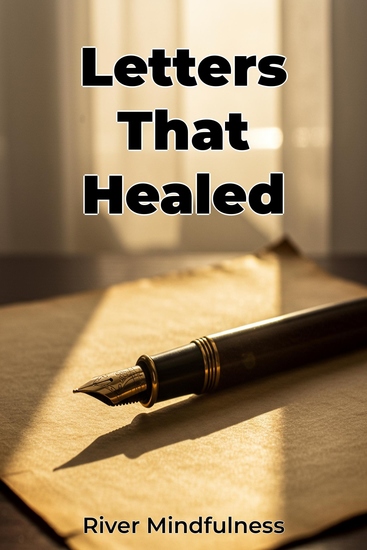
Letters That Healed - cover

Letters That Healed

River Mindfulness

Translator A AI

Publisher: Publifye

  • 0
  • 0
  • 0

Summary

Letters That Healed explores the transformative power of handwritten letters in mending and strengthening Family Relationships. In today's digital age, the deliberate act of writing a letter carries unique emotional significance, fostering genuine connection often missed in fleeting texts. The book unveils how these thoughtfully crafted letters can act as catalysts for healing, focusing on mindful communication to repair damaged relationships.

 
The book progresses by introducing effective letter-writing techniques, followed by case studies demonstrating how handwritten letters resolved family disputes, sibling rivalries, and parent-child estrangements. One intriguing fact is the book's analysis of actual letter excerpts through a psychological lens, revealing specific techniques used.

 
The book also highlights the importance of understanding emotional triggers and expressing vulnerability when composing these letters. Letters That Healed offers a step-by-step guide to composing your own healing letters, making it a valuable resource for anyone seeking to improve family dynamics. The book's value lies in its targeted approach to family relationships, differentiating itself from general communication guides. It provides a practical framework, drawing from communication studies, family therapy, and real-life experiences, to help readers navigate difficult conversations with greater confidence. By understanding the underlying psychological principles, readers can increase the likelihood of positive outcomes and foster deeper understanding within their families.
Available since: 02/17/2025.
Print length: 101 pages.
Other books that might interest you

  • A Short History of the World - cover

    A Short History of the World

    H. G. Wells

    • 0
    • 0
    • 0
    Don’t have time to read a whole history textbook or a set of encyclopedias? Check out H.G. Wells’ A Short History of the World for a bite-sized portion of human history. From the origin of our planet, to the great civilizations, to the Great War, follow Wells on this ambitious journey spanning thousands of years. 
     Although H.G. Wells is known as “the father of science fiction,” his interest in biology and politics also compelled him to write about the physical world around him. A Short History of the World offers the chance to connect with a great creative mind on a literal and intellectual level. Discover why Albert Einstein recommended this book for understanding the course of civilization throughout history.
    Show book
  • The Noosphere-The Thinking Layer of Earth - cover

    The Noosphere-The Thinking Layer...

    Brian Thomas Swimme, Monica...

    • 0
    • 0
    • 0
    Are we living in and collectively participating in a planetary nervous system? Are we all creative participants guiding Earth’s destiny? Here we focus on the noosphere, which represents the third major evolutionary layer enveloping Earth, following the geosphere (inanimate matter) and the biosphere (biological life).  Brian Thomas Swimme, Ph.D. is Professor of Evolutionary Cosmology at the California Institute of Integral Studies in San Francisco. He is the Director of the Third Story of the Universe at The Human Energy Project He is the host of the Emmy-award winning PBS special "Journey of the Universe," written with Mary Evelyn Tucker. He is also the host of the 35-part video series "Story of the Noosphere," created for the Human Energy Project.  Monica DeRaspe-Bolles is a doctoral student at the California Institute of Integral Studies in the Philosophy, Cosmology, and Consciousness program. Her area of research is the “Third Story of the Universe” and the potential emergence of a new structure of experience fostering cosmogenic awakening. She is a collaborator with Brian Swimme on the video series “Story of the Noosphere.” They are the co-authors of the book The Story of the Noosphere (Orbis Books 2024) This interview with Justine Willis Toms was recorded on July 11, 2025 
    Tags: Brian Thomas Swimme, Monica DeRaspe-Bolles, Noosphere, geosphere, biosphere, James Webb telescope, Pierre Teilhard de Chardin, Vladimir Vernadsky, Jiffy time, Arno Penzias, Robert Wilson, universal mind, planetary mind, Zarathustra, entelechy, diversification, conscious recall, Personal Transformation, Philosophy, Science, Community
    Show book
  • History of Soviet Union From Revolution to Collapse The - First Part - cover

    History of Soviet Union From...

    Onofre Quezada

    • 0
    • 0
    • 0
    This audiobook is narrated by an AI Voice.  
    This book offers a clear and in-depth look at the history of the Soviet Union, from the early days of the 1917 Revolution to its unexpected dissolution in 1991. Through its pages, readers will discover how a vast empire rose from the ruins of Tsarism, becoming a superpower that defined the course of the 20th century, and how, after decades of internal strife, international tensions, and social transformations, it finally collapsed. 
    The History of the Soviet Union From Revolution to Collapse not only addresses the major political and military events but also the cultural, economic, and human impact that shaped the lives of millions of people under the Soviet regime. Ideal for students, researchers, or anyone curious about history, this book reveals the keys that made the Soviet experiment one of the most fascinating and controversial chapters in human history.
    Show book
  • David Trimble: Peacemaker - cover

    David Trimble: Peacemaker

    Stephen Walker

    • 1
    • 0
    • 0
    Nobel laureate, party leader, peacemaker, first minister and statesman – David Trimble had many roles. But what is the real story behind the man who made headlines and changed lives?
    In this definitive biography of Trimble's life and death, award-winning journalist Stephen Walker vividly details how a shy Belfast academic changed the political landscape of Northern Ireland.
    Written with the cooperation of his widow, Lady Trimble, and their grown-up children, Peacemaker offers unparalleled insights into the life of the first person to be elected first minister of Northern Ireland and the most significant unionist leader since the creation of Northern Ireland in 1921. From the beginning of his political career in the dark days of the Troubles, to bringing unionism and nationalism together to end decades of division and violence and secure peace, Trimble's personal journey mirrors the story of Northern Ireland itself.
    Drawing on over 100 fresh interviews, this is a colourful and personal account of the life of a key figure in Irish history and an essential companion to Stephen Walker's bestselling biography of John Hume.
    Show book
  • Why Shamans Aren’t Enlightened - cover

    Why Shamans Aren’t Enlightened

    Elena Cross

    • 0
    • 0
    • 0
    This audiobook is narrated by an AI Voice.  
    The image is compelling: an indigenous elder in ceremonial dress, keeper of ancient wisdom, connected to spirits and plant teachers. The shaman has become the central figure in modern spiritual mythology, presented as living proof that enlightenment exists and can be accessed through proper guidance. Millions have traveled to the Amazon, to Siberia, to Africa, convinced these figures represent something their culture has lost. The mythology is false. Shamans are not enlightened. They are not awakened beings who have transcended the human condition. They are people who have become expert at entering altered states, navigating drug-induced experiences, and performing culturally expected roles that satisfy both their communities and the foreign seekers who provide their income. What they offer is not enlightenment—it is theater that looks like enlightenment to those who do not know what enlightenment actually is. Most shamans spend significant portions of their lives intoxicated. Traditional practice involves regular consumption of psychoactive substances. The shaman's baseline consciousness is perpetually shaped by these substances, never fully stabilizing in ordinary waking reality. This is the opposite of genuine enlightenment, which requires sustained clarity, not sustained alteration. The romanticization of shamanism serves Western spiritual consumers, not truth.
    Show book
  • How to Be Queer - An Ancient Guide to Sexuality (Ancient Wisdom for Modern Readers) - cover

    How to Be Queer - An Ancient...

    Sarah Nooter

    • 0
    • 0
    • 0
    The idea of sexual fluidity may seem new, but it is at least as old as the ancient Greeks, who wrote about queer experiences with remarkable frankness, wit, and insight. How to Be Queer is an infatuating collection of these writings about desire, love, and lust between men, between women, and between humans and gods, in lucid and lively new translations. 


    How to Be Queer starts with Homer's Iliad and moves through lyric poetry, tragedy, comedy, philosophy, and biography, drawing on a wide range of authors, including Sappho, Plato, Anacreon, Pindar, Theognis, Aristophanes, and Xenophon. It features both beautiful poetry and thought-provoking prose, emotional outpourings and humorous anecdotes. From Homer's story of the relationship between Achilles and Patroclus, one of the most intense between men in world literature, to Sappho's lyrics on the pleasures and pains of loving women, these writings show the many meanings of what the Greeks called eros. 


    Complete with brief introductions to the selections, How to Be Queer reveals what the Greeks knew long ago—that the erotic and queer are a source of life and a cause for celebration.
    Show book