
Join us on a literary world trip!
Add this book to bookshelf
Grey
Write a new comment Default profile 50px
Grey
Subscribe to read the full book or read the first pages for free!
All characters reduced
Arid Zone Survival - cover

Arid Zone Survival

Ritika Gupta

Translator A AI

Publisher: Publifye

  • 0
  • 0
  • 0

Summary

Arid Zone Survival explores the critical challenges of living in arid environments, focusing on heat management and water sourcing. It highlights how understanding thermoregulation and mastering water conservation are essential for survival in these harsh landscapes. Interestingly, humans can lose up to 1-1.5 liters of water per hour through sweat in extreme heat, underscoring the urgency of effective hydration strategies. The book also examines how indigenous populations have developed unique survival skills over generations, offering valuable lessons in adapting to arid conditions.

 
The book provides a structured approach, beginning with the science behind human adaptation to heat and dehydration, before moving into practical water sourcing techniques, like solar stills and dew collection. It emphasizes sustainable practices, such as shelter design and waste reduction, to minimize water loss.

 
By integrating environmental science, geography, and human biology, Arid Zone Survival delivers actionable strategies for individuals and communities facing the growing challenges of climate change in arid regions.
Available since: 02/19/2025.
Print length: 76 pages.
Other books that might interest you

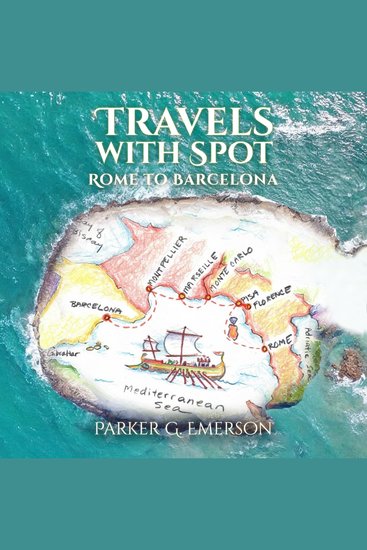
  • Travels with Spot - Rome to Barcelona - cover

    Travels with Spot - Rome to...

    Parker G. Emerson

    • 0
    • 0
    • 0
    Missed flights. Wrong connections. A ship that almost sails without them. 
    Travels with Spot: Rome to Barcelona begins where most travel books stop pretending. Parker G. Emerson takes readers along on a European journey that refuses to go smoothly and becomes better because of it. 
    From Rome to Florence, through small Tuscan towns, along the Mediterranean coast, and into Barcelona, this book captures what travel really feels like when plans change and curiosity takes over. It is filled with quiet observations, unexpected moments, history that makes sense, and the small details guidebooks never mention. 
    This is not a how-to or a highlights list. It is a true travel journal for readers who want the story behind the places and the experience between the stops.
    Show book
  • Ice Age The: The History and Legacy of the Glacial Period during the Pleistocene Era - cover

    Ice Age The: The History and...

    Editors Charles River

    • 0
    • 0
    • 0
    The early history of Earth covers such vast stretches of time that years, centuries, and even millennia become virtually meaningless. Instead, paleontologists and scientists who study geochronology divide time into periods and eras.  
    	What humans commonly refer to as the “Ice Age” is actually a series of fluctuating climate events that have occurred throughout the planet’s history. These ongoing historical phenomena are difficult to conceptualize because of both the time frame involved and the natural process by which they cyclically unfold. The Earth’s climatic clock repeats the maneuver over millions of years per occurrence, a number that is intellectually graspable, but not viscerally well-perceivable by most members of the human race. The process by which ice ages form is not relevant to any societal function, and therefore remains a mystery. Those who attempt to define it are often met with either apathy or defiant superstition. 
    	As a basic definition, it may be said that an ice age is simply a period of time during which thick ice sheets cover vast areas of land. These sheets have advanced and retreated, at times taking over the entire planet, and conversely disappearing nearly altogether. Glacial ice formed by this regularly occurring process does not sit in a state of inertia, but moves dynamically, reshaping the geological features of the continents. Again, the time frame for glacial movement is far longer than any involving human activity, so close attention must be paid in order to correctly measure and interpret it for the modern day. 
    Show book
  • Human Righats - cover

    Human Righats

    Ismail Serageldin

    • 0
    • 0
    • 0
    Ismail Serageldin is the Co-Chair of the Board of Trustees of the Nizami  Ganjavi International Center (NGIC).  He was the Founding Director of the Bibliotheca Alexandrina, the New Library of Alexandria in Egypt (2001-2017).  Before that he was the Vice-President of the World Bank (1993-2000) in charge of Environmentally Sustainable Development (ESD), and the Chairman of the Consultative Group for International Agricultural Research (CGIAR).  He served on many international committees and commissions, including serving as a member of the High Level group for the Alliance of Civilizations convened by the Secretary General of the United Nations (2006-2007).   He was also a distinguished professor at Wageningen University and the College de France. He is a member of many Academies and serves on many commissions, boards, and advisory committees for academic, research, and NGO institutions. He has lectured widely and published more than 100 books and 500 articles. He has received many awards from many countries and has received more than 40 honorary doctorates from all over the world.
    Show book
  • Complete Guide to Growing and Cultivating Herbs and Spices - Expert Advice for Planting Indoors and Outdoors the Best Containers and Storage - cover

    Complete Guide to Growing and...

    Linda Gray

    • 0
    • 0
    • 0
    Complete Guide to Herbs and Spices is a must-have book for all garden aficionados. Even if you don't have space for an outdoor garden, it's packed with practical information for propagating, growing, using and preserving herbs and spices in large or small spaces to help make you more self sufficient. While addressing both, author Linda Gray emphasizes clay pot and container gardening. Each plant profile contains growing advice for each herb or spice including how to prepare the soil, when to sow and plant, when to harvest and gather, and how to use each herb and spice in food. Herbs include aloe vera, basil, bay leaves, lavender, lemon balm, lovage, and more! Spices include caraway, chili peppers, garlic, horse radish mustard, poppies, saffron and more! Be inspired to create new culinary delights with herb and spice infused recipes, complete with beautiful full-color photography. Recipes include Aloe Vera Juice, Candied Angelica, Tomato and Basil Salad, Bouquet Garni, Blackberry and Apple Crumble, Borage Syrup, Dandelion and Burdock Beer, Caraway Seed Cake and more! Become more self-sufficient and one with nature when you grow and cultivate your own herbs and spices.
    Show book
  • Planepack - cover

    Planepack

    Slobodanka Graham

    • 0
    • 0
    • 0
    I fly and travel with carry-on luggage only. That's 7 kgs. And yes, you can do it too!At Planepack, discover the art of light travel: skip the queues; hop in and out of trains, boats and planes. Lose your addiction to heavy cases and you too will be a liberated light traveler.I write and review light travel essentials, packing guides, travel tips - and how to travel with style and ease.Planepack is perfect for anyone wanting to enjoy their travel experience - and not be burdened with luggage. I hope this book inspires you too to travel light.
    Show book
  • The Cat Who Went to Heaven - A Tale of Ancient Japan with New Original Music - cover

    The Cat Who Went to Heaven - A...

    Elizabeth Coatsworth

    • 0
    • 0
    • 0
    The 1931 winner of the Newbery Medal, finally in audiobook form with new original music. 
     
    Elizabeth Coatsworth originally published The Cat Who Went to Heaven in 1930 with illustrations by celebrated artist Lynd Ward.  Set in a village in ancient Japan, the tale recounts the adoption of a cat by a poor painter and his housekeeper.  At first suspicious of the feline, the painter grows fonder as he depicts a succession of animals in a large silkscreen painting portraying “The Death of the Lord Buddha,” commissioned by the village temple.  As each animal appears in the painting, the reader receives a Buddhist folktale illustrating Buddhist teachings of kindness, mercy, and sacrifice. 
     
    As the painter painstakingly creates his masterpiece, the adopted cat, whom the artist names Good Fortune, demonstrates a devotion to the Lord Buddha and his teachings that surprises and inspires the humble household.  Through her behavior and deeds, Good Fortune steadily overcomes the reputation of the cat as the one animal too proud to pay homage to the Lord Buddha.  She earns her place alongside her fellow creatures, her place in heaven. 
     
    While generations have treasured The Cat Who Went to Heaven, this is the first audiobook production of the work.  Why?  The music.  Coatsworth broke up the narrative into eight parts, and ended each part with a “song of the housekeeper” that provided an emotional summary of the preceding scenes.  Coatsworth presented the songs, however, as simple poems, and never offered the chords or melodies that would allow a narrator to easily sing the songs.  This audiobook contains original musical compositions based on Coatsworth’s lyrics from the text.
    Show book