Join us on a literary world trip!
Add this book to bookshelf
Grey
Write a new comment Default profile 50px
Grey
Subscribe to read the full book or read the first pages for free!
All characters reduced
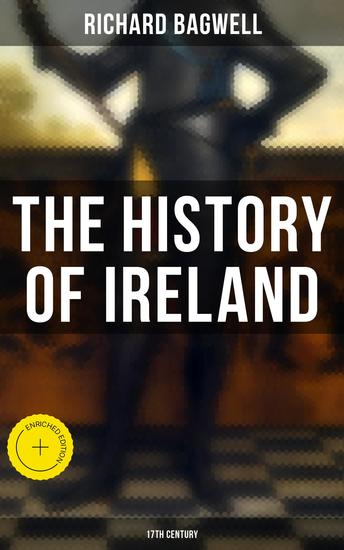
The History of Ireland: 17th Century - Enriched edition During the Reign of the Stuarts and the Interregnum: From 1603 to 1690 - cover

The History of Ireland: 17th Century - Enriched edition During the Reign of the Stuarts and the Interregnum: From 1603 to 1690

Richard Bagwell

Publisher: Musaicum Books

  • 0
  • 0
  • 0

Summary

Richard Bagwell's 'The History of Ireland: 17th Century' is a comprehensive account of Ireland's tumultuous history during the 1600s. Bagwell carefully examines the political, social, and cultural dynamics of the era, providing readers with a detailed insight into the complexities of Ireland's past. The book is written in a clear and engaging style, making it accessible to both academic scholars and general history enthusiasts. Bagwell's work is considered a significant contribution to Irish historical scholarship, offering fresh perspectives and interpretations on this period of Irish history. Richard Bagwell was a prominent historian and author who dedicated his career to studying Irish history. His deep understanding of the political landscape and social dynamics of Ireland informed his writing and allowed him to produce authoritative works such as 'The History of Ireland: 17th Century'. Bagwell's meticulous research and thoughtful analysis make this book a valuable resource for anyone interested in delving into the complexities of Irish history. I highly recommend Richard Bagwell's 'The History of Ireland: 17th Century' to readers looking to deepen their understanding of Ireland's past. This book offers a nuanced and compelling exploration of a pivotal period in Irish history, shedding light on the events and forces that shaped the country during the 17th century.

In this enriched edition, we have carefully created added value for your reading experience:
- A succinct Introduction situates the work's timeless appeal and themes.
- The Synopsis outlines the central plot, highlighting key developments without spoiling critical twists.
- A detailed Historical Context immerses you in the era's events and influences that shaped the writing.
- A thorough Analysis dissects symbols, motifs, and character arcs to unearth underlying meanings.
- Reflection questions prompt you to engage personally with the work's messages, connecting them to modern life.
- Hand‐picked Memorable Quotes shine a spotlight on moments of literary brilliance.
- Interactive footnotes clarify unusual references, historical allusions, and archaic phrases for an effortless, more informed read.
Available since: 12/17/2020.
Print length: 1053 pages.
Other books that might interest you

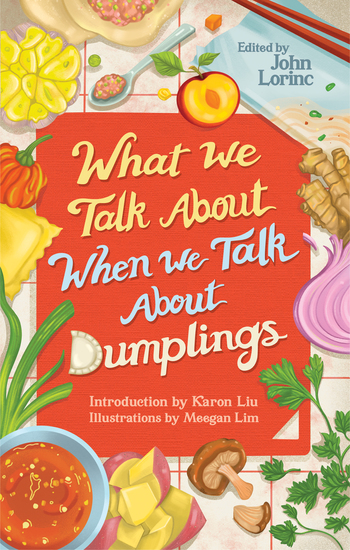
  • What We Talk About When We Talk About Dumplings - cover

    What We Talk About When We Talk...

    John Lorinc

    • 0
    • 0
    • 0
    Featured on "The Sunday Magazine" on CBC Radio 
    SHORTLISTED FOR THE 2023 TASTE CANADA AWARD FOR CULINARY NARRATIVES 
    Nearly every culture has a variation on the dumpling: histories, treatises, family legends, and recipes about the world’s favourite lump of carbs 
    If the world's cuisines share one common food, it might be the dumpling, a dish that can be found on every continent and in every culinary tradition, from Asia to Central Europe to Latin America. Originally from China, they evolved into ravioli, samosas, momos, gyozas, tamales, pierogies, matzo balls, wontons, empanadas, potato chops, and many more. 
    In this unique anthology, food writers, journalists, culinary historians, and musicians share histories of their culture’s version of the dumpling, family dumpling lore, interesting encounters with these little delights, and even recipes to unwrap the magic of the world's favourite dish. 
    With an introduction by Karon Liu. 
    Illustrations by Meegan Lim. 
    Contributors include: Michal Stein, Christina Gonzales, Kristen Arnett, David Buchbinder, André Alexis, Miles Morrisseau, Angela Misri, Perry King, Sylvia Putz, Mekhala Chaubal, Arlene Chan, Chantal Braganza, Naomi Duguid, Eric Geringas, Matthew Murtagh-Wu, Monika Warzecha, Bev Katz Rosenbaum, Tatum Taylor Chaubal, Domenica Marchetti, Julie Van Rosendaal, Amy Rosen, Cheryl Thompson, Jennifer Jordan, Marie Campbell and Navneet Alang
    Show book
  • The Era of Revolution - 1775-1796 - cover

    The Era of Revolution - 1775-1796

    George Washington, Maximilien de...

    • 0
    • 0
    • 0
    Six speeches about freedom and revolution from the American, French and Irish revolutions.The first two speeches are from the American Revolutionary war (1775-1783). Patrick Henry’s “Give me Liberty or give me death” is recognized even today, two centuries since Henry spoke at the Second Virginia Convention to an audience including Thomas Jefferson and George Washington. The speech is credited with providing troops from Virginia for the revolutionary war.In the Newburgh Address, Washington and implores his army to put their faith in him. A mutiny was proposed because Congress has not paid them as promised. Washington needed to make clear to his generals that there was no option to surrender or turn away to unsettled lands, and that he was with them and on their side in the thick of both war and politics.Next is William Wilberforce’s Abolition Speech to the British parliament in 1789, the apex of a campaign that led to slavery being outlawed across the British Empire.Speeches from the French revolution then follow. First, there is the reaction from the aristocracy in England; a valediction from Edmund Burke, an MP in the British Parliament, on the beauty of Marie Antoinette and his sadness at her passing.Four speeches follow by Maximilien de Robespierre, a foundational member of the French Revolution, who laid down the political philosophy of liberty and the moral law over divinity and customary law. The speeches are filled with a passion for direct democracy and the rule of the people, not the elites.The volume ends with a more measured, but no less impassioned, address by the Irish lawyer and statesman John Curran. It was given in Curran’s defence of Archibald Rowan, who was sentenced to transportation to Australia for his treasonous activities fighting for Irish independence. While unsuccessful, this rallying cry for genuine self-determination and free speech captures the heart of the conflicts that defined the era.
    Show book
  • Understanding Your Child - Parenting Strategies for Children's Emotional Resilience - cover

    Understanding Your Child -...

    Elly Watson

    • 0
    • 0
    • 0
    "Understanding Your Child: Parenting Strategies for Emotional Resilience" offers practical guidance for parents to nurture their children's emotional well-being. Drawing on the latest research, this book equips parents with tools to recognize, validate, and guide their children's emotions. From fostering empathy to teaching coping skills, parents learn how to create a supportive environment where their children can develop emotional resilience. With real-life examples and actionable strategies, this book is an essential resource for parents seeking to raise emotionally healthy children.
    Show book
  • Chess for Schools - From simple strategy games to clubs and competitions - cover

    Chess for Schools - From simple...

    Richard James

    • 0
    • 0
    • 0
    Written by Richard James, Chess for Schools: From simple strategy games to clubs and competitions is a great resource to help teachers encourage children to enjoy the benefits and challenges of the chess game
    Chess is a game of extraordinary excitement and beauty and all children should have the opportunity to experience it. Indeed, many claim that playing abstract strategy games such as chess provides a wide range of cognitive and social benefits- such as improvements in problem-solving ability and communication skills.
    However, Richard James argues that, because of the complexity of chess, most younger children would gain more benefit from simpler chess-based strategy games and incremental learning. In this practical handbook, Richard provides a wide range of games and puzzles based on these principles which are appropriate for primary schools and explains how teachers can identify children who would benefit from starting young.
    Richard also sets out how this approach can engage the whole community, including working with children with special needs, getting parents involved in learning and playing, and developing partnerships between primary and secondary schools.
    Chess for Schools shares the latest research into how children process information, combined with insights into international best practice in teaching chess to young children. The book demonstrates the transformative effect chess can have on older children, and how this can be promoted in secondary schools. Richard James offers valuable insights into the greater context of chess-playing, expressing how and why chess is a joy to so many worldwide andshares a series of resources and minigames for teachers to use with their learners.
    An ideal resource for primary and secondary school teachers wanting to introduce their pupils to chess.
    Show book
  • End of World War II in the Pacific The: The History of the Final Campaigns that Led to Imperial Japan’s Surrender - cover

    End of World War II in the...

    Editors Charles River

    • 0
    • 0
    • 0
    By the spring of 1943, American military planners had begun to create a plan to dislodge Japan from east and southeast Asia. To do so, parts of the Philippines were considered main strategic points in the potential Allied attack in the Pacific. The end goal of the Allied plan was an invasion of the Japanese home islands, in which heavy aerial bombardment would precede a ground assault. In order for this to occur, Allied forces would have to occupy areas surrounding Japan, with China adding to Luzon (the largest island in the Philippines) and Formosa (a large island off the coast of China) to create a triangle from which they could launch their bombers. 
    When Admiral Chester Nimitz was directed to capture an island in the Bonin group, Iwo Jima stood out for its importance in making progress against the mainland, with three airfields that would allow American air forces to attack the Japanese mainland. But the Japanese were also well aware of how important Iwo Jima was, and they fought desperately in bunkers and tunnels that required the Americans to carefully clear them out gradually.  
    Near the end of 1944, as Allied forces were pushing across the Pacific and edging ever closer to Japan, plans were drawn up to invade the Ryuku islands, the most prominent of them being Okinawa. Given the horrific nature of the combat, and the fact that it was incessant for several weeks, it’s no surprise that Okinawa had a profound psychological effect on the men who fought, but it also greatly influenced the thinking of military leaders who were planning subsequent campaigns, including a potential invasion of the Japanese mainland. The casualty tolls at Okinawa ultimately helped compel President Truman to use the atomic bombs on Hiroshima and Nagasaki in an effort to end the war before having to attempt such an invasion.
    Show book
  • The Highly Sensitive - cover

    The Highly Sensitive

    Patrick Hartwin

    • 0
    • 0
    • 0
    The Highly Sensitive: Growing in Self-awareness, Managing Emotional Overload and Stress, and Using the HSP’s Unique Characteristics to Live a Happy, Meaningful, and Fulfilling LifeBeing a highly sensitive person is not a mental illness. It is not a psychological condition or disorder. Because of his high sensitivity, a highly sensitive person simply finds it difficult to filter out or sift through stimuli. Only about 20% of the general population has sensory processing sensitivity. Given these statistics, if you are a highly sensitive person, do not be surprised if you feel out of place with most people. But with enough understanding of what this condition means, you will learn the strengths and weaknesses associated with this circumstance. In this audiobook, you will learn about HSP. You will get all the information that can help you understand and cope with the challenges unique to a highly sensitive person. It will provide practical and sensible advice you can apply in your daily life to resolve problems common to highly sensitive people. Discover coping strategies that will help you manage your emotions and deal with stress to prevent overload. This audiobook will cover the following topics:- Growing in Self-awareness as a Highly Sensitive Person- Emotions and the Highly Sensitive Person- How to Manage Stress and Anxiety as a Highly Sensitive Person- Survival Tips for the Highly Sensitive Person- Thrive and Make an Impact with the Highly Sensitive Person’s Unique Attributes- And many more!To learn more about HSP, download your copy of this audiobook today!
    Show book