Unisciti a noi in un viaggio nel mondo dei libri!
Aggiungi questo libro allo scaffale
Grey
Scrivi un nuovo commento Default profile 50px
Grey
Iscriviti per leggere l'intero libro o leggi le prime pagine gratuitamente!
All characters reduced
What We Talk About When We Talk About Dumplings - cover

What We Talk About When We Talk About Dumplings

John Lorinc

Casa editrice: Coach House Books

  • 0
  • 0
  • 0

Sinossi

Featured on "The Sunday Magazine" on CBC Radio 
SHORTLISTED FOR THE 2023 TASTE CANADA AWARD FOR CULINARY NARRATIVES 
Nearly every culture has a variation on the dumpling: histories, treatises, family legends, and recipes about the world’s favourite lump of carbs 
If the world's cuisines share one common food, it might be the dumpling, a dish that can be found on every continent and in every culinary tradition, from Asia to Central Europe to Latin America. Originally from China, they evolved into ravioli, samosas, momos, gyozas, tamales, pierogies, matzo balls, wontons, empanadas, potato chops, and many more. 
In this unique anthology, food writers, journalists, culinary historians, and musicians share histories of their culture’s version of the dumpling, family dumpling lore, interesting encounters with these little delights, and even recipes to unwrap the magic of the world's favourite dish. 
With an introduction by Karon Liu. 
Illustrations by Meegan Lim. 
Contributors include: Michal Stein, Christina Gonzales, Kristen Arnett, David Buchbinder, André Alexis, Miles Morrisseau, Angela Misri, Perry King, Sylvia Putz, Mekhala Chaubal, Arlene Chan, Chantal Braganza, Naomi Duguid, Eric Geringas, Matthew Murtagh-Wu, Monika Warzecha, Bev Katz Rosenbaum, Tatum Taylor Chaubal, Domenica Marchetti, Julie Van Rosendaal, Amy Rosen, Cheryl Thompson, Jennifer Jordan, Marie Campbell and Navneet Alang
Disponibile da: 18/10/2022.
Lunghezza di stampa: 174 pagine.

Altri libri che potrebbero interessarti

  • Dead Sea and the Dead Sea Scrolls The: The History of the Unique Lake and Its Ancient Jewish Manuscripts - cover

    Dead Sea and the Dead Sea...

    Charles River Editors

    • 0
    • 0
    • 0
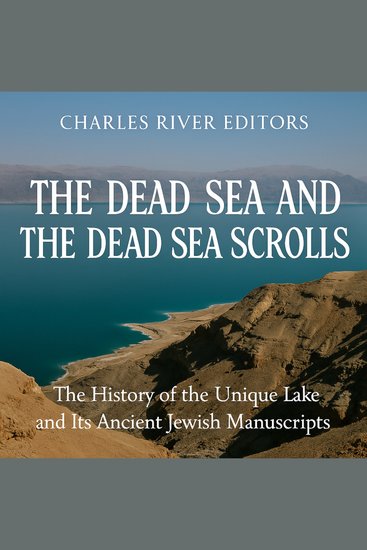
    If the world had a navel, it would be the Dead Sea, the lowest point on Earth where one can still stand on dry land. The photographs of this unique lake seem to be taken from a science fiction movie, or a land devastated after a nuclear holocaust. To others, the fluffy shores could remind them of Antarctica although it is in one of the warmest spots on the planet. Its white, creamy masses, scattered along golden beaches, are not ice floes or frozen water, but effervescent salt formations. The famous Jordan River, where the Hebrew people entered the Promised Land and Jesus was baptized, flows into the lake, but the basin is so deeply sunk into the face of the planet that the waters never leave, as if they had fallen into a small black hole where nothing can escape.  
    	The Dead Sea is also an archaeological site loaded with history. Known among the first civilizations in the region as "Sea of Asphalt" and “Salt Sea,” innumerable myths and legends lend it an air of mystery, as if it attracted sterility and misfortune while eradicating all life from its waters. It was perhaps the inhospitable feel of the place, the almost total desolation surrounding it, which led the writer of the Pentateuch to imagine that many years ago, a cataclysm sent to annihilate perverted people had taken place there.  
    	In the mid-20th century, one of the most important religious discoveries of all time was made in a series of caves near the Dead Sea, which had hidden remnants of nearly 1,000 texts, some of which were included in the Hebrew Bible and others which were extra-biblical. In addition to being the oldest surviving copies of such documents, the mixture of languages and different kinds of papers helped shed light on the people in the region at the time, making the Dead Sea Scrolls vitally important to the world’s major religions. 
    Mostra libro
  • Catastrophe - cover

    Catastrophe

    Dick Morris, Eileen McGann

    • 0
    • 0
    • 0
    #1 New York Times Bestseller! In Catastrophe, Dick Morris and Eileen McGann—authors of the megabestsellers Fleeced and Outrage—take a hard look at America in free fall and at how Barack Obama is transforming a vulnerable U.S. into a socialist state. Their seventh consecutive New York Times bestseller, Catastrophe is a call to arms for every American skeptical of Big Business and politics as usual—and a must read for fans of Bill O’Reilly, Sean Hannity, Rush Limbaugh, Michael Savage, Bernie Goldberg, and Glenn Beck.
    Mostra libro
  • Learn Swedish With Music - cover

    Learn Swedish With Music

    Innovative Language Learning, ...

    • 0
    • 0
    • 0
    Can learning Swedish be as simple as listening to music? 


    And as easy as remembering song lyrics?


    Just think. You remember song lyrics because lyrics are catchy, repeated throughout the song, and go with the music, right? Now, if you stuck in Swedish, you’d easily learn Swedish words and phrases the same way! 


    So, yes, learning Swedish is as easy as listening to music… with the Learn Swedish With Music Audiobook.


    Just press play, and you’ll hear Swedish words and phrases repeated to the beat of upbeat and cheerful music. And… follow along!


    You’ll learn 180+ most common Swedish words and phrases… while relaxing at home, or while driving to work.


    Learn Swedish With Music is the easiest way to start learning Swedish.. without getting overwhelmed by complicated explanations. Perfect for new learners with little to no language learning experience.


    What will you learn?
     
    180+ Words & Phrases Including...
     
    • Basic Greetings
     
    • Numbers
     
    • Common Questions and Answers
     
    • Parts of the Body & Talking About Your Wellbeing
     
    • Common Hobbies
     
    • And much more


    Learn Swedish With Music includes...
     
    • 15 Songs/Lessons Inside (Each is about 7 minutes long)
     
    • Fast-Paced Review Section at the End of Each Lesson
     
    • 1 Hour 50 Minutes in Total
     
    • Accompanying PDF eBook with the Words, Phrases and Translations


    Download the PDF and read along
    Mostra libro
  • Wars of Classical Greece The: The History of the Conflicts that Led to the Rise and Fall of the Greeks’ Dominance - cover

    Wars of Classical Greece The:...

    Charles River Editors

    • 0
    • 0
    • 0
    The ancient Greeks have long been considered the forefathers of modern Western Civilization, but the Golden Age of Athens and the spread of Greek influence across much of the known world only occurred due to one of the most crucial battles of antiquity: the Battle of Marathon. In 491 B.C., following a successful invasion of Thrace over the Hellespont, the Persian emperor Darius sent envoys to the main Greek city-states, including Sparta and Athens, demanding tokens of earth and water as symbols of submission, but Darius didn’t exactly get the reply he sought. 
    	The Peloponnesian War, as the great historian Thucydides wrote in the introduction to his eponymous book, which has become one of the greatest historical treatises of antiquity, was an event of such calamitous magnitude that Greece had never witnessed its like in all of recorded history. Not the Trojan War, not the Dorian Invasion, not even the recent Persian invasions – which had devastated mainland Greece and seen Athens herself evacuated and put to the flame, the buildings on her Acropolis razed into dust – could compare to the scale of the devastation that engulfed all of Greece for almost three decades, causing the deaths of tens, perhaps hundreds of thousands.  
    	Entire populations were displaced, whole cities destroyed, and mountainous sums of money spent, all in order for Greece’s two most famous city-states to establish who had dominion over Greece. Sparta, whose invincible armies had recently led the Greeks to victory against Xerxes’s hordes at Plataea was at the head of the Peloponnesian League. Their opponents were led by proud Athens, possessor of a fleet that virtually dominated the entire Mediterranean and decimated the Persian navy at Salamis and Mycale, at the head of the Delian League. Sparta was insular and old-fashioned, while Athens was dynamic and democratic, but both were bent on imperialistic expansion.
    Mostra libro
  • The Collapse of Global Liberalism - And the Emergence of the Post Liberal World Order - cover

    The Collapse of Global...

    Philip Pilkington

    • 0
    • 0
    • 0
    In the 1990s, a vision emerged of a frictionless world of globalization in which the West would become ever richer on the basis of a tech-based service economy, all underpinned by a rules-based liberal international order. It became the basis for the mainstream politics of center-left and right. 
     
    Philip Pilkington argues that this vision was always delusional and is now dying. It is based on a doctrinaire and unrealistic form of liberalism and has given rise to hollowed-out financialized economies and disintegrating societies that can barely even reproduce their population or meet their energy needs. The US and UK find themselves ill-equipped to compete with China and other non-liberal states within an emerging post-liberal order in which what really matters is industrial capacity, realpolitik, and military strength. Only by abandoning our liberal delusions and advancing our own brand of hard-headed post-liberalism can the West survive. 
     
    No clearsighted observer of contemporary geopolitics can afford to miss this bracing diagnosis of the West's malaise and bold agenda for renewal.
    Mostra libro
  • The Catiline Conspiracy and the Jugurthine War - cover

    The Catiline Conspiracy and the...

    Gaius (Sallust) Sallustius Crispus

    • 0
    • 0
    • 0
    The Catiline Conspiracy and the Jugurthine War are the two separate surviving works of the historian commonly known as "Sallust". Nearly contemporary to the events he describes, he is supposed to have been a retired officer of Caesar's army.  
     
    "Catiline" contains the history of the memorable year 63. Sallust describes Catiline as the deliberate foe of law, order and morality (although party politics may have influenced his view). Still, Sallust does recount Catiline's noble traits, including his courage in the final battle. There is doubt among historians about whether Caesar was involved in the conspiracy; several of Catiline's adherents who survived later joined Caesar's side in his was against Pompey. The difficulty of Cicero's position is thoroughly treated. 
     
    "Jugurthine War" records the war in Numidia c.112 B.C. This war, which introduces the rivals Marius and Sulla to the Roman political scene, recounts the downfall and capture of the Numidian King Jugurtha. There is an exciting description of an agile Ligurian agent of the Roman side entering a besieged enemy city. (Summary adapted from Wikipedia by Karen Merline)
    Mostra libro