Join us on a literary world trip!
Add this book to bookshelf
Grey
Write a new comment Default profile 50px
Grey
Subscribe to read the full book or read the first pages for free!
All characters reduced
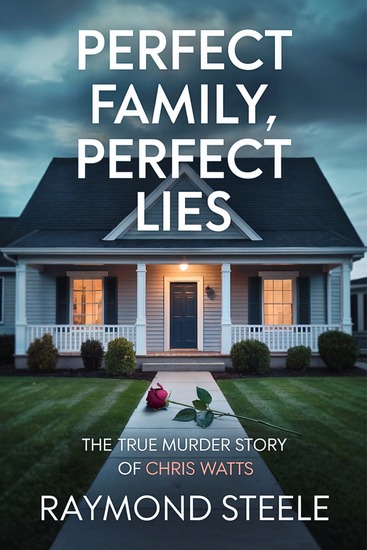
Perfect Family Perfect Lies - The True Murder Story of Chris Watts - cover

Perfect Family Perfect Lies - The True Murder Story of Chris Watts

Raymond Steele

Publisher: Factum Press

  • 0
  • 0
  • 0

Summary

THE SHOCKING TRUTH BEHIND THE PERFECT FAMILY FACADE
 
On August 13, 2018, Chris Watts strangled his pregnant wife and smothered his two young daughters before disposing of their bodies at an oil field. What drove a seemingly devoted husband and father to annihilate his entire family?
 
PERFECT FAMILY, PERFECT LIES takes you behind the carefully curated social media images to reveal the disturbing reality of the Watts family murders. Drawing on police records, court documents, and interviews with those who knew them, true crime expert Raymond Steele uncovers:
 
The mounting financial pressures that threatened their picture-perfect lifestyle
 
The secret affair that changed everything
 
Critical warning signs missed by friends and family
 
The chilling psychological transformation from family man to family annihilator
 
How the investigation broke the case in just three days
 
For readers of "The Perfect Father" and "My Daddy is a Hero," this meticulously researched account delves deeper than ever before into the minds of both predator and victims. Beyond just recounting events, it examines how the modern pressure to present perfect lives on social media can mask dangerous reality.
 
This isn't just another true crime story—it's a crucial examination of the warning signs that could prevent the next family tragedy.
 
Don't miss this definitive account of one of America's most shocking murder cases. Get a copy today to uncover the truth behind the perfect family lies.
Available since: 05/09/2025.
Print length: 140 pages.

Other books that might interest you

  • The Misfit - cover

    The Misfit

    Steven Poser

    • 0
    • 0
    • 0
    A fascinating account of the unusual relationship between Marilyn Monroe and her last psychiatrist in the fifteen months leading to her suicide.   Marilyn Monroe is remembered as both an iconic sex symbol and a heartbreaking figure who suffered through a chaotic childhood and wrestled with addiction and mental illness. This short true account shines new light on the last days of her life.   Dr. Ralph Greenson, a clinical professor of psychiatry at UCLA Medical School and a star among Hollywood psychoanalysts, treated Monroe for the fifteen months before her August 1962 suicide. He saw her seven days a week and brought her into his home. He never got over losing her.   Written by a practicing psychoanalyst, The Misfit recounts this tragic alliance and Marilyn Monroe’s borderline personality, offering compelling insight into the deteriorating mental state of a singular superstar.
    Show book
  • A History of the Undead - Mummies Vampires and Zombies - cover

    A History of the Undead -...

    Charlotte Booth

    • 0
    • 1
    • 0
    A history of Western culture’s fascination with undead creatures in film and television. 
     
    Are you a fan of the undead? Watch lots of mummy, zombie and vampire movies and TV shows? Have you ever wondered if they could be “real?” 
     
    This book, A History of the Undead, unravels the truth behind these popular reanimated corpses. 
     
    Starting with the common representations in Western media through the decades, we go back in time to find the origins of the myths. Using a combination of folklore, religion and archaeological studies we find out the reality behind the walking dead. You may be surprised at what you find . . .
    Show book
  • Moors The: The History of the Muslims Who Lived in North Africa and Europe during the Middle Ages - cover

    Moors The: The History of the...

    Editors Charles River

    • 0
    • 0
    • 0
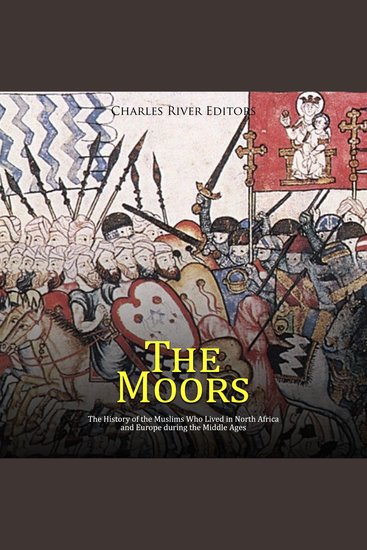
    The term Moor is a historical rather than an ethnic name. It is an invention of European Christians for the Islamic inhabitants of Maghreb (North Africa), Andalusia (Spain), Sicily and Malta, and was sometimes use to designate all Muslims. It is derived from Mauri, the Latin name for the Berbers who lived in the Roman province of Mauretania, which ranged across modern Algeria and Morocco. Saracen was another European term used to designate Muslims, though it usually referred to the Arabic peoples of the Middle East and derives from an ancient name for the Arabs, Sarakenoi. The Muslims of those regions no more refer to themselves by that term than those of North Africa call themselves Moors. Maghreb, or al-Maghreb, is a historical term used by Arabic Muslims for the territory of coastal North Africa from Alexandria to the Atlantic Coast. It means “The West” and is used in opposition to Mashrek, “The East,” used to refer to the lands of Islam in the Middle East and north-eastern Africa. The Berbers refer to the region in their own language as Tamazgha. In a limited, precise sense it can also refer to the Kingdom of Morocco, the proper name of which is al-Mamlakah al-Maghribiyyah, “Kingdom of the West.” 
    The history of the Spanish Peninsula is closely bound to that of the Moors. The term “Spain” was not in wide use until the region was united by the monarchs of Aragon and Castile, and the Moors called the lands they ruled in the Iberian Peninsula Al-Andalus, traditionally thought to be an Arabic transliteration of Vandal, the Germanic tribe which briefly ruled the region in the early fifth century. The English name Andalusia derives from the Spanish Andalucia, which is still used by Spain to name its southern region. Not surprisingly, three religions attempting to coexist during medieval times resulted in nearly incessant conflicts.
    Show book
  • How to Talk About Love - An Ancient Guide for Modern Lovers - cover

    How to Talk About Love - An...

    Plato

    • 0
    • 0
    • 0
    What is love? In poetry, songs, fiction, movies, psychology, and philosophy, love has been described, admired, lamented, and dissected in endless ways. Is love based on physical attraction? Does it bring out our better selves? How does it relate to sex? Is love divine? Plato's Symposium is one of the oldest, most influential, and most profound explorations of such questions—it is even the source of the idea of "Platonic love." How to Talk about Love introduces and presents the key passages and central ideas of Plato's philosophical dialogue in a lively new translation. 


    The Symposium is set at a fictional drinking party during which prominent Athenians engage in a friendly competition by delivering improvised speeches in praise of Eros, the Greek god of love and sex. The aristocrat Phaedrus, the legal expert Pausanias, the physician Eryximachus, the comic playwright Aristophanes, and the tragic poet Agathon—each by turn celebrates different aspects of love before Socrates proposes not to praise love but to tell the truth about it. In the final speech, the politician and libertine Alcibiades argues that Socrates himself is the epitome of love. 


    Deftly capturing the essence and spirit of Plato's masterpiece, How to Talk about Love makes the Symposium more accessible and enjoyable than ever before.
    Show book
  • The Contradictions of Ageing - cover

    The Contradictions of Ageing

    Violet Taylor

    • 0
    • 0
    • 0
    The book explores the problems that may arise from an overly open mindset, and uses a story about a community organization to illustrate the paradox of tolerance, pointing out that unlimited tolerance may lead to the disappearance of tolerance. It also mentions that one should be cautious about being open-minded in personal life, especially in terms of time allocation and career choices.
    Show book
  • The Correction of Taste - The Late Fiction of Henry James - cover

    The Correction of Taste - The...

    Denis Donoghue

    • 0
    • 0
    • 0
       'Donoghue was alert to the idea of the unsayable, as he circled around the idea of language itself as pliable material, all the more beautiful for that and worthy of our full consideration, but yielding at times to further levels of mystery...' from foreword by Colm Tóibín   
    In this last written work, the internationally renowned Irish literary critic Denis Donoghue brings an acute critical intelligence to bear on the late novels of Henry James. One of the greatest novelists in the English language, Henry James (1843-1916) was an American-British author who is regarded as a key transitional figure between literary realism and literary modernism.
    James's The Portrait of a Lady (1881) was the central achievement of his early period. The Turn of the Screw (1898) was a high-point of Gothic literature. In The Correction of Taste, Denis Donoghue offers a close reading of James's final novels, taking as his starting point an observation by T.S. Eliot about the function of literary criticism. Exploring a succession of works such as The Ambassadors (1903), The Wings of the Dove (1902) and The Golden Bowl (1905), Donoghue brings into sharp focus the complex layers of James's literary genius.
    Show book